
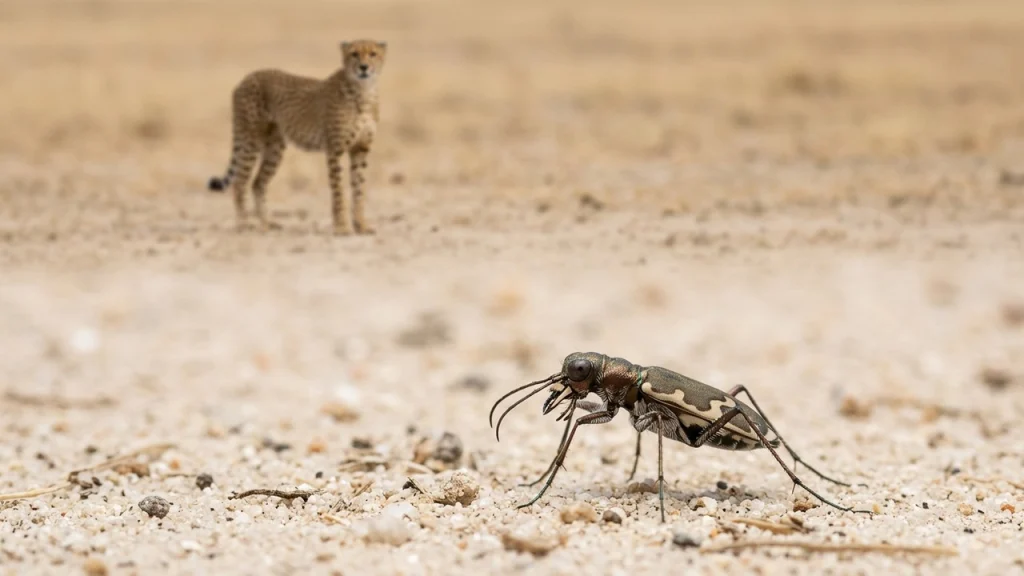
No, in absolute speed a cheetah is far faster, but per body length the tiger beetle is quicker. The numbers given in an ordinary speed unit come from two different animals. The Journal of Experimental Biology reports a top speed of 2.5 metres per second for the Australian tiger beetle Rivacindela hudsoni, and a cheetah’s top speed averages between 96 and 112 km per hour.
Counted in body lengths per second rather than in metres, the figures are 171 for an Australian tiger beetle, Cicindela eburneola, and 30 for the cheetah, according to a Nature Communications study. No land mammal runs faster.
How fast a cheetah gets, and for how long
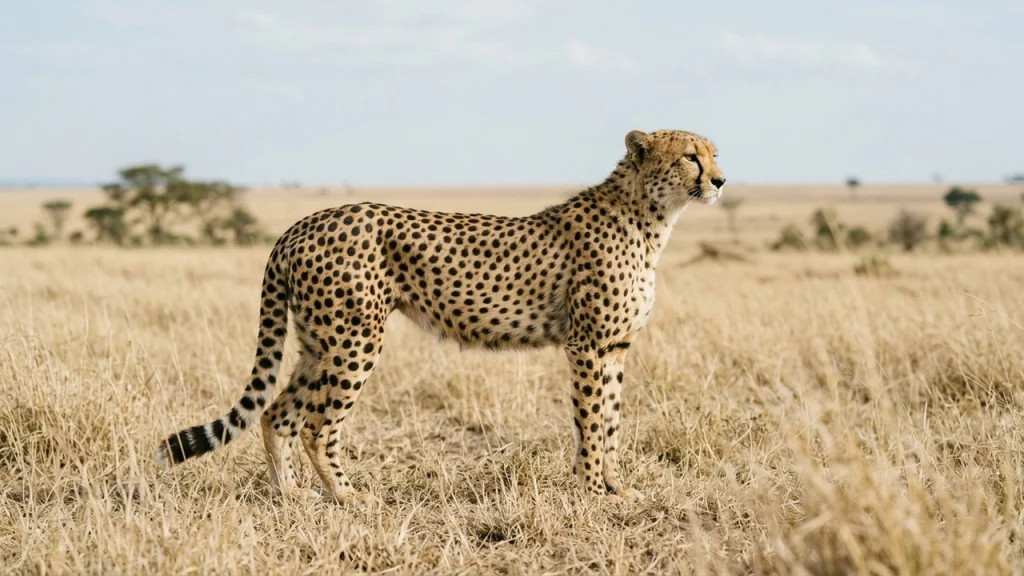
From a standstill a cheetah reaches 72 km per hour in 2.5 seconds. Its top speed lasts only around 300 yards (274 meters), and each stride at that pace covers 23 feet (7 meters), with four of those strides happening every second. Its flexible spine carries the front legs far ahead of the body on every stride, and at speed the cat is off the ground for more than half of its running time.
Two tiger beetle speeds
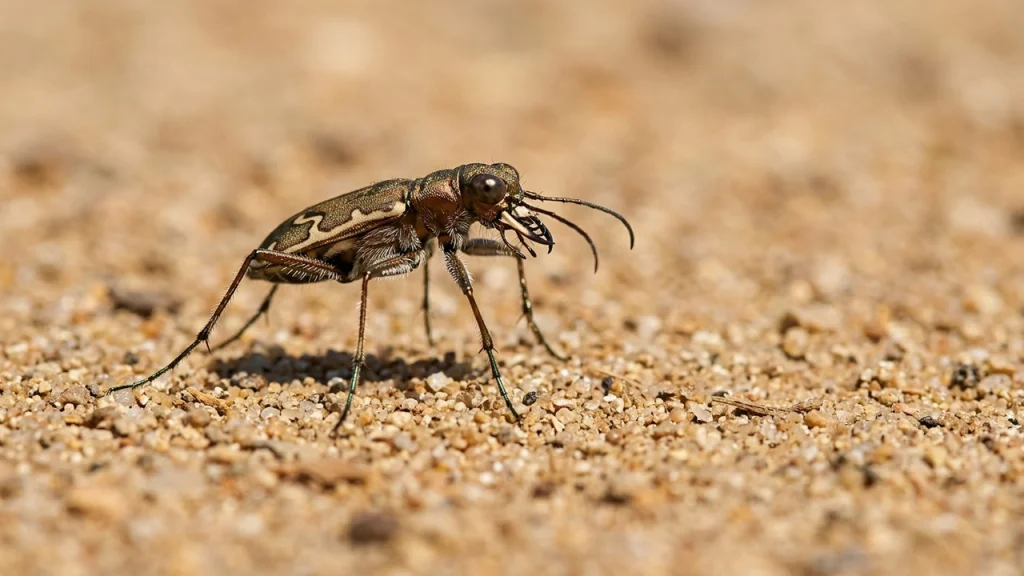
Both beetle figures describe the highest speed the animal can reach.
Tiger beetles are predators of other insects, and many of the species are adapted to high ambient temperatures. A study in the Annals of the Entomological Society of America describes them as easily recognized by their run/stop movement.
While a tiger beetle pursues prey or a mate, the same study reports, its vision is impaired: the images it takes in are not sharp enough to form a clear picture or to place a target.
What the numbers are made of
The two kinds of figure are not built the same way. The beetle speed is stated in metres per second, while the cheetah’s figure from the Nature Communications study counts body lengths covered each second.
None of the zoo, wildlife agency or research sources behind this article measures a tiger beetle and a cheetah at the same speed in the same absolute units.
Closing the gap on prey
A cheetah tries to narrow the gap to roughly 165 feet (50 meters) before it charges, and only about half of its hunting attempts end in a catch. It hunts alone, with no group strategy of the kind lions use.
According to the San Diego Zoo Wildlife Alliance, cheetahs naturally hunt in the morning and again at dusk. A cheetah rests when temperatures rise. Once a kill is done, it takes roughly 20 minutes for the cat’s breathing and temperature to settle, and that is also how long its prey takes to suffocate.
Teeth, size and a preference for flight
The Smithsonian’s National Zoo lists a cheetah body length of 112 to 142 centimeters, plus a tail of 66 to 84 centimeters. Its teeth, the same zoo notes, are small next to those of other big cats, and the space that leaves goes to nasal passages built for quick air intake.
Without large teeth, the same zoo says, a cheetah’s fighting abilities are limited. Lions and other larger cats overwhelm it easily, and it chooses to flee rather than fight.
Our estimate
This section is our own inference from the figures cited above. No source records this outcome directly.
Counted in body lengths per second, the tiger beetle would likely come out ahead of the cheetah. Cicindela eburneola, an Australian tiger beetle, can reach 171 body lengths per second, and a Nature Communications study puts the cheetah at 30, which gives our estimate of about 5.7 times as many body lengths each second.
Sources
- Nature Communications (via PubMed Central): A wireless controlled robotic insect with ultrafast untethered running speeds
- The Journal of Experimental Biology (via PubMed Central): Beetling the heat – the diurnal Namib Desert beetle Onymacris plana cools by running
- Smithsonian’s National Zoo: Cheetah
- San Diego Zoo Wildlife Alliance: Cheetah
- Annals of the Entomological Society of America (via PubMed Central): Hot springs, cool beetles: extraordinary adaptations of a predaceous insect in Yellowstone National Park
- PLOS ONE (via PubMed Central): The implications of habitat management on the population viability of the endangered Ohlone tiger beetle (Cicindela ohlone) metapopulation