
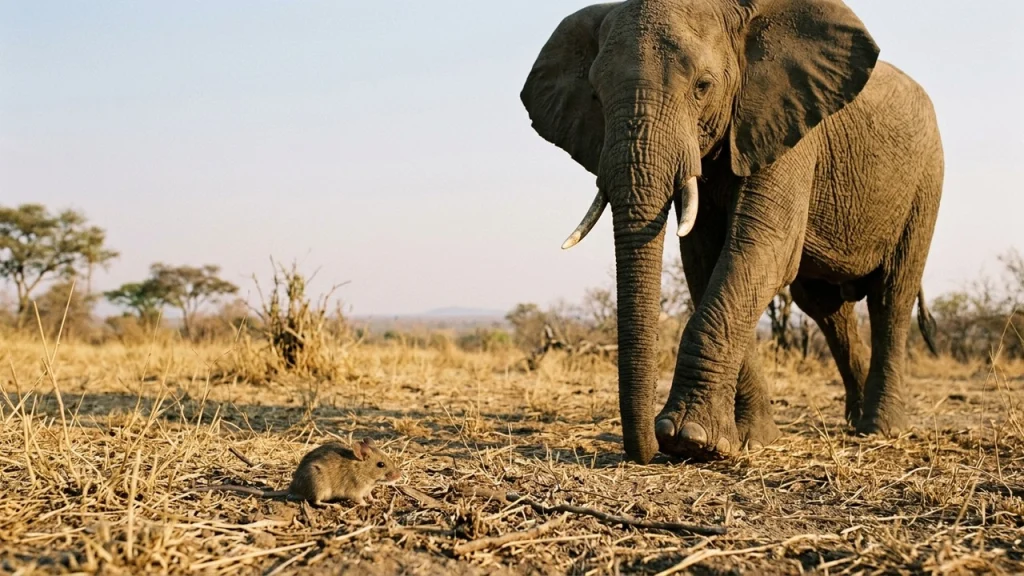
Across mammal species, a bigger body predicts a longer life, and a lower risk of dying from outside causes may be part of the reason. A review in Biochemistry (Moscow) links the long life of large animals to a reduced risk of dying from extrinsic causes, and it names predation among them.
People notice the pattern in familiar groups: elephants and humans outlast mice, and mice outlast worms and flies. That link between size and longevity has been well documented and striking across mammals, as one Biochemistry (Moscow) review puts it. It holds between species, but among individuals of one species the correlation reverses.
Bowhead whale and blue whale longevity
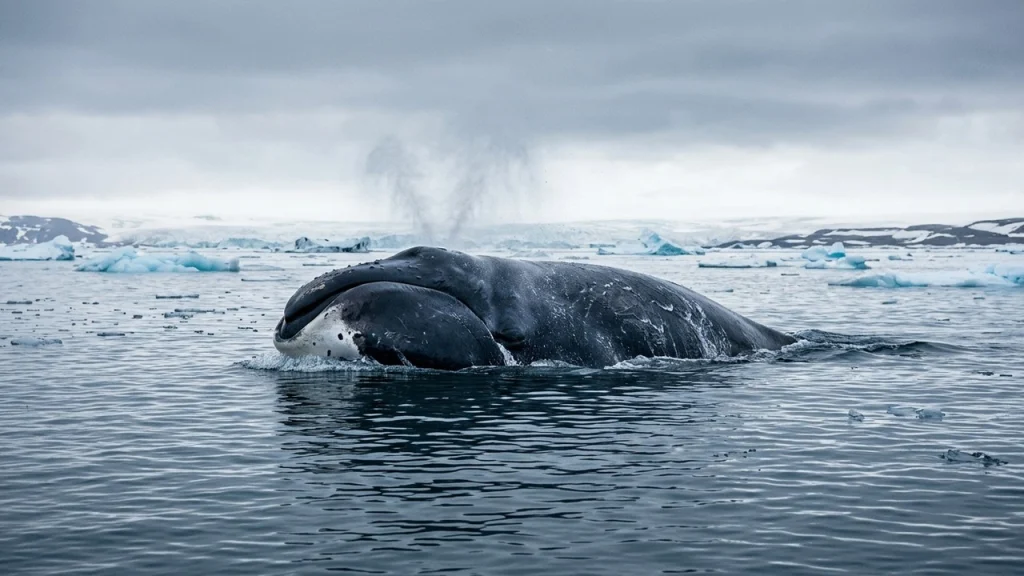
The bowhead whale is described as the longest living mammal. Bowhead whales weighing 75 tons may reach 150 to 200 years of age.
The Animal Diversity Web account gives the heaviest blue whale as 190,000 kg, and blue whale ages point to a lifespan in the 80 to 90 year range. Longevity in that species has also been estimated as high as 110 years.
Elephants and where humans stand
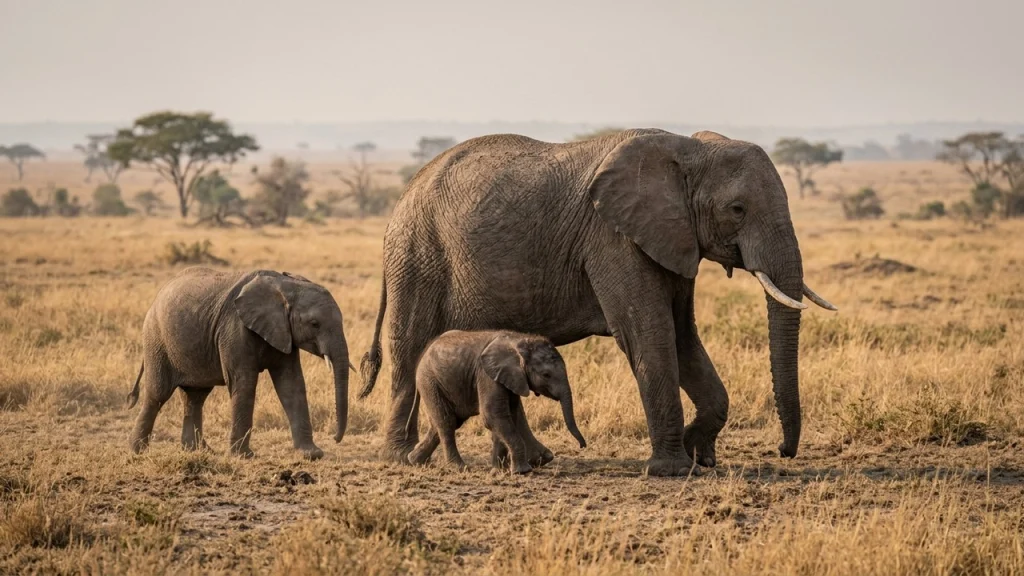
African elephant body mass ranges from 2000 to 6100 kg. Wild African elephants average 60 to 70 years of life, and the reported captive maximum for the species is 65 years.
Humans sit oddly against the size pattern. Primate life spans run longer than body size alone would suggest, and humans are the most extreme case of that. Human life expectancy is higher than that of far larger hoofed mammals, and the documented maximal human lifespan is 122 years.
Why predators matter for lifespan
A review in Aging (Albany NY) says large size by itself is protective from predators. The same review adds that elephants and whales, when no hunter is after them, may end their lives from old age. Big animals suffer fewer accidental deaths, and on that basis selection favors slow aging in them.
Growth, breeding and a slower pace of life
Large animals that behave in complex ways need long developmental periods and so mature slowly. Growing slowly, maturing sexually late and producing few offspring all go together and predict slow aging and long life. In general, the Biochemistry (Moscow) review links quick development, early sexual maturation and early reproductive effort, and the production of many offspring to shorter lifespans.
Metabolism moves with body mass as well. A review in the Journal of Experimental Biology finds that standard metabolic rates in mammals vary with body mass raised to the three-quarter power, and oxygen consumption per kilogram falls as body mass grows in every tissue.
Other factors that shape lifespan
Not every part of the pattern is about size. One Biochemistry (Moscow) review reports that IGF-1, the mediator of pituitary growth hormone’s stimulatory action on somatic growth, sits at unexpectedly low circulating levels in bigger species than in small ones.
Telomeres matter too. A review in Philosophical Transactions of the Royal Society B reports that, barring exceptions, species below roughly 2 kg make telomerase while those above that weight do not. Telomeres also tend to be short in species heavier than about 5 kg, and that review’s authors assume selection favors short telomeres there as a defense against cancer.
Exceptional lifespans in elephants and bowhead whales are tied to cancer defenses and DNA repair. Nor is body size the whole story. A Biochemistry (Moscow) review reports that birds burn more energy than equally sized mammals, yet still live longer rather than shorter. Many bat species also outlive rodents and shrews of about the same size, and animals with a big brain for their body size tend to live longer and reproduce over more years.
Sources
- Biochemistry (Moscow), via PubMed Central: Relationships among Development, Growth, Body Size, Reproduction, Aging, and Longevity: Trade-Offs and Pace-Of-Life
- Aging (Albany NY), via PubMed Central: Big mice die young but large animals live longer
- Philosophical Transactions of the Royal Society B, via PubMed Central: All’s well that ends well: why large species have short telomeres
- Journal of Experimental Biology, via PubMed Central: Metabolic scaling: consensus or controversy?
- Animal Diversity Web, University of Michigan: Loxodonta africana (African bush elephant)
- Animal Diversity Web, University of Michigan: Balaenoptera musculus (Blue whale)