
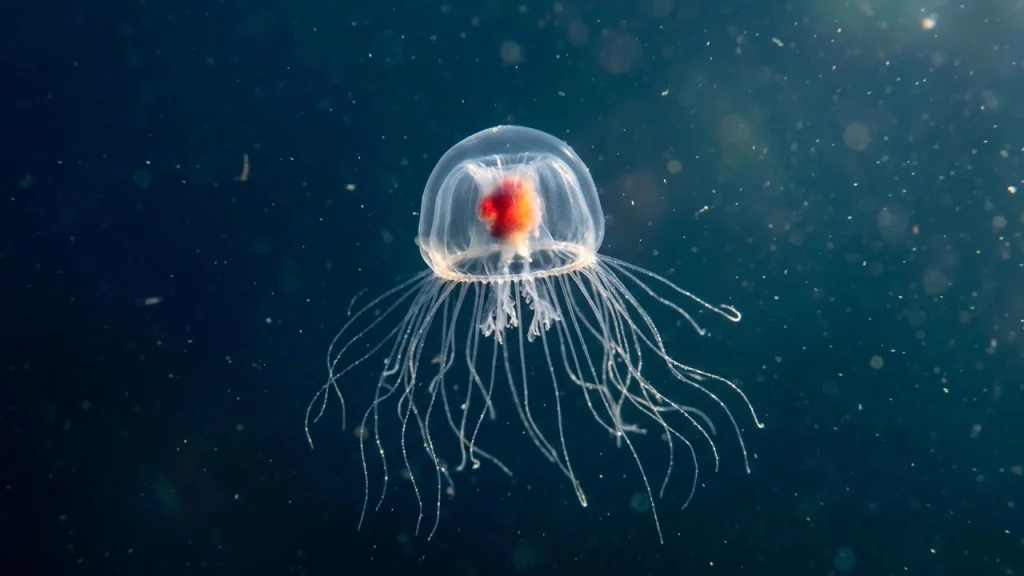
No, jellyfish as a group do not live forever. Research in Proceedings of the National Academy of Sciences describes Turritopsis dohrnii as the only metazoan that can renew itself time after time after its medusae have reproduced. National Geographic describes the shift as a change back from a medusa to a polyp. Animal Diversity Web notes that an adult compass jellyfish cannot undergo reverse development.
The same magazine reports that these animals still die in the usual way most of the time. According to a study in Genes, Genomes, Genetics, aged, weakened or damaged medusae can turn into a cyst that grows back into a polyp. Turritopsis usually produces new medusae when free floating sperm and eggs meet, as the magazine notes.
How a medusa turns back into a polyp
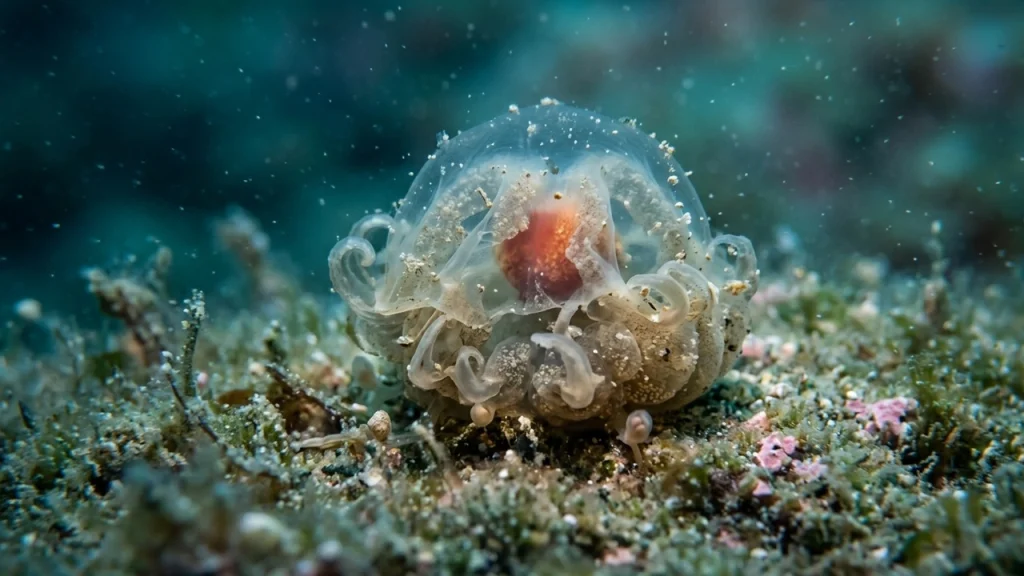
A study in Genes, Genomes, Genetics reports that medusae of Turritopsis dohrnii begin reverse change after physical harm, poor surroundings or aging. During that change the animals shrink, lose swimming ability and settle on the bottom before forming a cyst like phase with no clear medusa or polyp traits, according to the same genetics work. National Geographic pictures the next step as a bloblike cyst growing into a polyp colony that corresponds to the earliest phase of jellyfish life.
According to the magazine, members of this species can turn aging backward and form again as juveniles rather than dying. The animals can repeat that reset, apparently only as an emergency response, that account says.
What the cyst becomes next
Research in Genes, Genomes, Genetics finds that in Turritopsis dohrnii the cyst gains polyp traits within 24 to 36 hr, including a rootlike base that gives rise to new polyps and restores the usual polyp to medusa sequence. Active processes at this phase include telomerase activity, control of mobile elements and DNA repair systems, according to the same genetics work. Through asexual reproduction, the resulting colony of this species can release hundreds of genetically identical jellyfish, National Geographic notes.
In Turritopsis dohrnii, muscle cells can turn into nerve cells and even into sperm or eggs, according to the magazine. That magazine calls the change transdifferentiation. A planula later settles on the sea floor and grows into a colonial polyp that buds new medusae and closes the cycle, according to the genetics study.
Repeated reversal in close relatives
A study in Proceedings of the National Academy of Sciences surveyed renewal after reproduction inside this genus. It lists the trait as reported in only T. dohrnii and two numbered relatives, sp.5 and sp.2. The latter two lose much of their reversal ability once mature, according to the same analysis. The same analysis describes the related Turritopsis rubra as unable to rejuvenate at mature stages.
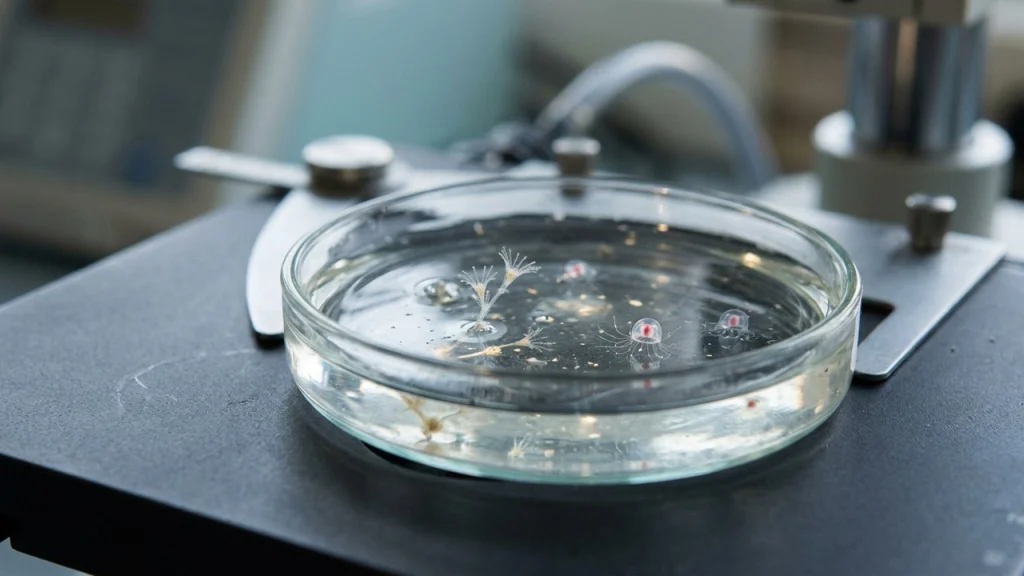
Work in DNA Research found that only two hydromedusan species showed repeated reversal in the laboratory: Turritopsis dohrnii and T. sp. The change can be triggered with CsCl incubation, heat shock and needle injury, according to that laboratory study. That Academy analysis defines T. dohrnii as immortal when the chance for mature medusae to rejuvenate reaches up to 100%, with no clear cap on cycles for one animal.
Adult compass jellyfish cannot turn back
Animal Diversity Web estimates the typical compass jellyfish lifespan at about one year. Once adult, reverse development is not possible and the animal is likely to reproduce sexually, according to that wildlife account. Evidence suggests the early ephyra stage can still turn back into a polyp rather than growing into an adult, the same account notes. Between June and August, an estimated 95% of all compass medusae strand briefly on shore and die, according to that wildlife account.
Sources
- National Geographic: “Immortal” Jellyfish Swarm World’s Oceans
- National Geographic: Jellyfish: Scary, Squishy, Brainless, Beautiful
- Proceedings of the National Academy of Sciences: Comparative genomics of mortal and immortal cnidarians unveils novel keys behind rejuvenation
- G3: Genes, Genomes, Genetics: Transcriptome Characterization of Reverse Development in Turritopsis dohrnii (Hydrozoa, Cnidaria)
- DNA Research: Genome assembly and transcriptomic analyses of the repeatedly rejuvenating jellyfish Turritopsis dohrnii
- Animal Diversity Web: Chrysaora hysoscella (Compass jellyfish)