
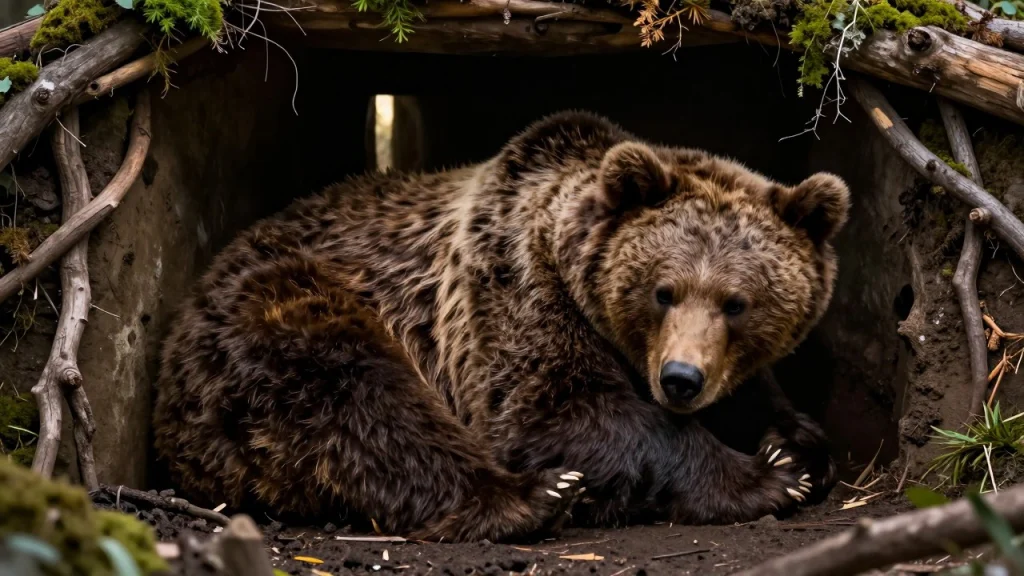
Bears undergo one of the most remarkable physiological transformations in the animal kingdom when they enter winter dormancy. Immobilization can cause muscle atrophy in humans, and disuse can cause unbalanced bone remodeling in most mammals. Bears, however, can sleep inside a den for five to seven months without eating, drinking, urination, or defecation, yet wake up in spring with muscle mass largely preserved despite a partial loss of strength.
Understanding how bears keep their muscle mass while hibernating comes down to a unique blend of biochemical recycling, metabolic reduction, and subconscious muscular stimulation. By conserving protein, converting metabolic waste back into amino acids, and burning fat for energy, bears preserve their physical structural integrity through months of complete physical inactivity.
The Biological Puzzle of Long-Term Immobility
For humans and most other animals, prolonged inactivity leads to significant muscle atrophy. Short-term immobilization can cause muscle wasting, but human evidence points to reduced muscle protein synthesis rather than increased muscle protein breakdown. The body reduces protein production in unused muscle tissue rather than actively breaking it down for energy.
Bears, however, lose relatively little muscle mass during prolonged immobility, although muscle strength can decline. Black bears and grizzly bears lose far less muscle mass and strength during hibernation. Furthermore, the remaining muscle fibers maintain their cellular structure, contractile force, and resistance to fatigue, allowing the animal to emerge from the den fully capable of defending itself and foraging.
Urea Recycling: Turning Nitrogen Waste into Muscle Protein
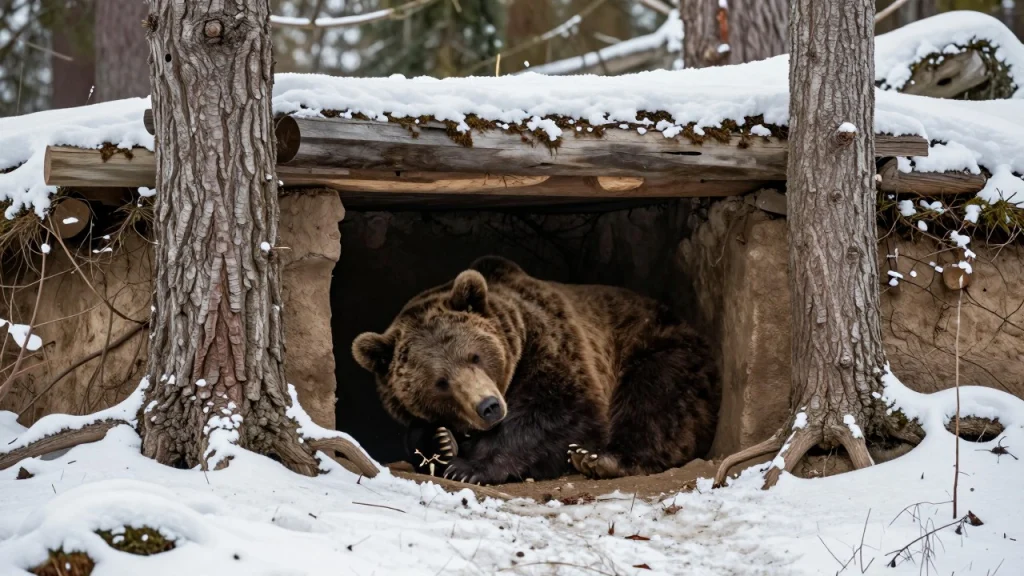
The primary physiological secret behind a bear’s muscle preservation is its ability to recycle nitrogen waste. In active mammals, the breakdown of proteins produces ammonia, which the liver converts into urea. Urea is normally filtered by the kidneys and excreted through urine.
Because hibernating bears do not urinate, urea accumulates in their bloodstream and diffuses into the digestive tract. Specialized gut bacteria break down this urea into ammonia and carbon dioxide. The ammonia then re-enters the liver, where it is combined with metabolic intermediates to synthesize new non-essential amino acids.
Through this continuous loop of nitrogen recycling, bears reconstruct muscle proteins without needing to ingest external food sources. The body essentially reclaims its own waste products to rebuild structural tissue.
[ Protein Breakdown ] ──> [ Urea Accumulation ] ──> [ Gut Bacteria Action ]
         ▲                                                     │
         │                                                     ▼
[ Muscle Preservation ] <── [ Amino Acid Synthesis ] <── [ Ammonia Re-absorption ]
Shifting Energy Demands to Fat Reserves
To protect vital proteins from being broken down for daily energy requirements, hibernating bears shift their metabolic reliance almost entirely to stored body fat. During late summer and autumn, a period known as hyperphagia, bears consume massive quantities of calories, accumulating thick layers of adipose tissue.
During hibernation, black bear metabolism drops to about a quarter of summer levels, a roughly 75 percent reduction, and heart rate falls to about a quarter of summer levels as well. Energy is supplied by the oxidation of fatty acids, producing energy and metabolic water.
- Fat breakdown provides fuel for core body functions, keeping organs operational.
- Protein reserves are shielded from being used as a primary energy source.
- Metabolic water generated from fat burning keeps the bear hydrated without drinking.
Subconscious Muscle Contractions and Micro-Movements
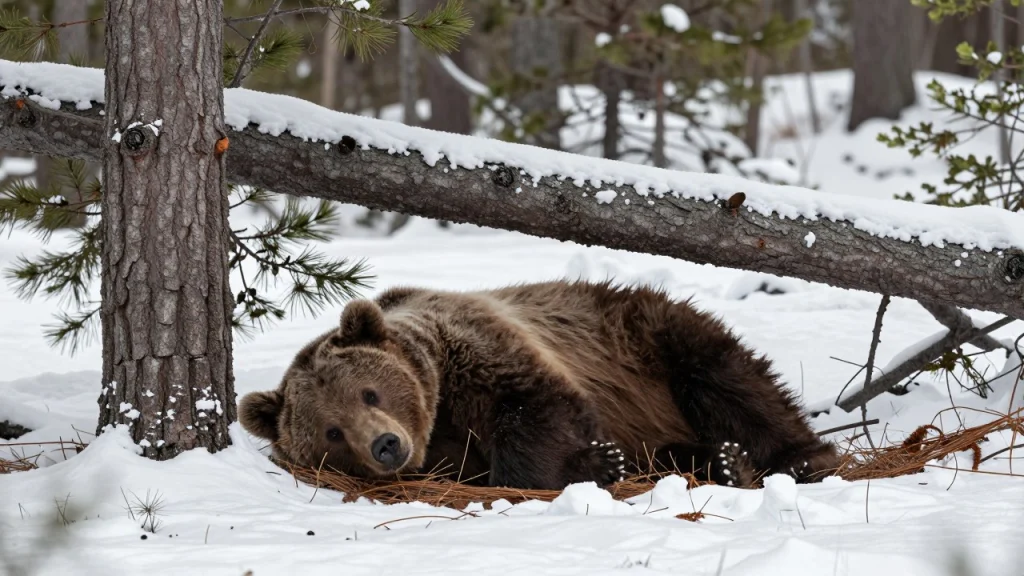
Chemical recycling is supported by physical mechanisms inside the den. Although hibernating bears appear completely still, they undergo periodic periods of shivering, positional shifts, and subtle muscle contractions.
These micro-movements generate gentle mechanical stress across muscle fibers and bone tissues. Mechanical tension signals cellular pathways within the muscle to downregulate degradation pathways and maintain muscle tone. Bone density is similarly preserved because the slight tension prevents calcium reabsorption into the bloodstream, protecting the bear from osteoporosis or bone brittleness.
Unique Gene Regulation and Blood Plasma Factors
Recent research highlights the role of genetic regulation and circulating blood proteins during hibernation. Scientists found that winter bear serum reduced protein degradation in cultured human differentiated muscle cells.
Key biological mechanisms involved include:
- Suppression of degradation pathways: Genes responsible for muscle breakdown (such as the ubiquitin-proteasome system) are turned down.
- Maintenance of protein synthesis: Intracellular signaling pathways, including mTOR pathways, remain active at low levels to maintain protein balance.
- Anti-inflammatory protection: Elevated levels of antioxidants protect muscle fibers from oxidative stress and cell damage during dormancy.
Biological Adaptations for Spring Survival
The ability to maintain muscle tissue during hibernation is an essential survival strategy. Upon emerging from the den in early spring, bears encounter harsh environmental conditions, scarce food resources, and active competitors or predators.
Maintaining functional muscle mass allows female bears to nurse and protect newborn cubs immediately after waking. Bears rely on preserved physical strength to forage efficiently and defend themselves after months without nutrition. This evolutionary adaptation ensures that bears resume active life without a lengthy recovery phase.
Sources
- Scientific Reports: Proteolysis inhibition by hibernating bear serum leads to increased protein content in human muscle cells
- Scientific Reports: Proteomic and Transcriptomic Changes in Hibernating Grizzly Bears Reveal Metabolic and Signaling Pathways that Protect against Muscle Atrophy
- PLOS ONE: Skeletal muscles of hibernating black bears show minimal atrophy and phenotype shifting despite prolonged physical inactivity and starvation
- Journal of Cachexia, Sarcopenia and Muscle: Declines in muscle protein synthesis account for short-term muscle disuse atrophy in humans in the absence of increased muscle protein breakdown