
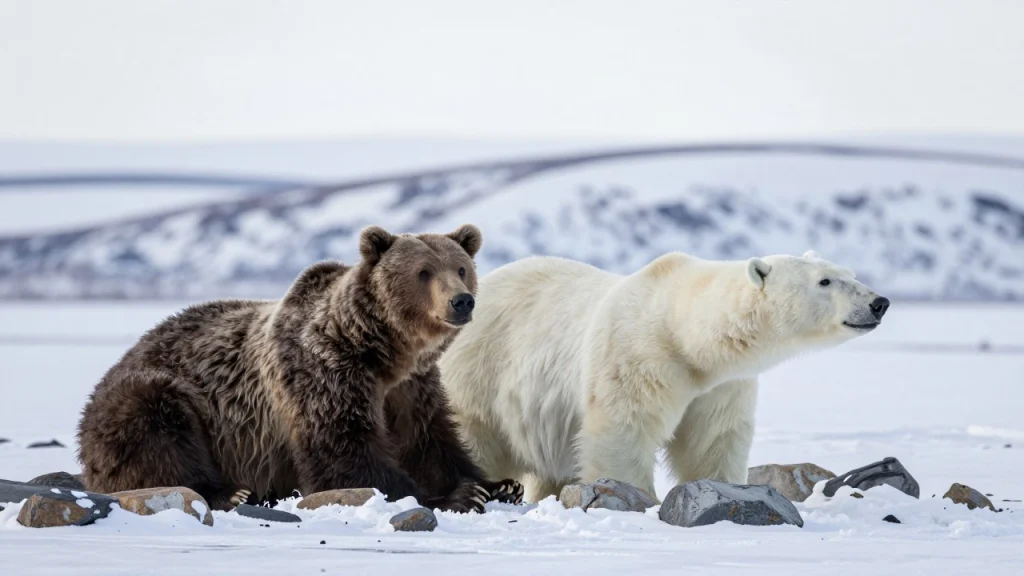
When comparing apex predators of North America and the Arctic, bite force is one of the most revealing measures of physical capability. While both species possess immense strength, one finite-element model found the polar bear’s mean canine bite force (about 2,120 newtons, or roughly 480 pounds of force) modestly higher than that of the brown bear, the grizzly’s parent species, at about 1,680 newtons (roughly 380 pounds of force).
This difference in jaw power stems directly from their unique evolutionary adaptations, diets, and hunting environments. Below is a detailed look at how these two massive bear species compare in jaw mechanics, skull structure, and ecological needs.
Polar bear vs. grizzly bear bite force compared
Bite force in apex predators is commonly measured in pounds per square inch (PSI) or standard force units like Newtons. In one finite-element model, an adult male polar bear’s bite was slightly stronger than an adult male brown bear’s at every simulated bite position; the results were unvalidated estimates.
- Polar bear bite force: about 2,120 newtons (roughly 480 pounds of force)
- Grizzly bear bite force: about 1,680 newtons (roughly 380 pounds of force)
While both numbers represent incredible physical force, enough to crush heavy bone, the polar bear’s modeled canine bite force was only about 440 newtons (roughly 100 pounds of force) higher than the grizzly’s close relative, the brown bear; the study did not test hide or blubber penetration.
Why polar bears have a stronger bite force
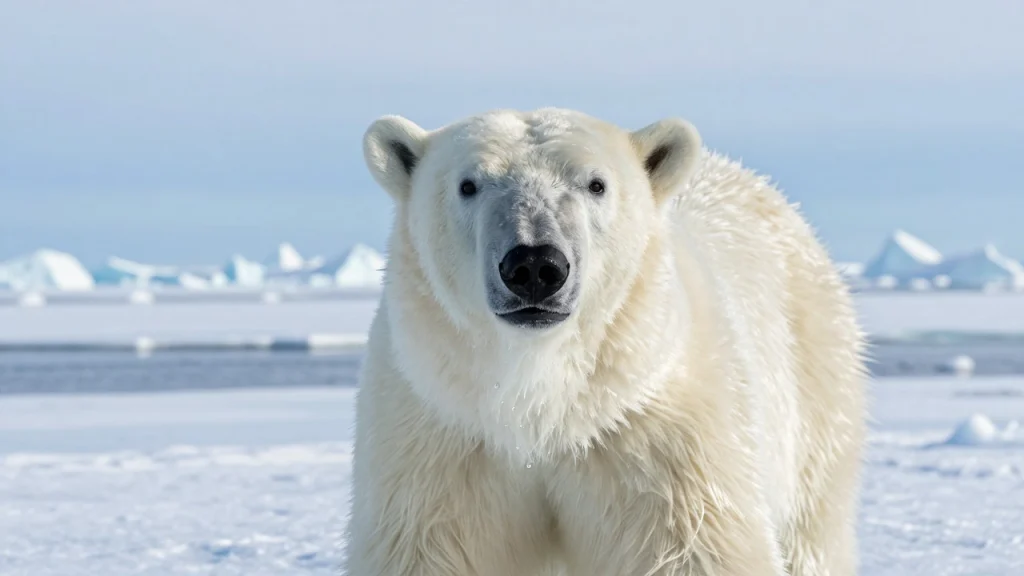
The difference in jaw power between these two species is not accidental; it is driven by their specialized evolutionary adaptations and dietary needs.
Dietary requirements and prey types
Polar bears are hypercarnivores. Their diet consists almost entirely of marine mammals, primarily ringed and bearded seals. Polar bears feed almost exclusively on blubber and flesh that, unlike bone, require little or no processing before swallowing.
Grizzly bears, by contrast, are omnivores. Grizzlies hunt moose and elk, while brown bears have been observed capturing young moose calves. Much of their diet consists of plant material, roots, berries, insects, and fish. They do not rely on high-force canine bites the way polar bears do.
Skull architecture and jaw muscles
The skull structure of each species reflects its primary feeding habits:
- Grizzly bears: Compared with the low, flat polar skull, the brown bear has a deep, vaulted and pneumatized forehead and a larger molar grinding area.
- Polar bears: Have a low, flat skull, and their temporalis covers the anterior border of the coronoid process and occupies almost the entire cranial surface.
The measured leverage effect of the polar bear was the smallest in the study’s three-species comparison; the finite-element model produced its highest mean force at M2, not at the canine.
How bite force affects hunting and survival
Bite force is a key tool for survival in the wild, shaping how each bear species interacts with its environment.
Polar bear hunting technique
Polar bears rely heavily on freeze-hunting at seal breathing holes. When a seal surfaces, the bear must grab it instantly using its jaws and front paws. A powerful bite force ensures that the seal cannot escape back into the water, securing a high-calorie meal essential for maintaining insulating fat layers.
Grizzly bear feeding mechanics
Grizzly bears use their jaws differently. Brown bears have a large shoulder muscle hump (grizzlies have the most distinctive of all) and their great front claws make them powerful diggers that excavate dens and roots.
Summary of physical differences
| Feature | Grizzly Bear | Polar Bear |
|---|---|---|
| Average Bite Force | ~1,680 N (380 lbf) | ~2,120 N (480 lbf) |
| Primary Diet | Omnivorous (plants, berries, fish, mammals) | Carnivorous (seals, marine mammals) |
| Skull Shape | Deep, vaulted, pneumatized forehead | Low, flat skull |
| Primary Tool | Combination of claws, hump muscle, and bite | Strong bite force and clamping jaw grip |
One finite-element model found comparable but slightly stronger polar-bear bites than brown-bear bites at every simulated position; it did not establish a global land-mammal ranking. However, the polar bear’s specialized diet of blubber-rich marine mammals is linked to a modestly stronger bite force than the versatile, omnivorous grizzly bear’s.
Sources
- PLOS ONE: Biomechanical Consequences of Rapid Evolution in the Polar Bear Lineage
- Journal of Veterinary Medical Science (J-STAGE): Adaptation of the Muscles of Mastication to the Flat Skull Feature in the Polar Bear (Ursus maritimus)
- University of Michigan Museum of Zoology, Animal Diversity Web: Ursus arctos (brown bear)
- San Diego Zoo Wildlife Alliance: Brown Bear
- San Diego Zoo Wildlife Alliance: Polar Bear