
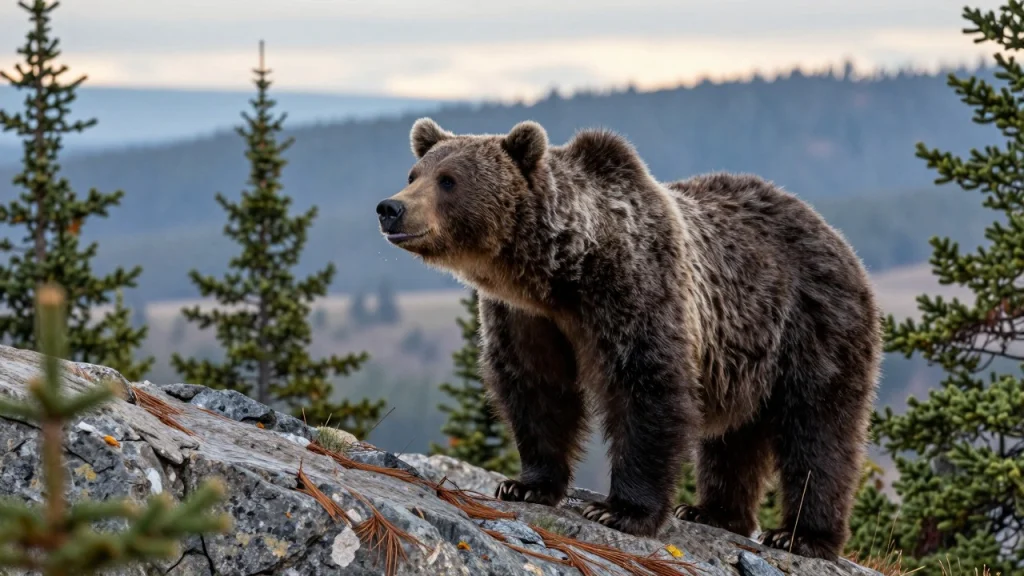
Bears possess an exceptionally acute sense of smell (brown bears, for example, have noses that exceed those of dogs), letting them detect food, carcasses, and prey from great distances. Under optimal conditions, a polar bear can smell a seal on the ice from up to 20 miles (32 kilometers) away. This unmatched olfactory ability plays a vital role in how bears navigate their habitats, locate rare food sources, and detect potential prey or carrion.
Whether tracking down a fresh kill, searching for ripe berry patches, or detecting human garbage left behind at a campsite, a bear’s nose is its primary tool for survival. Understanding the impressive range and mechanics of a bear’s scent detection reveals why these large mammals are so effective at finding food in dense wilderness settings.
How Far Away Can Bears Smell Food and Prey?
The precise distance a bear can smell food depends on several environmental factors, but researchers and wildlife experts generally agree on impressive benchmark distances. Under typical wilderness conditions, bears rely heavily on scent trails to locate food across long distances.
- Standard scent detection: Brown bears can follow the scent of a rotting carcass for more than two miles.
- Carrion and strong odors: Large, pungent food sources such as carrion can be detected by brown bears from more than two miles away.
- Subsurface detection: A polar bear can find a seal’s air hole in the ice up to 1 mile (1.6 kilometers) away.
Because bears rely heavily on scent to find scattered meals across vast territories, their sense of smell is exceptionally acute: brown bears, for example, have noses that exceed those of dogs.
Why Bears Have Such a Powerful Sense of Smell
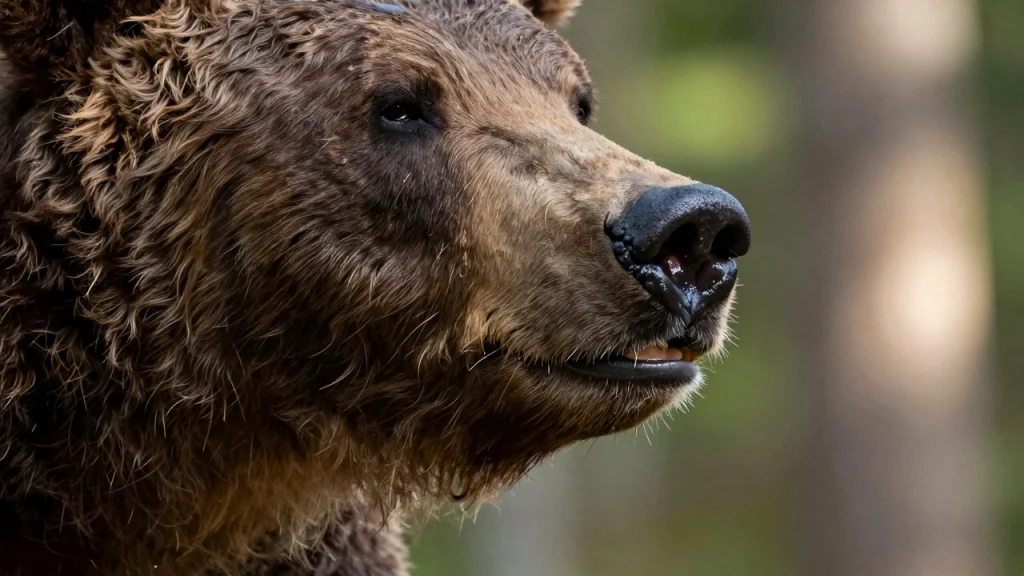
A bear’s extraordinary olfactory capability is the result of specialized physical traits shaped by evolution. Their heads are structurally designed to maximize air capture and scent processing.
Anatomy of the Bear Nose
Inside a bear’s snout lies an intricate network of thin bones covered in mucous membranes known as turbinates. These folded structures create immense surface area dedicated entirely to detecting airborne chemical compounds.
- Massive surface area: Polar bears have enlarged olfactory turbinals that increase the surface area available for detecting scent.
- Jacobson’s organ: Bears also possess a specialized vomeronasal organ on the roof of their mouth, which helps them detect subtle pheromones and chemical signals left by prey or other bears.
Together, these anatomical features help bears track subtle odor gradients across long distances.
flowchart TD
    A["Airborne Odor Molecules"] --> B["Nostril Entry & Turbinate System"]
    B --> C["Olfactory Mucosa & Receptor Cells"]
    C --> D["Olfactory Bulb in Brain"]
    D --> E["Identification & Directional Tracking"]
Comparing Bear Olfactory Abilities Across Species
Black bears, grizzly bears (also called brown bears), and polar bears all rely on a keen sense of smell, though their noses serve different purposes depending on their environment and diet.
| Bear Species | Primary Scent Focus | Distance Range | Environmental Adaptations |
|---|---|---|---|
| Polar Bear | Seals, blubber, marine carrion | Up to 20 miles | Can smell prey hidden beneath thick snow and sea ice |
| Grizzly Bear | Spawning salmon, carcasses, roots | More than 2 miles (carrion) | Tracks carrion across open tundras and mountain valleys |
| Black Bear | Berries, nuts, insects, human food | Not verified in available sources | Navigates dense forest canopy to locate scattered food sources |
Polar bears have enlarged olfactory turbinals, an adaptation that may help them detect prey despite the vast, sparse Arctic environment where they hunt.
Environmental Factors That Affect Scent Distance
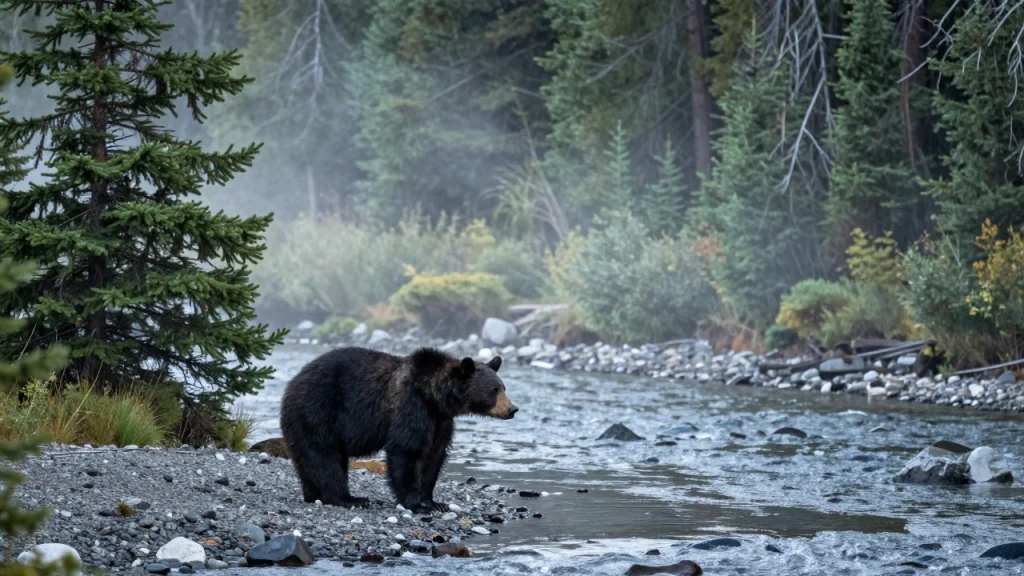
A bear’s ability to smell food across miles is not uniform; it varies significantly based on weather patterns and terrain features.
Wind Direction and Velocity
Wind carries odor molecules across landscape contours. A steady breeze blowing from a food source toward a bear creates a concentrated scent corridor, helping the animal detect food from farther away. Conversely, turbulent or shifting winds can scatter odor molecules and make tracking harder.
Air Temperature and Humidity
Moisture in the air helps bind scent particles, making them easier to trap in the moist lining of a bear’s nasal cavity. High humidity and cool air preserve odor trails longer, whereas hot, dry air causes scent particles to dissipate quickly.
Odor Concentration and Elevation
Thermal updrafts and downdrafts in mountainous regions carry smells up or down valleys. Strong, volatile odors (such as rotting meat, fish, or fried food) are far easier for a bear to detect than fresh vegetation, especially when carried on wind currents.
How Bears Use Scent to Hunt and Forage
Bears use their scent detection not just to locate stationary food, but as a strategic tool for hunting and foraging across vast home ranges.
- Tracking live prey: In many parts of Alaska, brown bears are capable predators of newborn moose and caribou calves.
- Locating buried food: Brown bears use their keen sense of smell to locate and dig ground squirrels and other small mammals out of their burrows.
By constantly testing the air, a bear builds a detailed mental map of its surroundings based almost entirely on odor profiles.
Implications for Human Safety and Food Storage
Because bears can smell food from more than two miles away, human activities in wild habitats require careful food management to prevent dangerous human-bear interactions.
Proper Camping and Trash Precautions
Bears are quick learners that associate human food odors with easy calories. Items that seem odorless to humans, such as toothpaste or gasoline, can still attract bears from a distance.
- Store food away from your campsite, hang it out of reach of bears, or use a bear-resistant container when no trees are available.
- Avoid cooking or storing scented items inside sleeping tents.
- Pack out all food scraps and trash, including biodegradable waste like fruit peels.
- Remember that items like toothpaste, lip balm, sunscreen, and empty food wrappers carry strong scents that draw curious bears.
Understanding that a bear can smell food long before it sees or hears humans highlights the importance of maintaining clean campsites in bear country. Respecting their olfactory capabilities helps protect both humans and wild bear populations.
Sources
- San Diego Zoo Wildlife Alliance: Polar Bear | San Diego Zoo Animals & Plants
- Animal Diversity Web, University of Michigan: Ursus arctos (brown bear) | INFORMATION | Animal Diversity Web
- Alaska Department of Fish and Game: Brown Bear Species Profile
- Alaska Department of Fish and Game: The Essentials for Traveling in Alaska’s Bear Country
- Journal of Anatomy: Respiratory and olfactory turbinal size in canid and arctoid carnivorans