
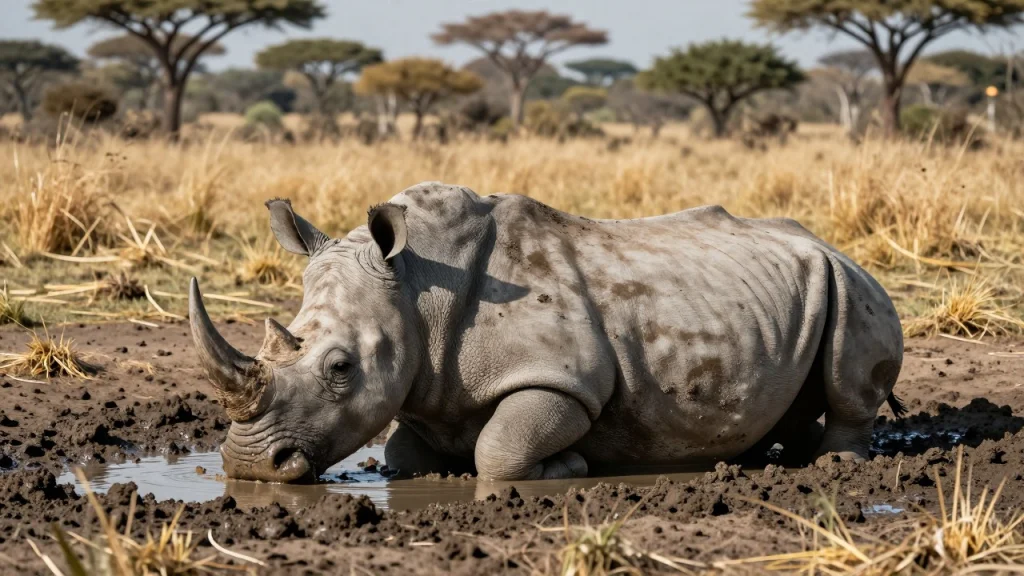
Rhinoceroses are well known for wallowing in mud. While this behavior might look like simple play or lazy rest, it is actually a vital survival strategy. In the wild, wallowing in mud serves critical physiological functions that protect these massive herbivores from harsh environmental conditions and external threats.
The primary reason rhinoceroses wallow in mud is temperature control. Rhinos possess extremely thick skin, yet they lack effective sweat glands across most of their bodies to cool down when temperatures rise. Mud acts as a natural coolant, absorbing heat from the animal’s body and insulating it against the blazing tropical sun.
Beyond thermoregulation, mud bathing provides essential skincare, parasite defense, and sun protection. Understanding this wallowing behavior reveals how well adapted these prehistoric-looking mammals are to their native habitats.
Natural Temperature Regulation and Cooling
Regulating body temperature is a constant challenge for large terrestrial mammals. Because rhinos cannot rely on sweating to cool off, taking a dip in mud helps them shed excess body heat.
When a rhino wallows, water from the damp earth evaporates slowly from its skin. Evaporative cooling transfers heat away from the body far longer than clear water alone. A coating of wet mud holds moisture against the hide, helping rhinos maintain a stable internal temperature during the hottest hours of the day.
Mud wallows also offer a calm place to rest. Rhinos rest during the hottest part of the day.
Defense Against Insects and Parasites
Despite its impressive appearance, a rhino’s hide is surprisingly sensitive. Pests like ticks, biting flies, mosquitoes, and parasites frequently target exposed folds of skin where the hide is thinner and softer.
Wallowing forms a thick barrier against these persistent pests:
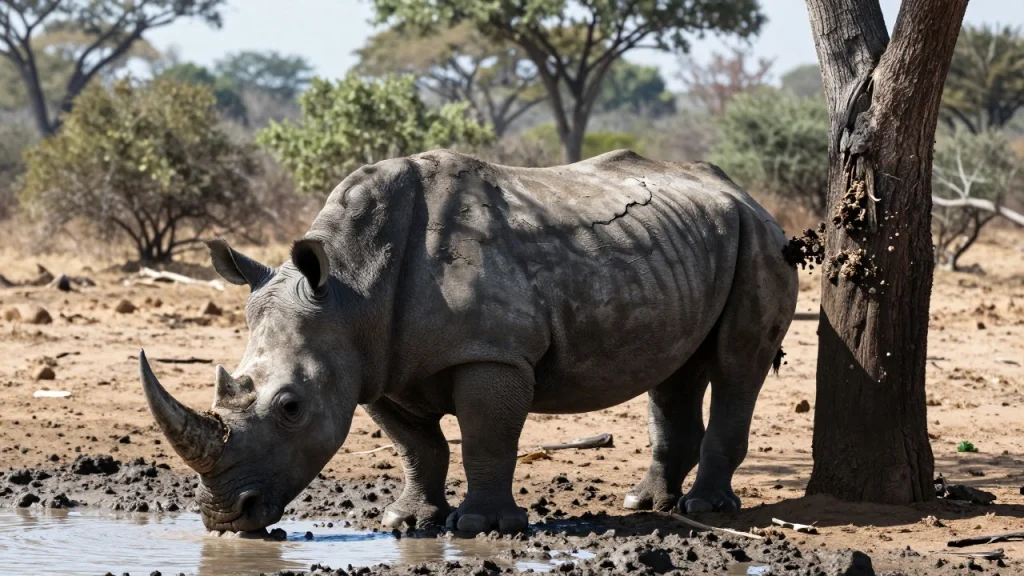
- Physical shield: Once dry, the layer of caked mud creates a tough crust that biting insects cannot penetrate.
- Parasite removal: As the dried mud naturally flakes or peels off, it pulls away attached ticks, mites, and dead skin cells.
- Rubbing behavior: After wallowing, rhinos often rub against trees or large rocks, further stripping away parasites trapped in the mud coating.
This natural protection reduces the risk of skin infections and blood loss caused by heavy insect infestations.
Protection Against Sunburn and Dehydration
Excessive sun exposure can severely damage an animal’s skin, especially in regions with intense UV radiation. Rhinos lack dense fur to block sunlight, making them vulnerable to sun damage without protection.
Mud acts as a natural sunblock. A uniform layer of mud shields delicate skin areas (such as the ears, flank folds, and abdomen) from direct solar rays, preventing painful sunburns.
Furthermore, mud helps lock in moisture. Rhinos exposed to dry winds and sun can suffer from dry, cracked skin. The mud layer traps hydration underneath, keeping the hide supple and preventing painful cracking that could allow pathogens to enter the body.
Social Interaction and Scent Marking
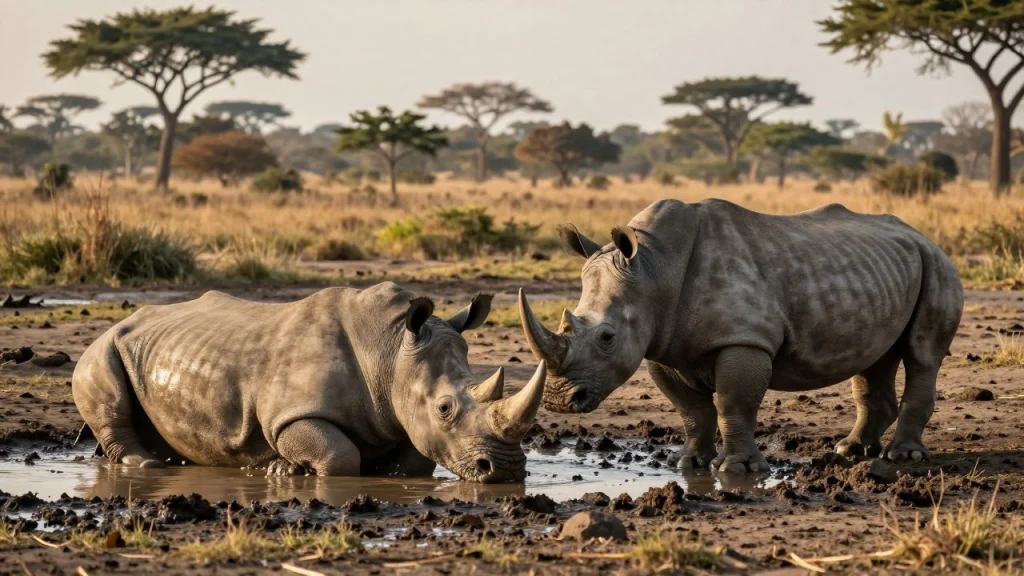
Wallowing holes often serve as gathering points for local rhino populations. Although rhinos are generally solitary or live in small family groups, wallows provide neutral spaces where individuals interact.
Mud wallows play a key role in chemical communication:
- Scent deposition: Rhinos leave behind distinct scent cues in wallowing areas, letting nearby individuals know who has visited recently.
- Territorial awareness: Dominant males use shared wallows to monitor the presence of rivals or potential mates in the area.
- Group bonding: In species like the white rhino, mother-calf pairs or small groups of subadults frequently share wallows simultaneously, strengthening social bonds.
These shared muddy hubs help maintain social structures without requiring aggressive face-to-face encounters.
Differences in Wallowing Behavior Across Rhino Species
All five species of rhinoceros (the white rhino, black rhino, Indian rhino, Javan rhino, and Sumatran rhino) wallow in mud, but their habits vary based on their environment.
White rhinoceroses use mud baths during summer, while black rhinos roll in mud; both species share Africa’s savanna habitats. As temperature increases, white rhinos move to shadier areas such as dense forest or mid-slopes of hills.
In contrast, Asian species reside in humid rainforests and marshlands. Sumatran, Javan, and Indian rhinos wallow in mud or water; Javan rhinos typically spend most of the day wallowing, Indian rhinos wallow and bathe in rivers and pools, and Sumatran rhinos wallow in mud pits in hot weather. For forest rhinos, mud baths also help deter tropical insects that thrive in humid jungle environments.
In summary, wallowing in mud is far more than a casual habit for rhinoceroses. It is an essential natural defense system that keeps their body temperature stable, shields their skin from parasites and sunburn, and facilitates communication across their territories.
Sources
- San Diego Zoo Wildlife Alliance: Rhinoceros
- Animal Diversity Web, University of Michigan: Ceratotherium simum (white rhinoceros)
- Animal Diversity Web, University of Michigan: Rhinoceros unicornis (Indian rhinoceros)
- Animal Diversity Web, University of Michigan: Rhinoceros sondaicus (Javan rhinoceros)
- Animal Diversity Web, University of Michigan: Dicerorhinus sumatrensis (Sumatran rhinoceros)