
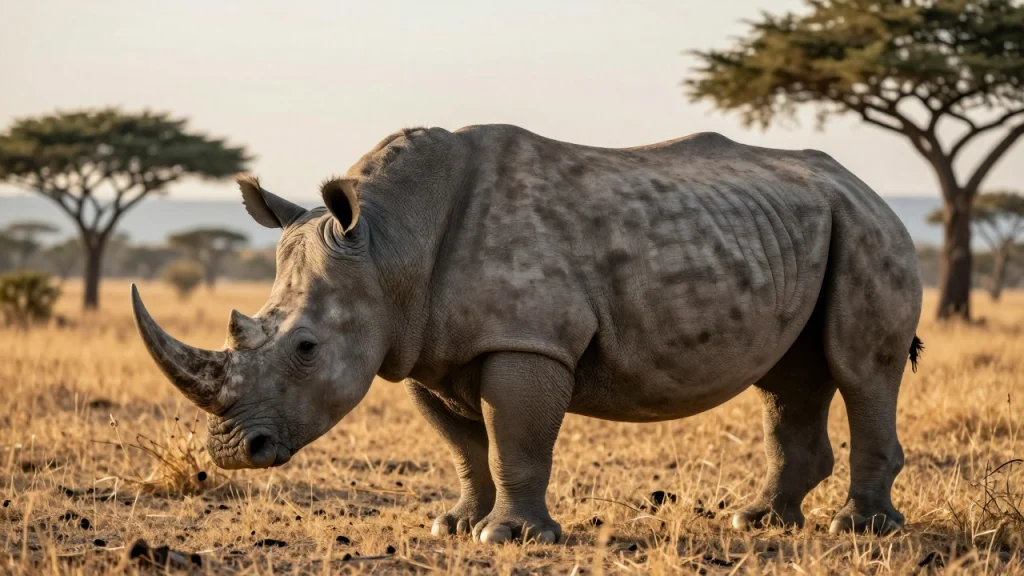
Rhinoceroses are famous for their tough, armor-like appearance. At first glance, a rhino’s hide looks nearly impenetrable, designed to withstand sharp horns, thick vegetation, and harsh climates. But just how thick is this skin, and how does it function in the wild?
White rhinoceros skin can be as thick as 45 mm (4.5 cm); on average, its epidermis measures about 1 mm and its dermis about 18 mm. Despite its heavy, rugged texture, rhino skin is surprisingly sensitive and plays a vital role in protecting these massive herbivores.
How thick is a rhinoceros skin across its body?
The thickness of a rhinoceros’s skin is not uniform across its entire body. Instead, it varies strategically based on where protection is needed most. In white rhinoceroses, the thickness of the skin layers differs between body regions.
- Flanks and back: In white rhinoceroses, the flank has the thickest epidermis among the sampled cheek, shoulder, flank, and rump regions. This acts as natural body armor against rival horns during battles for dominance.
- Shoulders and hips: Heavy layers of collagen protein bolster these regions to absorb impact when fighting or pushing through thorn bushes.
White rhinoceros skin adaptations provide protection from serious injury during combat.
Structure and composition of rhino skin
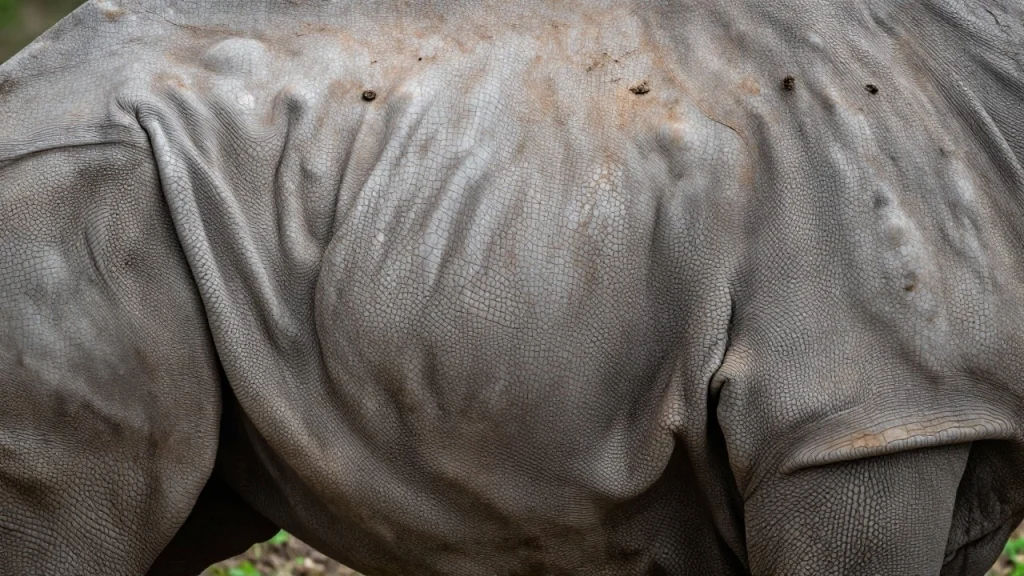
Although rhino skin looks like rigid plates of armor, it is made primarily of dense collagen fibers. Collagen is a structural protein found in the skin of all mammals, but in rhinoceroses, it is tightly woven in a cross-hatched pattern.
This unique arrangement gives the hide incredible tensile strength. The outer layer (epidermis) is tough and keratinized, while the inner layer (dermis) contains dense connective tissue. The deep folds seen on species like the Indian rhinoceros (one-horned rhino) are actually structural bends in the hide, allowing the thick skin to flex comfortably as the animal moves.
Why rhino skin is surprisingly sensitive
Despite its impressive thickness, a rhino’s skin is far from unfeeling. It is packed with nerves and blood vessels close to the surface, making rhinos sensitive to temperature changes, insect bites, and physical touch.
Because their skin lacks sweat glands in many areas, rhinos cannot easily cool down through sweating. Additionally, pesky insects like ticks, flies, and mosquitoes can easily bite into the creases of their hide.
To protect their skin, rhinoceroses rely on key environmental behaviors:
- Mud wallowing: Rhinos regularly coat themselves in mud. Once dry, the mud layer acts as a natural sunblock and a barrier against biting insects.
- Dust bathing: When mud isn’t available, rhinos roll in dirt to soothe irritated skin and block parasites.
- Symbiotic relationships: Birds like oxpeckers land on rhinos to eat ticks and parasites straight off their hide, providing natural grooming.
Comparing skin thickness across rhino species
There are five living species of rhinoceros: two in Africa (White and Black rhinos) and three in Asia (Indian, Javan, and Sumatran rhinos). While all feature thick skin, subtle differences exist between them:
- White and Black Rhinos: White rhinoceros skin is described as dense, tough and plate-like folded.
- Indian Rhinoceros: Famous for its armor-plated look, the Indian rhino has numerous skin folds that create this appearance.
- Sumatran Rhinoceros: The Sumatran rhinoceros is the smallest rhino species, covered with a coat of shaggy hair.
In summary, a rhinoceros’s skin is a remarkable adaptation. Reaching as thick as 45 mm (4.5 cm) in white rhinoceroses, it provides vital protection against predators, rival rhinos, and harsh landscapes, while requiring regular mud baths to stay healthy and bug-free.
Sources
- PLOS One: Histological study of white rhinoceros integument
- San Diego Zoo Wildlife Alliance: Rhinoceros | San Diego Zoo Animals & Plants
- Animal Diversity Web (University of Michigan): Rhinocerotidae (rhinoceroses) | INFORMATION | Animal Diversity Web
- Animal Diversity Web (University of Michigan): Ceratotherium simum (white rhinoceros) | INFORMATION | Animal Diversity Web
- Animal Diversity Web (University of Michigan): Rhinoceros unicornis (Indian rhinoceros) | INFORMATION | Animal Diversity Web