
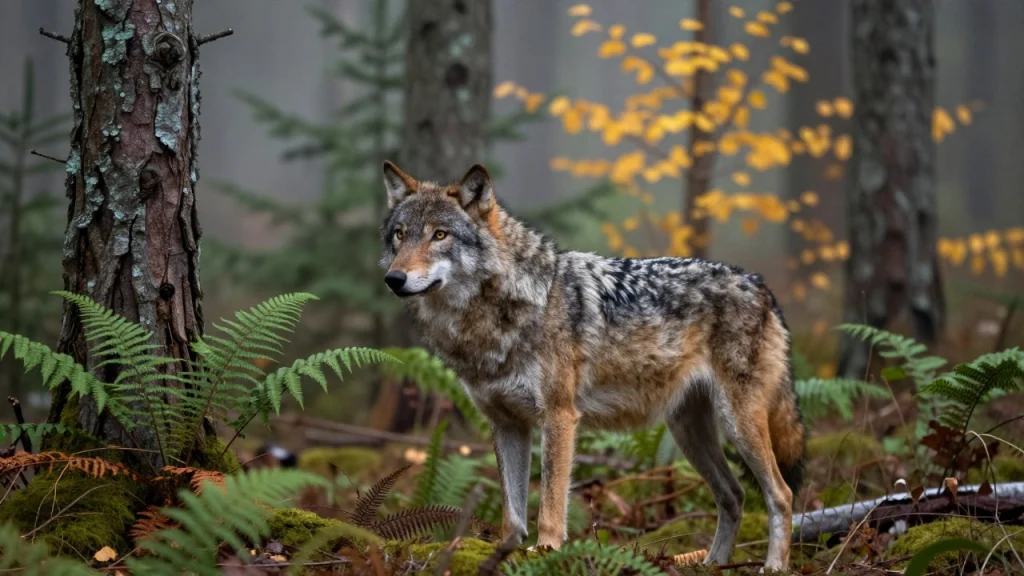
Healthy wild wolves naturally fear humans and rarely pose a direct threat to people. While wolves are powerful apex predators capable of inflicting serious harm, documented attacks on humans remain exceptionally rare across North America and Europe. In most wilderness encounters, wolves choose to avoid human presence entirely, relying on their keen senses of smell and hearing to stay hidden.
Understanding whether wolves are dangerous to humans requires examining wild wolf behavior, environmental factors, and specific conditions that lower their natural caution. Dangerous interactions almost exclusively occur when wolves become habituated to human food, infected with rabies, or provoked by domestic pets. For hikers and outdoor enthusiasts, knowing how wild wolves behave helps replace fear with informed respect.
How Wild Wolves Perceive and Treat Humans
In intact wilderness ecosystems, wild wolves view humans as unfamiliar and potential threats rather than prey. Centuries of hunting and human encroachment have reinforced an innate instinct within wolf packs to maintain a safe distance from human settlements and recreational trails.
When a human crosses paths with a wild wolf, the animal typically responds with cautious curiosity before retreating. Wolves rely heavily on scent and auditory cues to monitor their environment. If a wolf detects human scent on the wind, it almost always shifts direction to avoid direct contact long before a person becomes aware of its presence.
Natural Avoidance Behavior
Wild wolves actively minimize contact with human activity due to several ingrained survival traits:
- Innate fear of human presence: Wolves recognize human voices, scents, and movements as unfamiliar signals, prompting quick avoidance.
- Preference for natural prey: Pack hunting strategies focus on large wild ungulates such as moose, elk, deer and bison.
- Nocturnal activity: Wolves often hunt at night, when human foot traffic in wild spaces is minimal.
Because humans fall completely outside the natural prey spectrum of healthy wolves, unprovoked predatory behavior toward people is an extreme anomaly in wildlife management records.
Factors That Can Increase the Risk of Wolf Attacks

Although unprovoked attacks are rare, wild animals remain unpredictable under specific circumstances. Biologists and wildlife officials have identified key factors that can compromise a wolf’s natural caution around people.
Identifying these risk factors helps researchers develop management strategies and guides outdoor enthusiasts on minimizing potential conflicts when exploring wolf habitat.
Food Conditioning and Habituation
Habituation occurs when wild animals repeatedly encounter humans without experiencing negative consequences. Over time, wolves lose their natural fear of people, especially if human food or garbage is easily accessible.
- Intentional feeding: Feeding wild wolves drastically accelerates habituation and creates dangerous associations between humans and food rewards.
- Improper waste disposal: Unsecured trash, campfire food scraps, and unattended coolers near campsites attract curious wolves into human spaces.
- Near-settlement scavenging: Wolves living near suburban boundaries may scavenge carcass dumps or pet food left outdoors.
When a wolf loses its fear of humans through habituation, its behavior can escalate from distant observation to bold approaches, significantly increasing collision risks.
Disease and Rabies Infections
Disease plays a major role in historical and modern reports of aggressive wild animal behavior. Among viral infections, rabies is the primary disease that causes wild wolves to attack humans without provocation.
Rabies affects the central nervous system, causing infected animals to lose all natural bite inhibition, self-preservation instincts, and fear. A rabid wolf can display sudden, chaotic aggression toward any moving object, including people and vehicles. Fortunately, widespread vaccination efforts and wildlife monitoring keep rabies outbreaks in wolf populations relatively low today.
Presence of Domestic Dogs
Domestic dogs represent one of the most common triggers for wolf aggression in remote areas. Wolves are highly social, territorial animals that defend pack territories and often act aggressively toward intruding carnivores.
When hikers bring off-leash dogs into wolf territory, the dog may track or provoke a nearby wolf pack. If the dog flees back to its owner for safety, it can inadvertently draw aggressive wolves directly toward humans. Keeping domestic dogs leashed significantly reduces this risk.
Historical Perceptions vs. Modern Statistical Data
Public perception of wolf danger has long been shaped by folklore, historical accounts, and media portrayals. Historical records from past centuries in Europe and Eurasia document higher attack numbers than modern statistics show, largely due to different environmental conditions.
In historic Europe, widespread deforestation, severe prey depletion, uncontrolled rabies outbreaks, and child livestock herders created unique vulnerabilities. Modern wildlife management data presents a vastly different picture of overall safety.
Statistical Comparison of Wildlife Encounters
In North America and Europe, fatal encounters with wild wolves are extraordinarily rare compared to interactions with other large mammals. Statistical reviews of wildlife incidents over the past century demonstrate that:
- Domestic dogs bite 4.5-4.7 million Americans every year, far exceeding recorded wolf aggression.
Modern conservation data confirms that traveling through wolf territory carries a far lower statistical risk than standard outdoor hazards such as severe weather, navigation errors, or terrain injuries.
Safety Guidelines for Encounters in Wolf Territory

Knowing how to react during a rare encounter ensures safety for both humans and wildlife. If you spot a wild wolf while hiking, camping, or working outdoors, remaining calm and following established safety protocols prevents tension from escalating.
Most wolf sightings last only a few seconds as the animal assesses the situation before running off into dense cover. However, if a wolf approaches or stands its ground, proactive measures can deter the animal effectively.
What to Do During a Close Encounter
If a wild wolf does not immediately retreat and appears bold or curious, execute the following protective steps:
- Do not run: Running can trigger a predatory chase instinct inherent to all large carnivores.
- Make yourself appear large: Stand tall, raise your arms or jacket above your head, and maintain direct eye contact without crouching down.
- Make loud noises: Clap your hands, shout firmly, use a whistle, or bang gear together to startle the animal.
- Back away slowly: Move backward deliberately toward safe shelter or other people, keeping your face pointed toward the animal.
- Keep pets secured: Instantly call your dog to your side, place it on a short leash, or pick up small pets.
- Use deterrents if necessary: Carry bear spray or safety air horns when trekking through dense wolf territory, spraying toward the animal’s face if it continues approaching.
In the extremely rare event that a wolf makes physical contact, fight back aggressively using sticks, rocks, backpacks, or hands. Never curl into a passive fetal position during a wolf attack.
Coexisting Safely with Wild Wolves
As wolf populations recover across protected wilderness reserves and rural landscapes, peaceful coexistence relies on responsible human behavior. Respecting wild carnivores as vital components of healthy ecosystems helps preserve their natural wariness toward humans.
By securing campsites, disposing of garbage properly, keeping domestic pets leashed, and maintaining a respectful distance during wildlife sightings, people can explore wild habitats safely while allowing native wolf packs to thrive in their natural environment.