
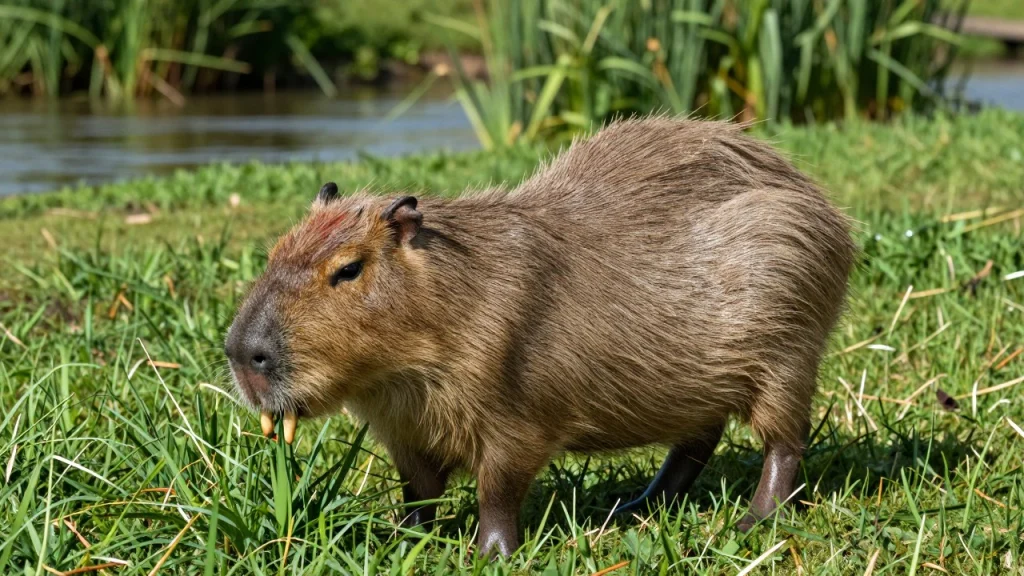
Capybaras eat plants, mainly grasses and aquatic plants. According to the San Diego Zoo Wildlife Alliance, an adult capybara can eat 6 to 8 pounds of grass per day, or 2.7 to 3.6 kilograms. Capybaras are selective grazers that favor aquatic and semiaquatic plants, the highest in protein.
Capybaras (Hydrochoerus hydrochaeris) live as strict plant eaters, and meadow grasses plus freshwater vegetation supply most of their bites. They feed along water edges for long stretches, clipping short growth with chisel-like front teeth. A full-grown animal may crop around 6 to 8 pounds of fresh grass each day, which explains why herds visibly shape the meadows they visit.
They do not eat at random. Field work describes choosy feeders that target protein-rich growth, so most yearly intake comes from only a handful of plant kinds. One dataset puts 80% of intake on only 5 grass species in the Poaceae family, while zoo records summarize seventy-five percent of intake on only three to six plant kinds. This narrow focus lets them process familiar fiber efficiently rather than sampling everything green.
Grasses anchor the wild menu
Grasses are the foundation, and freshwater plants come second. These rodents graze for a living, with leaves and stems forming the bulk of daily foraging. Short riverside swards matter especially, because their front teeth clip growth that cattle leave behind. That clipping habit keeps tender regrowth coming and supports repeated visits to the same banks.
Measured intake underlines how much bulk they need. Research cages and field estimates describe choosy feeders taking about 3 kg per day of fresh forage, largely grasses. Such volume makes sense for a large rodent that ferments fiber rather than hunting concentrated foods. It also explains why good grazing grounds can carry stable groups.
Protein quality guides their choices. In wetlands they favor aquatic and semi-aquatic growth with higher protein levels, not simply whatever is closest. Selectivity rises when plant variety increases, so animals become pickier in diverse meadows. In leaner places they accept the common species at hand, especially through winter when fewer kinds remain.
Water sets the table
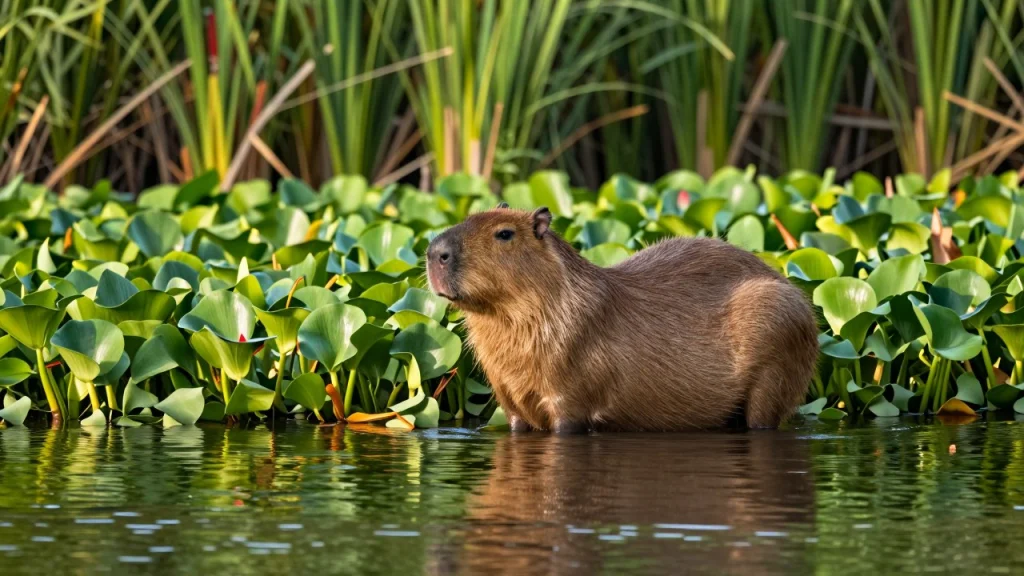
Habitat and food stay linked. These mammals occupy freshwater rivers, lakes, swamps and marshes, where they graze directly on aquatic vegetation. Their broader range covers Central and South America, with groups roaming swampy and grassy ground beside rivers, ponds, streams and lakes. Living near water gives both shelter and salad.
Aquatic foods vary widely by site and season. Estimates place water plants anywhere from .6% to 87% of intake, which reflects different wetlands rather than error. As rains progress, animals take more reeds and water hyacinths. This flexibility lets the same species thrive in grassy savannas, marsh edges and lowland forest clearings.
Dry months bring tougher fallback foods
When drought dries out tender growth, the menu shifts toward reeds plus energy-rich grains, melons and squashes. These drier-season items are harder or more scattered than fresh grass, so feeding takes more effort. Yet they keep animals fueled until rains restore soft pasture.
Bark and fruit play a smaller part. Fruit and woody bark appear at times, but they do not anchor daily feeding. They work as occasional supplements when grasses alone cannot meet needs or when animals encounter fallen fruit near cover.
Farm fields tempt hungry herds
Rich crops near wild habitat attract attention. Groups sometimes enter plantings to take:
- grains and corn
- melons and squashes
- bananas
- sweet potatoes
- manioc leaves
These raids show adaptability, not preference for human food. Crops pack energy and water, so a large grazing animal benefits quickly. The behavior also creates conflict with growers, because a herd can remove much leaf and fruit in one visit.
A gut built for tough fiber
Digestion resembles a rabbit more than a cow. The gut uses a simple stomach linked to a large intestinal pouch, called the caecum, where microbes ferment cellulose. Microbial action unlocks energy from cell walls that mammalian enzymes cannot break alone. That partnership is what makes a grass-heavy life possible.
Grasses resist digestion because silica and fiber wear teeth and pass quickly. Teeth therefore grow without stopping, and constant grazing on aquatic vegetation, grasses and other abundant plants keeps them trimmed. Long, sharp front teeth slice stems cleanly, while broad back teeth grind the mass. Side-to-side chewing, similar to a camel rather than vertical human chewing, shears fibrous stems effectively.
Food often gets a second pass. Animals bring swallowed material back up and chew it again while resting, which reduces particle size before fermentation. This extra milling exposes more surface to microbes. It is a practical answer to low-quality forage.
Morning droppings become a second meal
Fiber recovery goes further through droppings. Animals consume some of their own dung to regain helpful gut bacteria that assist the stomach in handling thick fiber. Morning material is especially valuable because it carries abundant protein from microbes that worked overnight on earlier meals. Reprocessing waste in this way lets them essentially digest the same grass twice.
Physiology supports this routine. Besides firm olive-colored pellets, they produce a pale, protein-rich paste that is eaten again for fuller nutrient uptake, a habit termed coprophagy. Another account notes that they devote part of each morning to reusing material from the prior day. Because the grasses they consume resist breakdown, double handling raises protein and vitamin yield.
Feeding rhythm follows water and safety
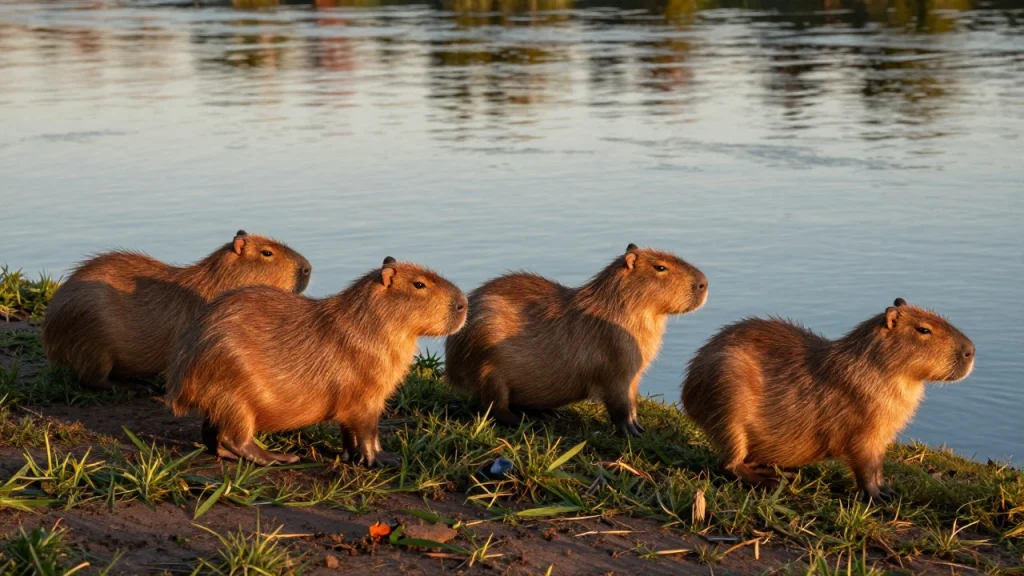
Timing shifts with season, cover and predators. Groups often favor dawn and dusk activity but adjust when danger or heat presses. Night feeding can increase where daytime risks rise. Staying near water lets them slip in quickly if threatened, then return to grazing.
Social life supports steady intake. Selective feeding works best when some animals watch while others clip grass. Herd movement tracks floods and droughts, so groups leave poor patches and gather where fresh growth persists. This mobility spreads grazing pressure across wetlands.
What managed menus teach us
Care under experts mirrors the wild pattern. One zoo offers low-starch and high-fiber biscuits plus mixed vegetables and greens with Bermuda grass hay. Fiber stays central, while produce adds variety and micronutrients. Such menus avoid sweet overload and protect teeth and gut microbes.
The lesson for the wild is clear. Selective grazing keeps protein intake high without wasting effort. Fiber fermentation turns abundant but tough plants into usable energy. Seasonal switching bridges wet abundance and dry shortage, from water hyacinths to melons. Together these tactics let a large rodent thrive on plants that many mammals cannot use.
Do capybaras eat meat?
National Geographic lists the capybara’s diet as herbivore. Herbivore is a word for animals that feed on plants.
Do capybaras eat their own poop?
Yes, capybaras eat their own droppings. Animals eat some of their own dung to win back gut bacteria that help the stomach deal with thick fiber.
National Geographic says this happens in the morning.
The San Diego Zoo Wildlife Alliance fact sheet also describes a colorless, protein rich paste that they eat again to get the most from its nutrients, a behavior it calls coprophagy. National Geographic notes that the droppings are protein rich because of the high number of microbes working on the previous day’s meals.
What do baby capybaras eat?
Baby capybaras begin eating grass very early. The Columbus Zoo and Aquarium says they start eating grass within about a week, and the University of Michigan Museum of Zoology says they can graze within a week of being born. Grass is not all they eat at that age.
Capybaras also nurse from their own mother and from other female relatives in the group. That nursing lasts for around three months before it stops.
Sources
- San Diego Zoo Wildlife Alliance: Capybara | San Diego Zoo Animals & Plants
- San Diego Zoo Wildlife Alliance Library: Diet & Feeding – Capybaras (Hydrochoerus spp.) Fact Sheet
- University of Michigan Museum of Zoology: Hydrochoerus hydrochaeris (capybara) | INFORMATION | Animal Diversity Web
- National Geographic: Capybara Facts | National Geographic
- U.S. Geological Survey: capybara (Hydrochoerus hydrochaeris) – Species Profile
- Columbus Zoo and Aquarium: Capybara | Columbus Zoo and Aquarium