
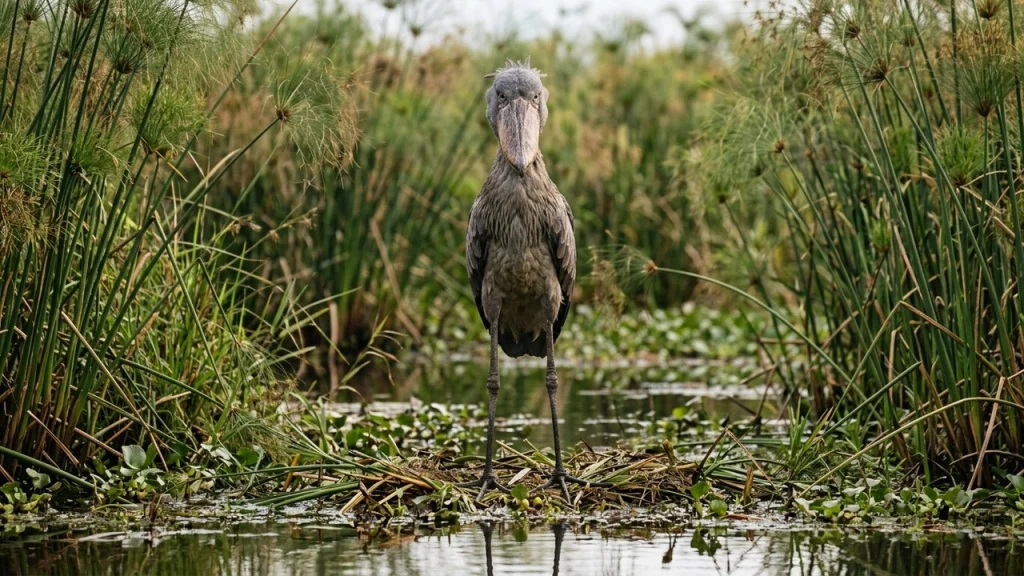
Short answer: yes, wild shoebills usually treat people with calm indifference rather than aggression.
Field notes describe the species as very tolerant near observers, and specialists report no documented injuries linked to wild encounters. A nesting bird often holds its perch and meets a visitor with a level stare instead of threat behavior. That composure explains why guided wetland tours prize sightings, yet it never means the bird invites touch or close handling.
Researchers have eased to about 6 feet from birds on nests during studies without provoking charges. Such tolerance reflects habituation to quiet observers, not tameness, and loud or sudden moves can still disrupt breeding. Responsible viewing keeps a respectful gap, moves slowly and leaves the surrounding vegetation untouched.
Why this giant stays calm around people
Calm temperament shapes most meetings. The steady nature lets naturalists watch fishing and preening from a prudent distance. The steadiness also helps scientists record behavior without chasing subjects through fragile marsh.
Steady stare instead of attack defines the classic encounter. Rather than spreading wings or jabbing, a bird often locks eyes and remains planted. Visitors sometimes read the fixed gaze as stern, but functionally it signals watchfulness while conserving energy for hunting and chick care.
Quiet habits lower tension. Adults remain mute for long periods, then produce rattling bill greetings at the nest area. Because noisy displays cluster around pair communication, a silent bird on a feeding pool is usually focused on fish, not on people nearby.
Statue stillness aids both hunting and viewing. Birds famously freeze like carvings while scanning water for long stretches. That discipline lets photographers frame shots, while the bird keeps full attention on movement below the surface.
A loner that values personal space
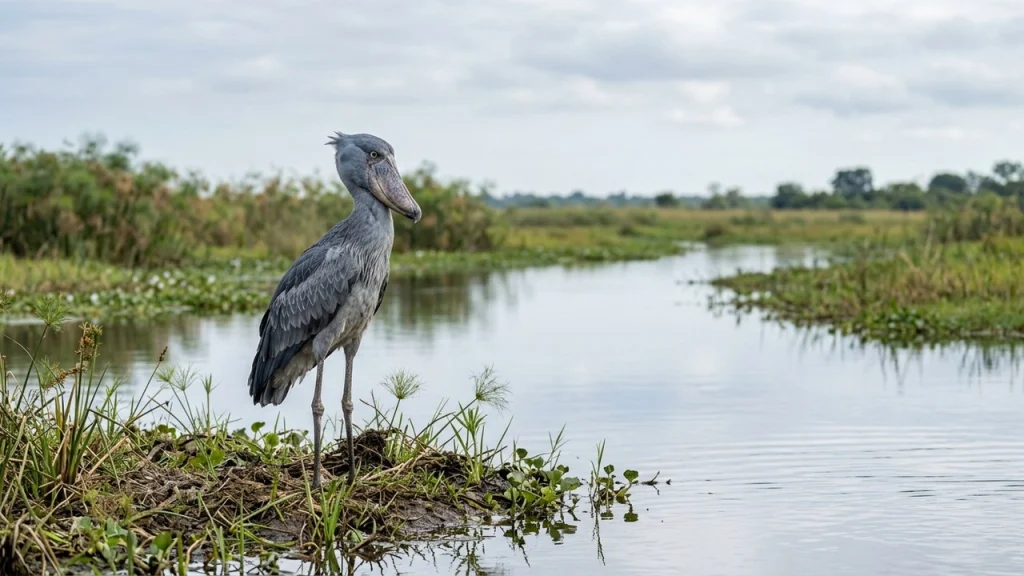
Solitary life rules daily routines. Wild individuals avoid flocks and feed alone across flooded ground. Even when food grows scarce and neighbours hunt in sight of each other, each bird keeps its own strike zone.
Breeding adults hold separate nesting ranges of around 3 square kilometers. During the nesting period pairs patrol and protect the platform against rivals and possible predators. This defence explains why a pair may appear relaxed toward distant people yet react strongly to another large wader landing close.
Mated partners often work far apart, each covering a different edge of the shared range. The spacing reduces competition for the same fish and lets both parents provision chicks efficiently. For visitors, the pattern means sightings usually involve single birds rather than groups.
How patience turns into power
Hunters wait in or beside shallow water until the moment feels right. After hours of stillness, the bird topples forward in a rapid lunge to seize fish. The manoeuvre, nicknamed a collapse, lasts only seconds yet lands with precision and force.
The hunting method involves lunging or falling forward onto prey. Low oxygen shallows raise success rates because fish must rise repeatedly for air. Broad feet and tall legs help the predator cross quaking plants without sinking, so it can reach prime channels.
The clog shaped bill, measuring nine inches in length and four inches in width, works as scoop, spear and shears. Its outline recalls a Dutch wooden shoe, while the hooked tip pierces and the sharp rims slice before swallowing. That toolkit matters because wetland fish slide easily and often hide among stems.
What fills the menu in the marsh
Core prey centres on lungfish, bichir, catfish, tilapia and watersnakes from muddy shallows and open pools. Such targets thrive where dense cover and warm water concentrate food. By focusing on abundant, hard to handle species that many rivals ignore, the shoebill secures a niche with less direct competition.
That favourite lungfish can reach six feet in length and weigh nearly eight pounds, so catches demand the full bill toolkit. A large catch feeds the hunter for longer and can provision a growing chick with fewer trips. Size also explains why the strike needs shock absorbing strength in neck and skull.
Opportunistic meals include frogs, monitor lizards plus turtles, young crocodiles, mollusks and carrion. This flexibility helps adults feed chicks through seasonal shifts in water levels. It also shows why the bird patrols varied microhabitats, from reed edges to floating mats, rather than defending one small pool:
- frogs and monitor lizards seized at marsh edges
- turtles and young crocodiles taken in shallow channels
- mollusks and carrion, including baby crocodiles snapped during still hunts
Giant body, gentle presence
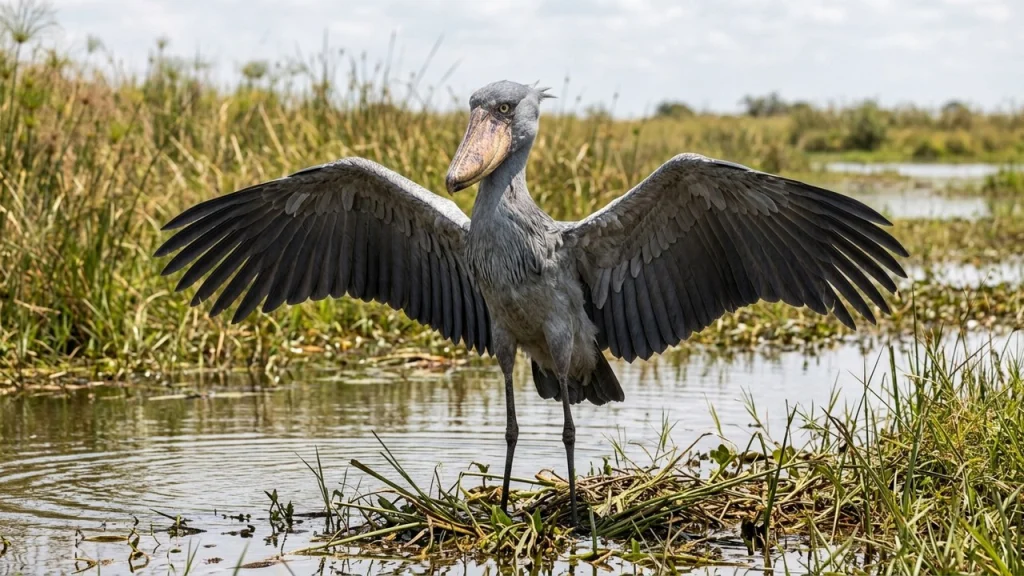
Adults show striking dimensions that can startle first time watchers:
- Adults stand 3.5 to 5 ft in height
- Adults weigh about 12 lbs
- Wings stretch about 7.7 ft across
Light weight for such height eases takeoff from soft ground and allows soaring on thermals. Long toes spread the load, so the bird can stalk across vegetation that would mire heavier waders. The tall profile also gives an excellent vantage over ripples where fish betray their position.
Wild longevity reaches 35 years, which supports slow life history and extended learning. Young mature at three to four years and form exclusive seasonal pair bonds. Long development lets juveniles master the difficult collapse technique before they must raise their own broods.
A clutch holds 1-3 eggs and hatching follows after about 30 days of incubation. Nests float on water plants and may stretch to eight feet wide, creating a stable island above fluctuating water. Both parents share duties, from turning eggs to shading chicks, which improves survival in exposed sites.
Wild home and fragile future
The species occupies freshwater swamps and broad marsh systems built on papyrus and reeds. Tall stems provide cover for ambush, while floating mats offer nest support over deep water. Loss or burning of that vegetation quickly removes both pantry and nursery.
Its range centres on flooded wetlands of the east, including Ethiopia, South Sudan and Zambia. Wide legs and large feet suit this flooded landscape, letting birds walk where boats struggle and many predators avoid wading. Because populations spread across remote wetlands, local water use and fishing pressure affect different groups in different ways.
Global assessments rank the species as Vulnerable, and current trends point toward a continuing decrease. Specialists link decline chiefly to habitat destruction as marshes convert to farms and grazing. Disturbance at feeding and nesting areas compounds the loss by lowering breeding output.
How to watch without causing harm
Keep distance even when a bird seems relaxed, and resist the urge to edge closer for photos. Stay in the boat or on marked paths, keep voices low and avoid blocking flight lines to and from nests. Support local guides and protected wetlands, since tourism income gives communities a stake in keeping marshes intact.
In short, the shoebill acts friendly in the sense of tolerance, not affection. It rarely threatens people, yet it remains a wild, solitary hunter that needs quiet water and room to breed. Admire the stare, enjoy the stillness and leave the marsh as you found it.