
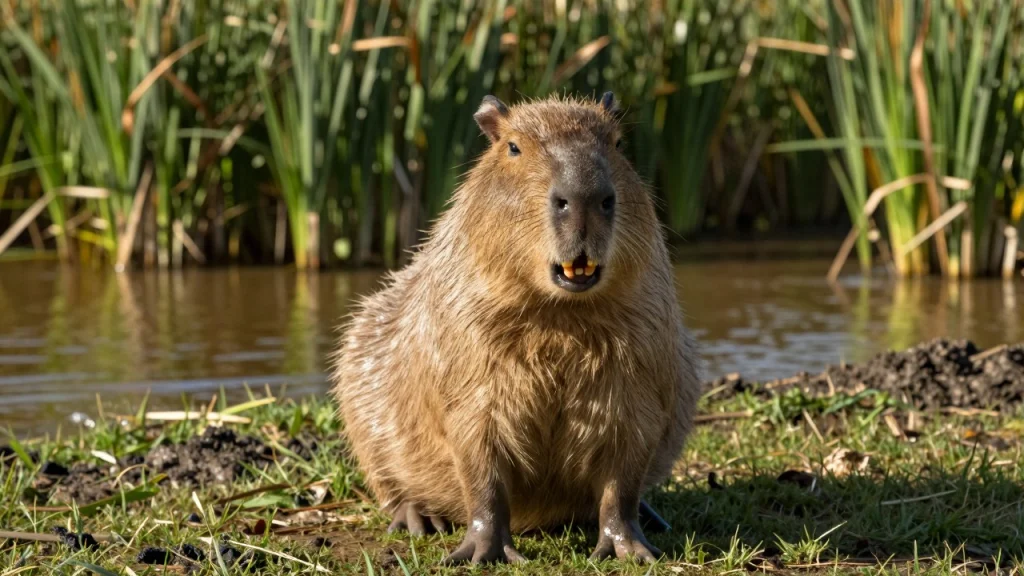
Yes, a capybara can bite, and the same sizable incisors it uses for daily grazing can break skin.
Those dental tools lengthen for life, and routine munching on wetland greenery files them down across seasons, which keeps the edges keen for feeding and for defensive nips when escape fails.
Most days they stay in tight troops of about 10, so bites remain unusual unless people press close or block water escape.
Risk climbs when they sense danger, because barking herds rush toward water and teeth become the backup when flight fails.
Why the mouth commands respect
As members of the rodent lineage, they show affinities with mice, squirrels and porcupines, which explains the standout front set and the need for constant wear for lifelong grazing.
The skull looks massive and squared, carrying incisors that recall a beaver, so the bite concentrates force through a short, sturdy jaw built for shearing stems for clipping and grinding.
Meadow grasses plus pond vegetation form the core of the menu across marshes, and that fibrous diet explains why strong teeth matter more than speed or claws for daily survival.
Field work describes them as choosy feeders that target water-linked plants rich in protein, so they seek the most nutritious patches rather than eating at random across the marsh.
A grown individual may crop 6 to 8 pounds, or 2.7 to around 3.6 kilograms, of fresh grass per day, which explains constant chewing and steady tooth wear that shapes daily rhythm and keeps edges serviceable.
They also recycle droppings in the morning, a repeat pass that extracts extra protein from microbes, which shows how thoroughly they exploit tough forage.
Adults rank as the heftiest rodents, with females a touch bigger, massing 35 to 66 kg, reaching 0.6 meters at the withers and stretching about 1.2 meters long in dense cover, so any bite carries adult body weight behind it.
The coat looks long, pale brown and rumpled, the muzzle recalls a beaver, no tail trails behind, and the toes link by slight webbing, all traits tuned for a damp grazing life.
Eyes, nostrils and bare ears sit near the crown, letting the face stay watchful during swims while the bulk stays below the surface, which supports quiet avoidance rather than confrontation.
How size changes the meaning of a nip
Size turns a nip from nuisance to hazard in shared wetlands, so respect scales with mass and calm distance matters most around large adults moving with young nearby and resting herd mates.
Zoologists label the greater form Hydrochoerus hydrochaeris, a formal tag that keeps records consistent across range countries and field studies.
Females usually produce one litter of four or five young per year, so groups often include vulnerable offspring that companions shield keenly through shared nursing and close guarding.
How social life sets the stage for nips

In the rainy months, gatherings can swell to 40, which raises contact rates and the chance of a warning nip when neighbors jostle.
Around shrinking pools in the rainless season, larger crowds gather near water, which again tightens spacing and tests tolerance among familiar and unfamiliar animals.
Signals that call for extra room
Give space when you notice these linked behaviors during shoreline walks and quiet observation with steady footing and binoculars:
- Males sort rank through pursuit, with bodily clashes uncommon, yet those rare contests show that teeth serve as social tools as well as feeding tools.
- Each family guards a home patch that covers dinner areas and muddy wallows, so intrusions feel threatening even when visitors mean no harm.
Where water shapes daily safety
They settle solely beside reliable water, favoring inundated meadows, bog fringes and riverside woods with steady forage, so encounters cluster at shorelines where people also walk.
Buoyancy almost matches the body, so paddling takes little effort in calm backwaters and flight into water often beats fighting on land, which is why cornering near banks is risky.
To dodge enemies, swimmers may linger below the surface for up to five minutes during hiding dives beneath floating plants, using immersion as a common defense that usually prevents any bite.
Foraging peaks near sunrise and sunset, shifting after dark when unease grows, which tells observers that daytime rest matters for calm behavior and safer viewing.
Midday heat sends them into pools, while movement concentrates in twilight hours, so heat stress shapes when they are approachable and when they need quiet.
What wild status means for encounters
Grown animals stay watchful because jaguars, pumas and caimans in water treat them as prey, so wariness of large shapes is hardwired and people can trigger the same reflex on narrow trails.
Global assessors class the species as least concern, noting broad range, abundant numbers and refuge in reserves across the region, which means frequent human contact in some wetlands.
Local declines still follow forest clearance, wetland loss and unlawful harvest, so stressed pockets may act more skittish where shelter has thinned.
Typical wild longevity hovers near 6 years, with exceptional animals touching 10 years in nature and 12 years under human care, so older herd members have learned to avoid trouble.
Space and quiet let the group keep grazing, resting and swimming on schedule through the day for people and herds alike, which keeps defensive bites rare and viewing calm and rewarding for careful watchers.
Sources
- San Diego Zoo Wildlife Alliance: Capybara | San Diego Zoo Animals & Plants
- Animal Diversity Web, University of Michigan Museum of Zoology: Hydrochoerus hydrochaeris (capybara) | INFORMATION | Animal Diversity Web
- U.S. Geological Survey: capybara (Hydrochoerus hydrochaeris) – Species Profile
- National Geographic: Capybara Facts