
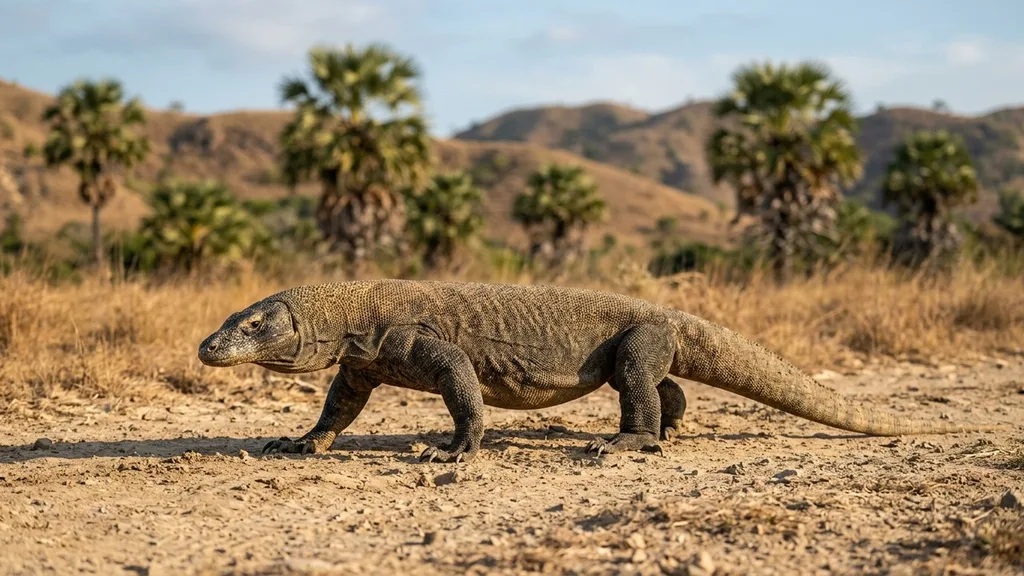
Despite occasional claims asking whether Komodo dragons are all female, wild populations contain both male and female individuals. Within natural ecosystems, the sharp difference in male and female lifespans could skew the adult sex ratio toward males, researchers say. The misconception that dragons consist entirely of females stems largely from public fascination with virgin birth, an extraordinary reproductive capability where solitary females produce viable offspring without mating. In the complete absence of suitors, females turn to asexual reproduction termed parthenogenesis because they possess both male and female sex chromosomes.
Unlike certain whiptail lizards where asexual reproduction creates all-female clonal lineages, virgin birth in this giant monitor produces the opposite outcome. Although asexual clutches enable lone females to seed populations, this reproductive route carries a fundamental flaw: virgin births yield only sons. Because unfertilized eggs can only develop into male hatchlings under this genetic architecture, an isolated female cannot establish an all-female colony on an uninhabited island. Standard sexual reproduction involving both male and female partners remains essential to preserve the species over generations.
The Biological Mechanics of Virgin Birth
Parthenogenetic reproduction stands out as an exceptional rarity among backboned animals. Vertebrates typically generate viable offspring only when male and female gametes combine. For decades, naturalists assumed that giant monitor lizards adhered exclusively to standard biparental reproduction. Captive breeding observations challenged that view when isolated females began producing healthy clutches without male participation.
Genetic profiling verified that two female dragons (Varanus komodoensis) isolated in distinct zoological parks produced parthenogenetic young, after which one individual reproduced sexually when given a male mate. This molecular evidence proved that virgin birth among monitor lizards was not an evolutionary accident, but a functional alternative when mates are absent.
Such flexible reproduction shows female dragons alternating between asexual and sexual strategies in response to mate presence, carrying critical lessons for captive husbandry programs. In zoological facilities where females live in solitary quarters before scheduled breeding loans, unintended parthenogenesis can quickly take place.
While asexual clutches allow isolated females to establish new generations, the process carries severe demographic liabilities:
- Parthenogenetic clutches yield exclusively male hatchlings, preventing the direct generation of daughter dragons.
- A persistent shortage of females within isolated colonies has produced documented evidence of inbreeding.
- Dwindling genetic variability diminishes the capacity of local colonies to resist ecological pressures.
Visual Indistinguishability and Sexing Challenges
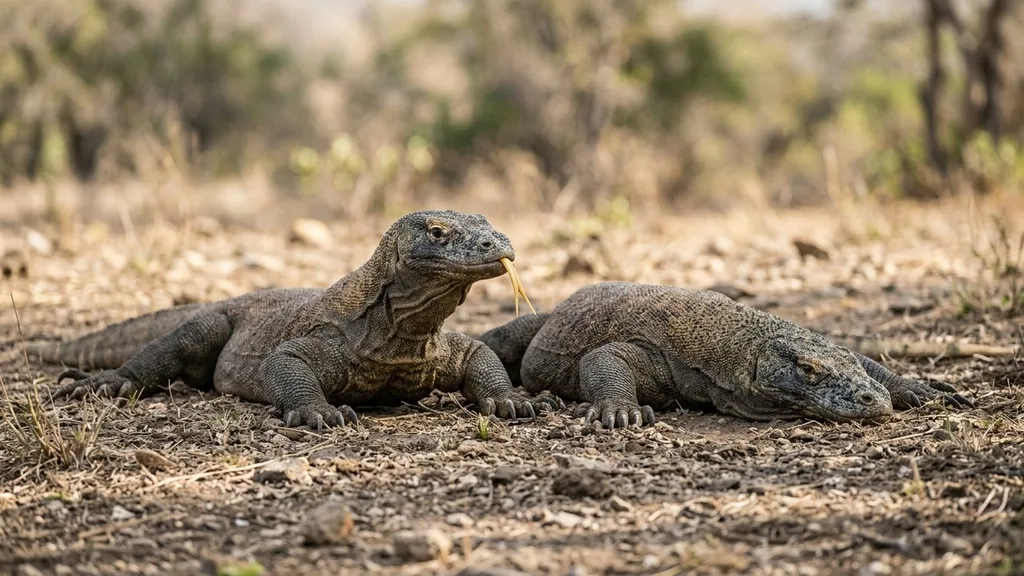
Discerning the sex of wild monitors remains difficult for biologists because male and female specimens possess no obvious outward physical differences. Because monitor lizards present uniform body shapes throughout life, field biologists cannot distinguish sexes through casual observation alone.
One subtle clue involves examining subtle variations in scale patterns positioned directly before the cloacal opening. However, evaluating these microscopic scale alignments remains exceedingly tricky, often requiring specialized magnification and careful physical restraint.
The difficulty of identifying sex long complicated management in zoological facilities:
- Prior to that development, institutions could not reliably sex dragons until individuals reached adulthood at 8–10 years old.
- Consequently, zoos frequently placed two individuals of the same sex together under the mistaken belief that they formed a reproductive pair.
- Unintended same-sex pairings resulted in delayed reproduction for endangered breeding programs.
To overcome these breeding setbacks, researchers at San Diego Zoo introduced a safe, practical technique during the mid-1990s for determining sex in young monitors. Employing small blood draws alongside ultrasound examinations, keepers identified dragon sex at 2 years old, establishing a breakthrough for captive sustainability efforts. Diagnostic abilities advanced even further in subsequent years: modern techniques allow veterinarians to verify gender by collecting blood drawn from developing eggs after only 260 days of incubation.
Sexual Size Dimorphism and Disparate Lifespans
While young dragons appear outwardly identical, mature adults develop pronounced sexual size dimorphism over their lifespans. Pronounced adult dimorphism is evident in body weight disparities, where mature males reach ∼70 kg while adult females average ∼25 kg. This sharp contrast in physical dimensions stems from fundamentally different physiological investments between the sexes, as adult females devote enormous metabolic resources toward building large egg clutches and excavating extensive nesting burrows.
The intense physiological toll of egg production and nest defense appears to shorten female life expectancy in the wild. Wild female lifespan appears notably truncated at ∼31 years, beyond which age females vanish entirely from survey captures. The absence of older females indicates that females face early mortality under harsh natural conditions.
In sharp contrast, male dragons continue growing throughout their adult lives without bearing the energetic burdens of oviposition. By comparison, male dragons reach modeled asymptotic physical size at approximately ∼62 years. This disparity in longevity between the sexes could skew wild populations toward older adult males, intensifying competition whenever a fertile female becomes receptive.
Courtship, Ritual Combat, and Oviposition
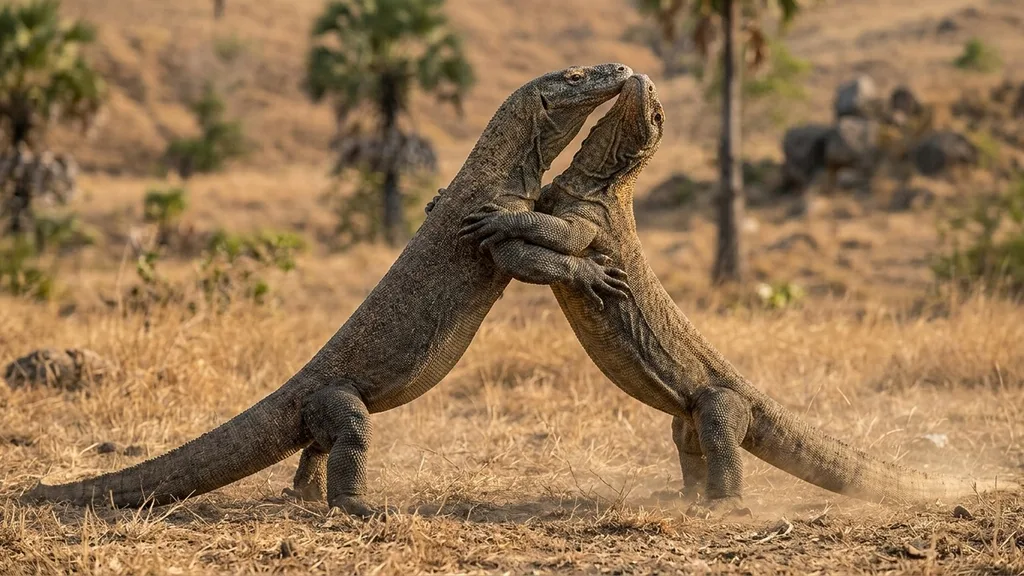
Natural sexual reproduction follows a tightly coordinated annual schedule on the islands. Once each breeding season, receptive females emit a scent signature in their droppings that roving suitors pursue. To claim receptive partners, top-ranking males face off in ritual combat across the landscape.
Balancing upright upon strong tails, competing suitors grapple with front limbs, straining to cast their rival onto the dirt. The victorious male claims breeding rights, while the defeated dragon flees or lies motionless in submission.
Following copulation, certain males stay beside the female for several days so competing suitors cannot copulate with her. This diligent mate-guarding behavior ensures that competing suitors cannot displace his sperm before fertilization occurs.
Approximately one month after mating, mothers deposit up to thirty eggs during September, timed to bypass brutal summer heat while maintaining potential opportunities for an additional mating cycle:
- Depositing eggs in September shields the clutch from the extreme heat of the dry season.
- Delays in egg laying allow unfertilized eggs a chance to develop if subsequent matings occur.
- The buried eggs incubate underground for roughly 8 months before hatchlings emerge.
Hatchling Vulnerabilities and Social Feeding Dynamics
When the incubation period ends, young hatchlings dig their way to the surface into an unforgiving world. Adult females guard the nest during incubation but leave the young to fend for themselves once they hatch.
Emerging babies register under 3.5 ounces (100 grams) in mass and reach an average span of 16 inches (40 centimeters). Other field records indicate that young measure around 37 centimeters upon emergence and suffer steep death rates, regularly becoming food for grown dragons alongside external carnivores. Consequently, young lizards climb adjacent tree trunks as promptly as possible, exploiting an arboreal existence that keeps them away from grounded adults.
Strict social hierarchies govern communal feeding events whenever an adult brings down prey:
- At communal feeding carcasses, the biggest males feast ahead of smaller males and adult females.
- Subordinate adult males and females feed only after dominant males finish their share.
- Arboreal young come down to forage only after adult monitors vacate the area.
Predatory Adaptations and Conservation Realities
Adult Komodo dragons secure their role as dominant apex predators through formidable physical and biochemical tools. Within the monitor’s jaws sit approximately 60 short, serrated teeth designed to slice through meat. Furthermore, specialized oral venom glands deliver secretions that suppress blood pressure, stimulate profuse hemorrhaging, block normal coagulation, and plunge victims into shock. Following a successful hunt, a hungry lizard can devour an astonishing 80 percent of its own mass during one meal.
Wild dragons occupy an extremely restricted range in the Indonesian archipelago. The government of Indonesia created Komodo National Park during 1980, creating a dedicated refuge for the endemic monitor and its natural surroundings. Despite formal habitat protections, local extinctions have occurred where ecological balances were disrupted. Padar has had no confirmed dragon sightings since the 1970s, an extirpation caused by intense poaching of deer that form the reptile’s primary food base.
Throughout the wider region, population pressures have escalated significantly over recent decades:
- Between 1981–2021, census figures plummeted from 5,000 down to 3,500 individuals, representing a 30% collapse across 40 years.
- This severe population contraction compelled the International Union for Conservation of Nature to elevate the species from vulnerable status to endangered.
- Ongoing conservation strategies must preserve genetic diversity across surviving island colonies.
Recognizing that Komodo dragons are not all female, but rather depend on balanced sexual reproduction to maintain genetic resilience, highlights why protecting both sexes is critical for their survival. While parthenogenesis provides a fascinating biological safeguard in emergencies, only thriving populations of both male and female dragons can ensure the long-term persistence of the world’s largest lizard.
Sources
- Smithsonian’s National Zoo and Conservation Biology Institute: Komodo Dragon
- San Diego Zoo Wildlife Alliance: Komodo Dragon
- National Geographic: Komodo dragon, facts and photos
- Animal Diversity Web: Varanus komodoensis (Komodo Dragon)
- Nature: Parthenogenesis in Komodo dragons
- PLOS ONE: Life-History and Spatial Determinants of Somatic Growth Dynamics in Komodo Dragon Populations