
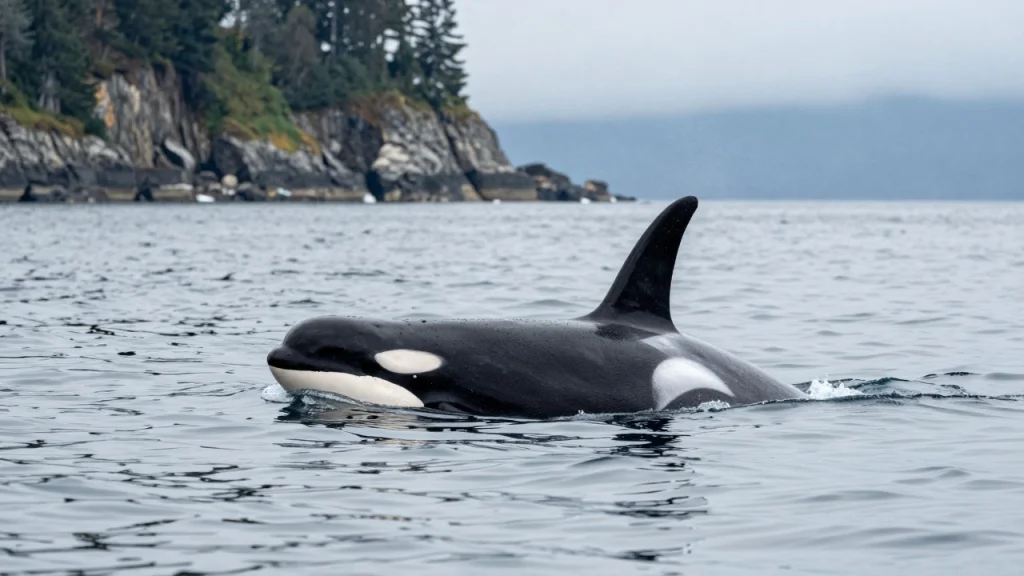
When news reports declare that only 73 individuals remain, marine enthusiasts and casual readers often wonder whether the entire global species is nearing total extinction. Rather than indicating a planetary total, the count of 73 animals belongs to an endangered regional group of Northwest killer whales known as the Southern Residents. This distinct community inhabits coastal channels along the Pacific coast of North America and faces grave survival hurdles, which explains why its small census frequently makes international headlines.
Across the globe, killer whales live throughout all oceans, concentrating most heavily in cold habitats such as Antarctica, the north Pacific, and the north Atlantic, while also maintaining a presence in warm tropical and subtropical waters. Because researchers lack comprehensive survey figures across every oceanic zone, the IUCN red list classifies the species as having insufficient data to formally evaluate its global status. The alarming figure of 73 is therefore accurate only for one unique, localized population rather than the global species as a whole.
Understanding the Endangered Southern Resident Community
The Southern Resident killer whale group represents an irreplaceable component of the coastal ecology in the Pacific Northwest. Within American waters, Southern Residents represent the sole killer whale population designated as endangered, roaming along an extensive coastal corridor from central California to southeast Alaska. Recognizing this vulnerability, NOAA Fisheries placed the group among 9 national “Species in the Spotlight” to direct emergency intervention toward marine wildlife facing critical extinction hazards.
Recognized under the scientific trinomial Orcinus orca ater, this community has generated intense research interest and public fascination since the late 1960s. The core habitat of these whales centers primarily along coastal inlets of Washington and southern British Columbia, with occasional journeys reaching California and southeast Alaska. Both Canada and the United States conferred endangered legal status upon the population starting in the early 2000s. United States wildlife authorities officially placed the Southern Resident group on the endangered species list under the ESA in 2005.
Biologists divide the Southern Resident community into three pods, which include J Pod alongside K and L pods. These tight-knit family groups stay together across generations, sharing specialized hunting knowledge and cultural behaviors that maternal elders pass down to younger whales. Their extreme social cohesion makes each individual loss deeply impactful to the entire clan.
Primary Threats Driving Population Decline
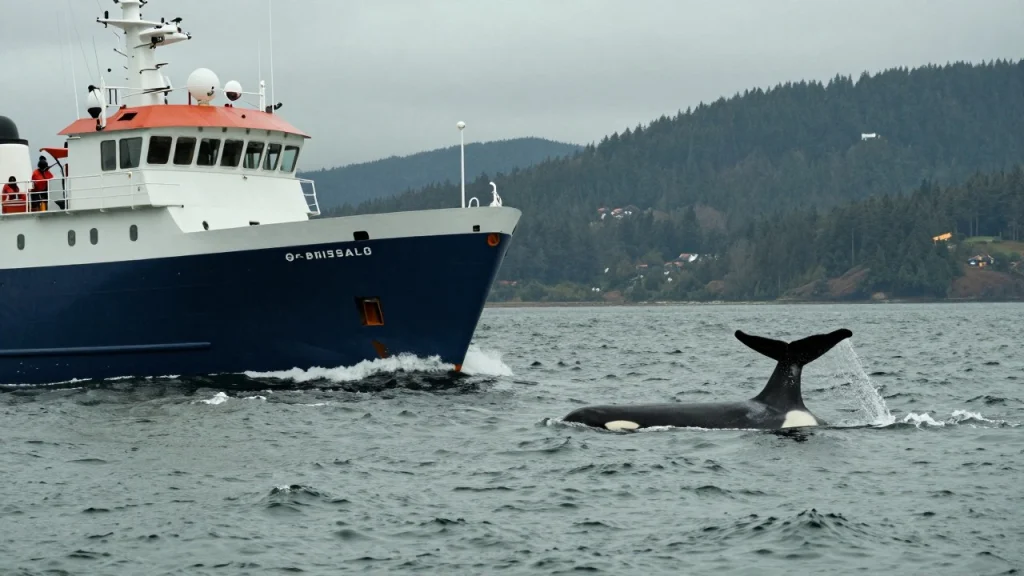
Decades of intensive field research have illuminated why this small population struggles to recover. Federal recovery documentation identified four primary risk factors threatening the whales: scarce salmon prey, vessel disturbance from underwater noise and physical crowding, harmful chemical contaminants, and biological risks stemming from small, isolated genetics. Each hazard compounds the others, creating an environment where reproduction and survival falter.
Unlike mammal-eating groups, resident killer whales primarily consume fish, showing an overwhelming dietary preference for Chinook salmon, even though several stocks of this prey are themselves endangered. Comprehensive field sampling confirms that Southern Residents feed mostly on salmon alongside an assortment of other fish species.
Underwater vessel noise further diminishes their ability to hunt successfully using sound. Maritime studies demonstrate that watercraft operating within an average distance of 400 yards interfere with deep foraging dives where whales pursue and capture their prey. When motorized vessels encroach closely, female whales frequently halt foraging behavior altogether, directly undermining their nutritional health. To protect vulnerable pods, maritime rules obligate civilian boaters to maintain at least 300 yards of space beside endangered killer whales and 400 yards along their direct travel lines ahead and behind.
Physical Characteristics and Anatomy of the Orca
Although widely labeled as whales in common parlance, orcas represent the largest extant dolphin species on Earth. The formal binomial label Orcinus orca derives roots from Orcus, the ancient mythological entity identified in Roman traditions as the god of the underworld and death. Even though modern taxonomists have repeatedly debated splitting Orcinus orca into multiple species, prevailing taxonomic consensus currently recognizes only a single species worldwide.
Beyond the primary North Pacific divisions, distinct populations of killer whales thrive in varied marine ecosystems across the globe. In the North Atlantic near coastal Norway, local killer whales specialize in capturing schooling fish, feeding mainly on herring. The animals display unmistakable coloration, featuring a jet-black dorsal surface and fins, contrasting white bellies, pale oval markings near the eyes, and a gray patch behind the dorsal fin known as a saddle.
Adult males attain an average length of 8 m, with the largest verified bull measuring a maximum length of 9.75 m. Mature females display an average length of 7 m, though exceptional individuals stretch to a maximum of 8.5 m in body length. Physical body mass reflects their oceanic dominance, with fully grown males exhibiting an average weight of 7200 kg. The prominent dorsal fin on adult males often reaches 1.8 m high, while females and young males have fins measuring only about 0.9 m high.
Reproduction, Social Pods, and Natural Longevity
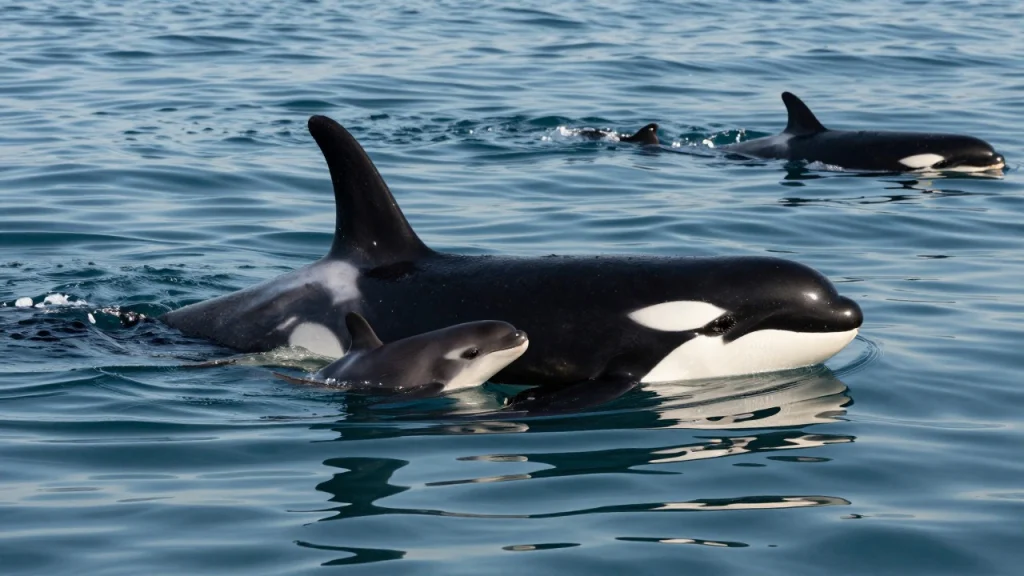
At birth, newborn calves measure between 2 and 2.4 m in length and weigh about 136 kg. Maternal development requires a long reproductive investment, with gestation lasting about 14 months in the wild and extending to 539 days in an exceptional captive observation. Young calves depend closely upon their mothers for nourishment. Early calf mortality remains severe, with investigations revealing that almost half of all calves die before their first birthday.
Wild females enjoy remarkable longevity, achieving an average lifespan of around 63 years and occasionally reaching maximum ages of 80 to 90 years. Social cohesion relies on intricate acoustics, as specific family pods share unique clicks, whistles, and noises that function like an exclusive vocal dialect. Despite their formidable hunting skills, historical and scientific records show there have never been any documented attacks by wild orcas on human beings.
Protecting the Future of Wild Killer Whales
Key recovery actions for preserving the Southern Residents focus on several interconnected conservation measures:
-
Restoring wild salmon habitats along major spawning rivers to stabilize primary prey resources.
-
Expanding protective buffer zones on the water to limit acoustic disturbance during deep-water feeding dives.
-
Enforcing stringent water quality measures to reduce persistent industrial contaminants in coastal waterways.
-
Monitoring individual health and genetic diversity across all three pods through ongoing photo censuses.
While the global population of killer whales spans cold and temperate seas worldwide, the plight of the 73 Southern Residents serves as a vital reminder of marine vulnerability. Protecting their remaining pods requires dedicated international cooperation, habitat restoration, and respect on the water to ensure these apex marine mammals endure for future generations.
Sources
- NOAA Fisheries: Killer Whale
- NOAA Fisheries: Boaters Pay Fines for Approaching Endangered Killer Whales, Putting Their Feeding at Risk
- National Park Service: Orca Whale
- Ecology and Evolution: Perspective: The Future of the Southern Resident Killer Whales Depends on Interactions With Other Killer Whale Populations
- Animal Diversity Web: Orcinus orca (killer whale)