
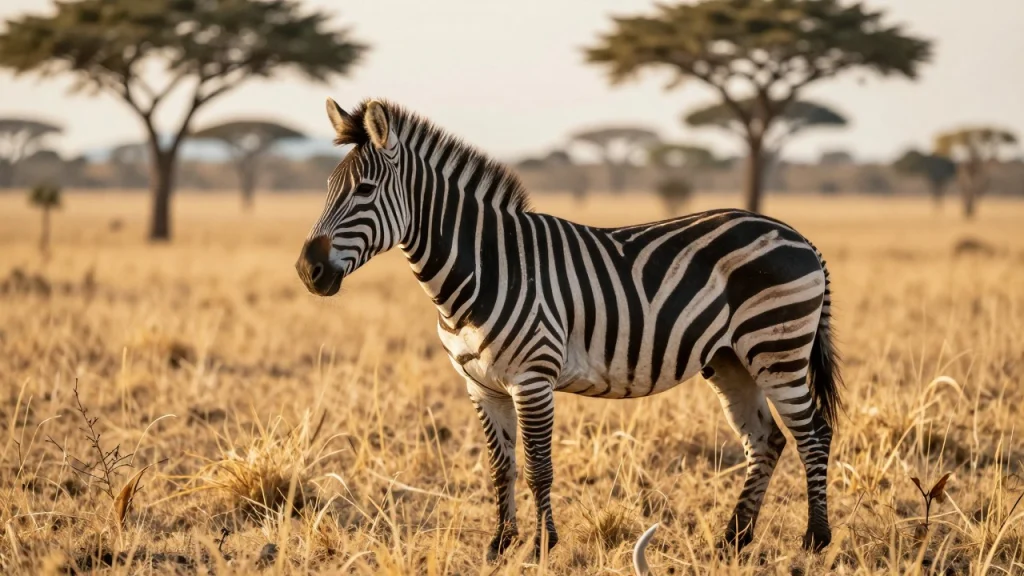
The iconic black-and-white coat of the zebra is one of the most recognizable patterns in the animal kingdom. For generations, people have debated whether these wild equines are white animals with black stripes or black animals with white stripes.
Scientific research in genetics and developmental biology provides a clear answer: zebras are black with white stripes. Although many zebras feature white underbellies, their genetic baseline and skin pigmentation reveal that black is their foundational color.
The Embryological Evidence
To understand a zebra’s true base color, scientists study embryology, the development of the animal before birth. All zebra embryos start out with completely dark skin.
During early embryonic development, specialized cells called melanocytes produce melanin, the pigment responsible for dark skin and hair fibers. As the embryo matures, genetic signals instruct melanocytes in specific regions to turn off.
Where melanin production continues normally, dark hair grows, forming the black stripes. Where melanin production is inhibited, white hair grows, forming the light stripes. Because dark pigmentation is the active state and white is the absence of pigment, biological consensus considers white to be the additive stripe color on a black base.
Melanocytes and Pigmentation Mechanics
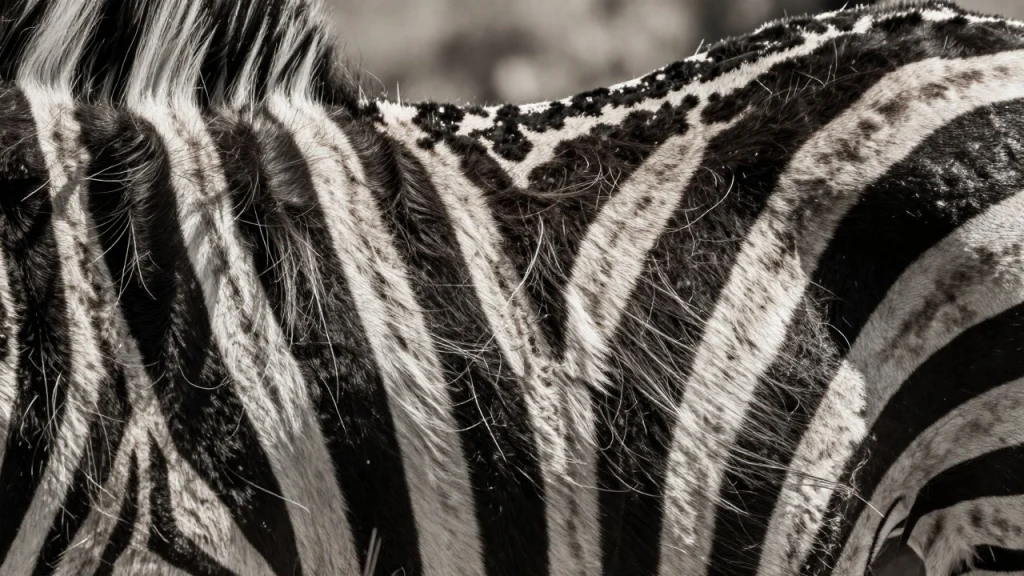
The color of mammalian fur depends entirely on melanin. In zebras, melanin produces the rich brown and black shades found across their bodies.
- Melanocytes active: Melanin transfers into the hair follicle, resulting in black fur.
- Melanocytes inhibited: Hair follicles receive no melanin, resulting in unpigmented white hair.
- Underlying skin: Shaving a zebra reveals uniformly dark brown or black skin underneath the entire coat.
Because the underlying skin is dark and unpigmented hair represents a genetic “suppression” of color, the underlying biological template of the zebra is black.
Evolutionary Purpose of Zebra Stripes
While genetics explains how stripes form, evolutionary biology explains why zebras developed this striking pattern. Researchers have identified several key functional advantages to having contrasting black-and-white stripes:
Pest Protection
One of the most strongly supported theories is that stripes deter biting insects, particularly tsetse flies and horseflies. Studies show that biting flies struggle to land on striped surfaces because the contrasting pattern disrupts their visual perception during flight.
Predator Confusion and Camouflage
When zebras move together in a herd, their overlapping patterns create an optical illusion known as motion dazzle. Human simulations suggest that stripes can hamper tracking during a chase, but evidence that they specifically confuse lions and hyenas remains limited.
Thermoregulation
The contrasting black and white bands absorb and reflect heat at different rates. However, experiments found no evidence that zebra-striped surfaces create a cooling effect.
Variations Across Zebra Species
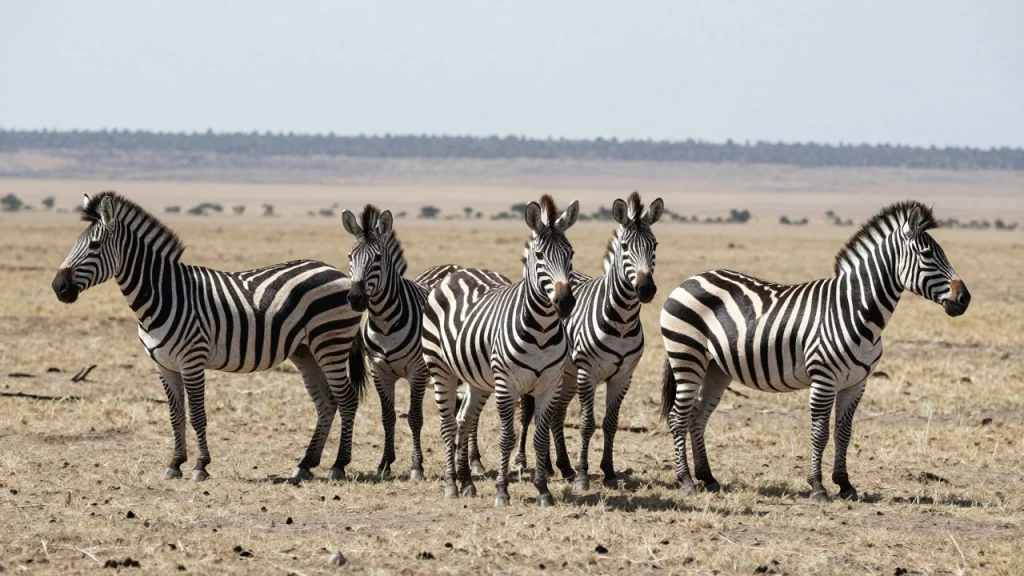
Zebras have black skin beneath their hair, and stripe density and pattern vary across the three species found in Africa:
- Plains Zebra: The most common species; some subspecies feature stripes that fade into brownish “shadow stripes” on their coats.
- Grevy’s Zebra: The largest species, characterized by narrow, closely spaced vertical stripes and a white belly with a thick dark spine line.
- Mountain Zebra: Features fine vertical stripes on the neck and torso with a distinctive “gridiron” pattern across the rump.
Despite these visual variations, the developmental mechanism remains identical across all species: unpigmented white stripes develop over a black background template.
Summary
The debate over the zebra’s coat comes down to genetics and developmental biology. Because zebra embryos begin with dark skin and dark hair production, with white regions created only when pigment production is halted, zebras are scientifically classified as black with white stripes. Zebras occupy African grasslands and other habitats, but research has not established that their stripes are essential for survival.
Sources
- San Diego Zoo Wildlife Alliance: Zebra
- University of Michigan Animal Diversity Web: Equus grevyi (Grevy’s zebra)
- Scientific Reports: Sunlit zebra stripes may confuse the thermal perception of blood vessels causing the visual unattractiveness of zebras to horseflies
- Biological Reviews: Zebra stripes: the questions raised by the answers
- Scientific Reports: Experimental evidence that stripes do not cool zebras