
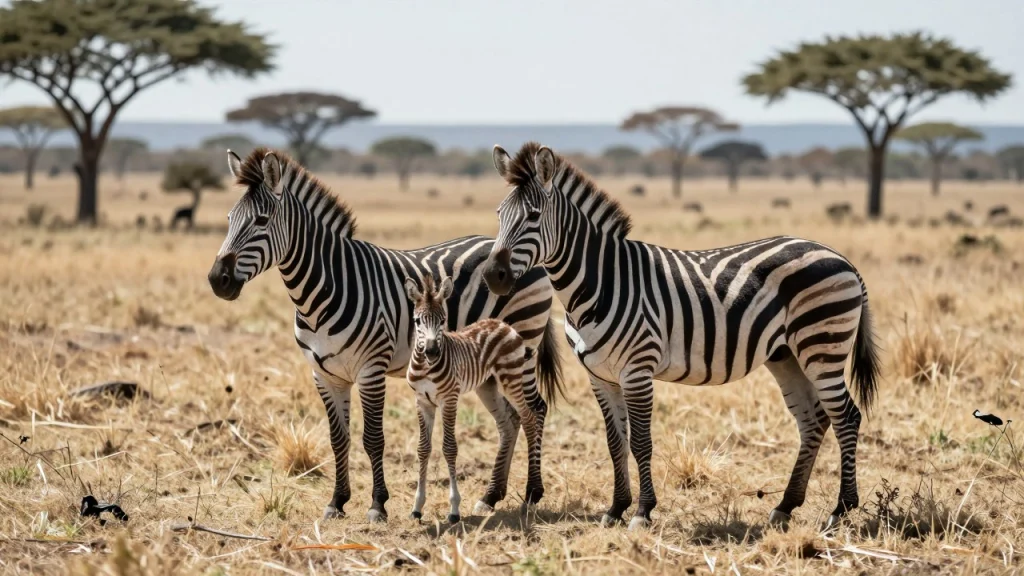
A female zebra typically carries her foal for 12 to 14 months, depending on the specific species. This extended gestation period ensures that the newborn foal is well-developed, strong, and ready to stand and run shortly after birth, a critical survival adaptation for life on the open African plains.
While the general timeframe spans roughly a year, variations occur between species. The plains zebra usually has a gestation of about 360 to 396 days, while the mountain zebra’s lasts approximately one year, averaging 362 to 365 days, whereas the endangered Grevy’s zebra has the longest gestation of any equid, ranging from about 358 to 438 days, with an average of 390 days.
Zebra Gestation Period by Species
Although all zebras belong to the equid family, differences in body size, habitat, and evolutionary adaptations influence their reproductive cycles.
- Plains Zebra (Equus quagga): The most common zebra species has a gestation period of approximately 360 to 390 days (12 to 13 months).
- Mountain Zebra (Equus zebra): Native to South Africa and Namibia, this species has an approximately one-year gestation, averaging 362 to 365 days.
- Grevy’s Zebra (Equus grevyi): The largest wild equid has the longest gestation of any equid, ranging from about 358 to 438 days, averaging 390 days.
The longer pregnancy in Grevy’s zebras is largely an adaptation to their arid environment, where mothers must endure harsher conditions and forage across wider areas while supporting a growing foal.
Why Do Zebras Have Such a Long Pregnancy?
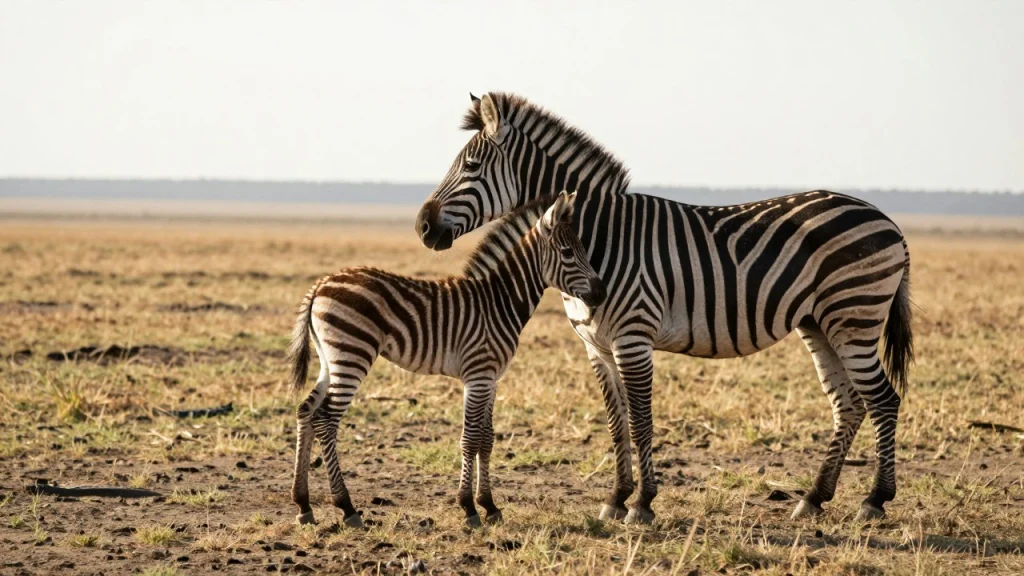
Like many large herbivores living alongside formidable predators, zebras rely on precocial development. This means foals are born at an advanced stage of physical maturity.
A lengthy gestation period allows the foal to develop robust muscular and nervous systems inside the womb. At birth, a zebra foal weighs 55 to 88 pounds (25 to 40 kilograms), and its legs are already almost as long as an adult zebra’s.
Within about 10 to 15 minutes of entering the world, a newborn foal can stand; it can walk within 20 minutes. Within an hour, it is capable of running alongside the herd, minimizing its vulnerability to predators like lions, hyenas, and leopards.
The Timing of Mating and Foal Births
Zebra breeding is closely tied to seasonal weather patterns and food availability:
- Mating Season: Breeding often peaks during the rainy season, when vegetation is abundant and nutritious. High-quality forage supports the female’s elevated energy needs during early lactation.
- Birthing Season: Because gestation takes roughly a full year, foals are typically born during the next rainy season. This timing guarantees that nursing mothers have access to green pastures to produce rich milk.
- Litter Size: Female zebras almost exclusively give birth to a single foal per pregnancy. For Burchell’s zebras, mares pregnant with twins generally miscarry about 8 months into pregnancy.
Maternal Care and Foal Survival
Grevy’s mothers drive other zebras away during the first two days, whereas mountain zebra dams prevent interaction with other herd members for the first few weeks. This isolation period allows the foal to imprint on its mother’s unique stripe pattern, scent, and vocalizations.
Once the bond is established, mother and foal rejoin the harem or larger herd. Lactation varies by species: Burchell’s zebra females may lactate up to 16 months, and Grevy’s zebra foals may take as long as three years to become completely weaned. Foals generally begin nibbling on grass within a few weeks of birth. The protection provided by the herd, combined with the foal’s early mobility, gives the young zebra the best possible chance of reaching adulthood.
Sources
- San Diego Zoo Wildlife Alliance: Zebra | San Diego Zoo Animals & Plants
- Smithsonian’s National Zoo: Grevy’s zebra
- Animal Diversity Web, University of Michigan: Equus burchellii (Burchell’s zebra) | INFORMATION | Animal Diversity Web
- Animal Diversity Web, University of Michigan: Equus zebra (mountain zebra) | INFORMATION | Animal Diversity Web
- Animal Diversity Web, University of Michigan: Equus grevyi (Grevy’s zebra) | INFORMATION | Animal Diversity Web