
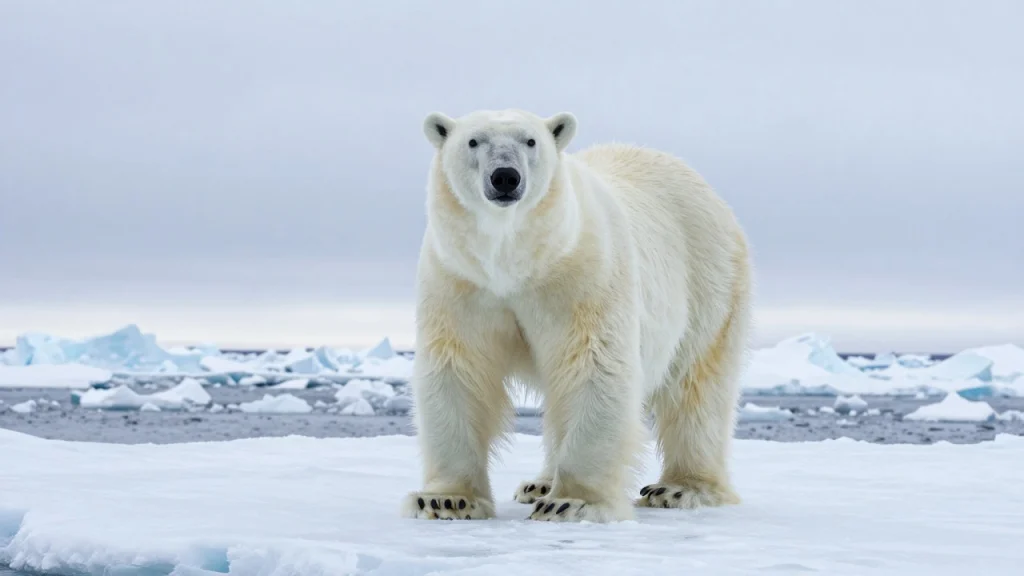
Polar bears do not naturally hunt human beings as a staple dietary component, yet they possess a purely carnivorous instinct that makes any encounter inherently perilous. Wildlife authorities view polar bears as dangerous animals capable of harming people.
Documented records demonstrate that actual encounters remain uncommon but carry exceptionally severe consequences. Historical compilations spanning 1870–2014 cataloged 73 attacks across 5 distinct Range States: Canada, Greenland, Norway, Russia, along with the United States, resulting in 20 human fatalities alongside 63 injuries. Most importantly, investigators concluded that the animals behaved as predators during the majority of aggressive strikes, with almost every incident involving ≤2 people. When polar bears attack, they usually act with predatory intent rather than deliver a defensive warning.
The underlying catalyst for these predatory attacks is nutritional deprivation. Wildlife data show that food-deprived mature males represented the primary demographic group creating hazards for human safety. In sharp contrast, aggressive actions by mature female bears happened infrequently and predominantly stemmed from mother bears guarding offspring.
Physical Power and Predatory Specialization
Understanding why polar bear attacks prove so deadly requires examining the enormous size and predatory capability of the species. Across the northern hemisphere, these impressive Arctic animals rank as the planet’s largest terrestrial meat-eaters. Their sheer physical mass enables them to overpower sizable mammals instantaneously during a violent encounter.
Physical dimorphism is pronounced among these predators, with males growing to extraordinary dimensions. Mature males commonly span 660 to 1,400 pounds (or 300 to 635 kilograms), though an exceptional specimen topped 1,700 pounds (or 770 kilograms) on record.
Their predatory success relies on sensory acuity and tactical stealth. As formidable and calculating apex predators, polar bears command the high northern ecosystem by eating marine mammals. Rather than hunting diverse terrestrial resources like omnivorous bears, they focus almost exclusively on ice-dwelling pinnipeds. Throughout the circumpolar north, ringed seals serve as the primary quarry for polar bears because they are widespread across northern waters.
To locate marine prey concealed beneath ice sheets, the species developed an extraordinary olfactory system:
- Their keen olfactory sense detects marine quarries across 20 miles (32 kilometers), locates subnivean dens, and pinpoints breathing vents from 1 mile (1.6 kilometers) distant.
Energetics and Ambush Tactics on Sea Ice
Surviving in extreme polar environments imposes enormous physiological costs on large carnivores. Bioenergetic assessments reveal that traveling across rough polar terrain demands twice as much caloric expenditure compared to movements by typical mammalian species. Moving through dense pack ice, deep snowdrifts, and freezing open water drains bodily reserves rapidly.
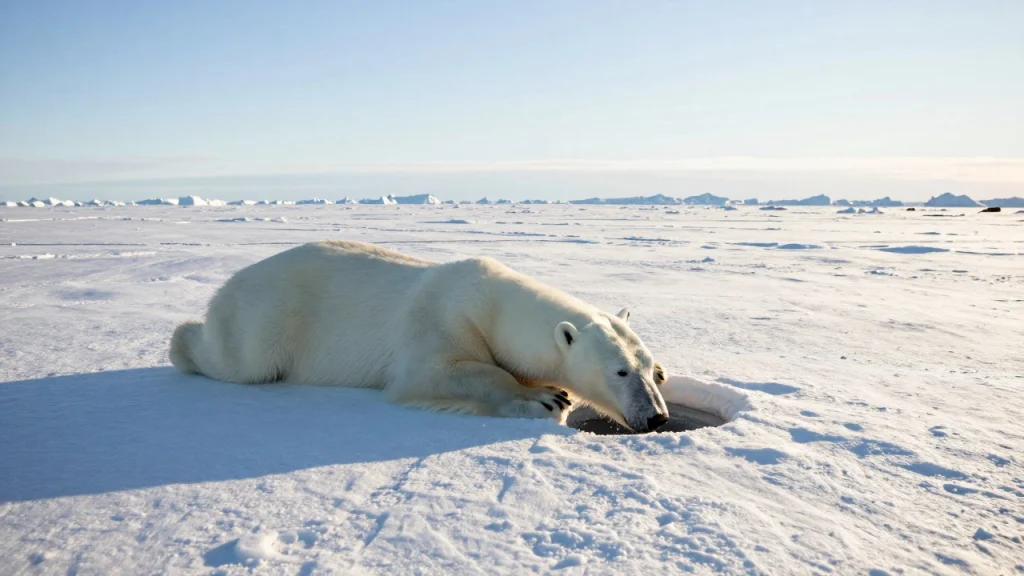
Because sustained running burns critical calories, bears adopt patient, low-energy foraging behaviors. High travel costs explain why bears lounge regularly and rely on stationary ambushes instead of pursuing fleeing game. The predator conserves thermal energy and metabolic reserves until a target enters striking distance.
Ambush techniques represent the cornerstone of their hunting strategy on the frozen ocean surface:
- Hunters often stay entirely still above icy openings for extensive periods, waiting for a surfacing target.
- Explosive physical power delivers an instant kill before the quarry can retreat into water.
Securing prey yields massive nutritional dividends that fuel long intervals of fasting. Field research indicates that successfully securing a single ringed seal delivers adequate fuel to sustain a bear across 11 days. Under routine wilderness conditions, an individual usually consumes a meal every four to five days.
Dietary Adaptation and Cranial Evolution
Unlike temperate bear species that process roots, nuts, and berries, polar bears evolved to digest concentrated marine fats. Dense blubber offers immense energetic value that helps predators maintain insulation and endure seasonal food shortages.
Their anatomical feeding process reflects this preference for lipid-rich tissues over fibrous matter. The Arctic hunter eats soft marine tissues and lipid deposits that slide down easily without heavy chewing. Once satiated on energy-dense blubber, bears frequently leave remaining lean meat behind for scavengers. Furthermore, unlike temperate ursids, polar bears never bury or cache leftover meat for future visits.
This specialized carnivorous diet triggered substantial evolutionary remodeling of their skull and dentition. Morphological research demonstrates that adapting to soft marine fats triggered rapid evolutionary changes, reducing molar surface area and flattening cranial proportions.
Consequently, modern polar bears exhibit significant dietary specialization:
- Extreme evolutionary focus on marine carnivory stripped the Arctic bear of the broad omnivorous capabilities found in ancestral brown bears.
- Polar bears hunt juvenile Pusa hispida and Erignatus barbatus scaling 68–250kg, which constitute modest quarries next to a adult polar bear weighing ∼500 kg.
- Although opportunistic bears consume walrus carcasses, caribou, beached whales, terrestrial grass, and seaweed, alternative foraging fails to deliver dependable, complete sustenance.
Because terrestrial vegetation and incidental carrion cannot meet their energetic requirements, polar bears remain biologically tethered to marine fats. When melting ice limits access to pinnipeds, bears experience rapid nutritional decline that alters their behavior toward riskier food sources.
Arctic Distribution and Climate Drivers of Human Conflict
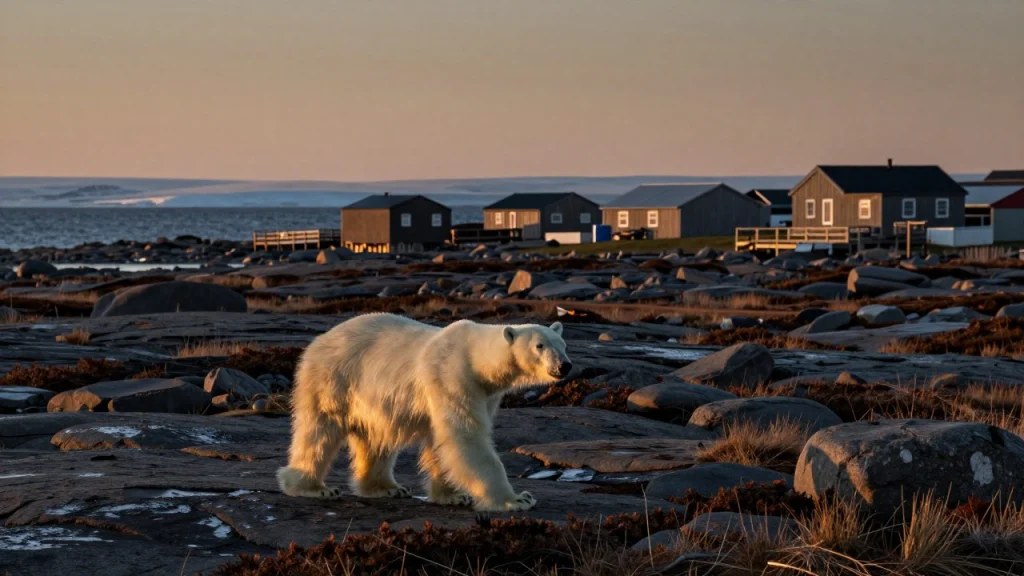
Confrontations between polar bears and humans have historically remained infrequent due to geographic isolation. Throughout the polar basin, sprawling home ranges and low human settlement density across northern latitudes make direct meetings unusual.
Modern wildlife monitoring delineates specific regional groups across Arctic boundaries. Biologists monitor 20 subpopulations distributed across five Arctic territories, encompassing Canada, Greenland (Denmark), Russia, Svalbard (Norway), and Alaska (USA). Within these vast jurisdictional sectors, global counts place total abundance at approximately 22,000-31,000 polar bears roaming northern regions.
Because ongoing environmental changes threaten their marine platform, international bodies closely track their status. The species is officially classified on the IUCN RedList as ‘vulnerable’, occupying an intermediate tier between ‘near threatened’ status and ‘endangered’ status.
Accelerated warming trends are fundamentally disrupting the seasonal ice cycles that govern polar bear feeding ecology:
- Rising temperatures cause sea ice to melt earlier in the spring and reform later in the autumn.
- Diminished marine ice platforms force bears to remain ashore for extended periods.
- Extended land stays draw hungry predators toward coastal communities, causing confrontations where humans and bears suffer injuries or fatal shootings in self-defense.
As nutritional stress spreads through local populations, public safety concerns increase in tandem. Biologists warn that heightened safety alarms are justified as habitat degradation drives starving animals onto shorelines near human settlements for lengthened intervals.
Human Safety and Conflict Mitigation in Polar Bear Habitat
Managing human safety and species conservation requires an objective understanding of bear behavior. Scientific consensus affirms that pinpointing what triggers violent encounters with Ursus maritimus remains fundamental to protecting human safety and polar bear conservation.
Effective coexistence hinges on comprehensive monitoring and proactive safety protocols:
- Thorough field investigations are essential to gather reliable incident details and share effective safety protocols with northern residents.
- Accurate educational resources empower people traveling through polar bear territory to implement precautions that prevent negative encounters.
While polar bears do not view humans as customary prey, extreme nutritional deprivation transforms them into aggressive, predatory carnivores. Maintaining distance, securing community attractants, and understanding Arctic ecology provide the best safeguards against fatal predatory encounters.