
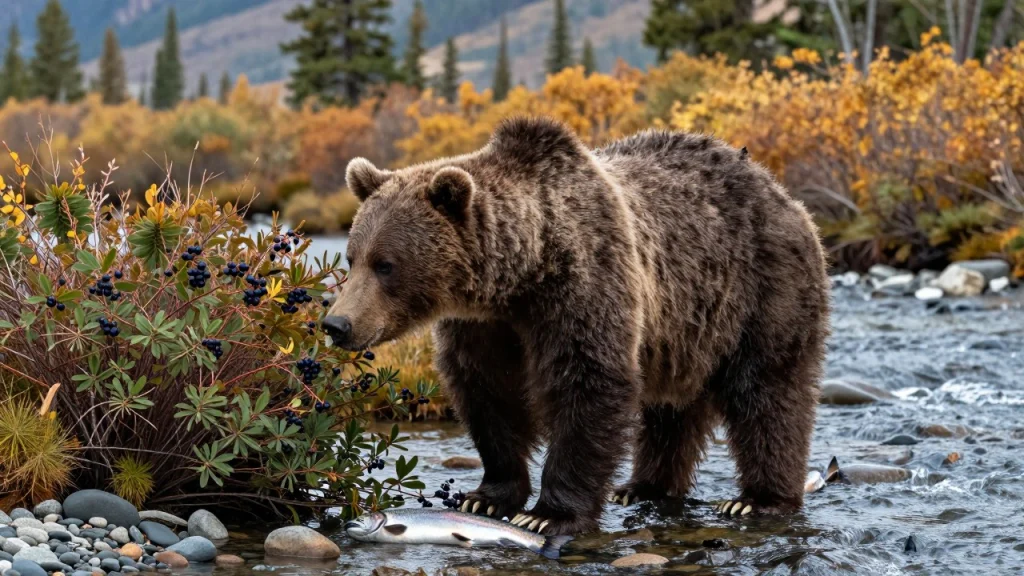
Bears are among the most versatile feeders in the animal kingdom. Most bear species are opportunistic omnivores, meaning their diet includes a wide variety of plants, fruits, insects, and animal meat. What a bear eats on any given day depends heavily on its species, geographic location, and the current season.
While the majority of bears consume both plant matter and meat, dietary habits range from almost strictly herbivorous to apex carnivore. For example, giant pandas rely almost entirely on bamboo, whereas polar bears feed almost exclusively on marine mammals. Understanding what bears eat provides valuable insight into how these large mammals survive and adapt across diverse wild habitats.
The General Diet of Wild Bears
In the wild, most bears consume more plant material than animal meat. Their digestive systems are flexible, allowing them to digest high-fiber vegetation as well as nutrient-dense proteins. This dietary flexibility is essential for surviving changing environmental conditions.
The primary components of a typical bear’s diet include:
- Plant matter: Grasses, roots, bulbs, shoots, tree bark, and leaves.
- Fruits and nuts: Wild berries, acorns, beech nuts, and pine nuts.
- Insects: Ants, termites, bees, wasps, and larvae extracted from decaying logs.
- Fish: Freshwater species such as salmon, trout, and suckers.
- Meat and carrion: Small rodents, young ungulates like deer or elk calves, and carcasses left by other predators.
Because bears need substantial energy to maintain their heavy bodies, they prioritize foods that offer high caloric returns for minimal effort.
How Diets Vary by Bear Species
The eight living species of bears occupy distinct ecological niches. Consequently, their diets vary significantly based on food availability within their natural habitats.
North American Black Bears
Black bears are omnivores that eat mostly plant material; in Great Smoky Mountains National Park about 85% of their diet comes from berries and nuts. In early spring, they feed on young grasses, herbs, and tree buds. As summer approaches, their focus shifts to wild berries, insects, and agricultural crops if accessible.
Fall brings a reliance on hard mast, such as acorns, walnuts, and hickory nuts. Meat makes up a small portion of their diet, consisting mainly of insects, newborn fawns, and animal carcasses.
Brown Bears and Grizzlies
Brown bears, including North American grizzly bears and Kodiak bears, have a broader diet than black bears. Their powerful claws allow them to dig efficiently for roots, tubers, ground squirrels, and marmots.
In coastal areas of Alaska and Canada, brown bears feast on seasonal salmon runs. This high-protein, high-fat fish diet allows coastal grizzlies to grow significantly larger than inland populations that rely primarily on roots, berries, and ungulate prey.
Polar Bears: The Carnivorous Exception
Unlike their omnivorous relatives, polar bears are apex carnivores adapted to the frozen Arctic environment. Vegetation is scarce in their sea-ice habitat, forcing them to rely almost entirely on marine mammals.
Their primary prey includes ringed seals and bearded seals. Polar bears target the energy-rich blubber of seals, which provides the dense calories required to maintain body heat in freezing temperatures. On rare occasions, they feed on walruses, beluga whales, or scavenged whale carcasses.
Giant Pandas: The Bamboo Specialists
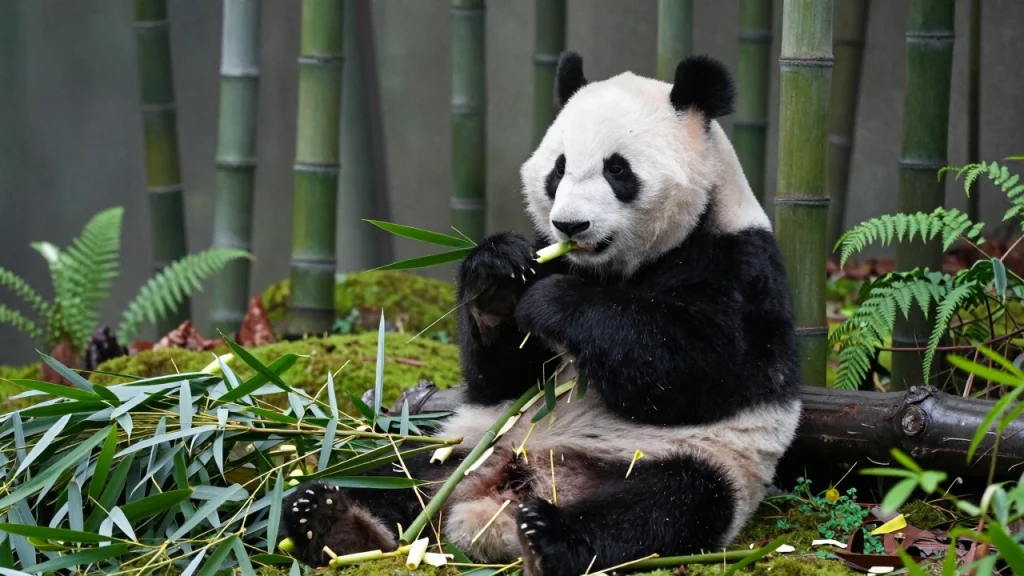
Giant pandas represent the opposite extreme of the bear family. Although classified as carnivores due to their digestive system structure, pandas have adapted to an almost exclusively herbivorous diet.
Over 99% of a giant panda’s diet consists of bamboo leaves, stems, and shoots. Because bamboo is low in nutrients, an adult panda can spend 10 to 16 hours a day eating, consuming about 26 to 33 pounds of bamboo leaves and stems, or 50 to 84 pounds of bamboo shoots, daily to fulfill its energy needs.
Other Global Bear Species
- Sloth Bears: Native to the Indian subcontinent, sloth bears specialize in myrmecophagy, eating primarily ants and termites extracted using their long claws and specialized lips.
- Sun Bears: Found in Southeast Asian tropical forests, sun bears use their exceptionally long tongues to extract honey, bees, termites, and tropical fruits.
- Spectacled Bears: The only bear native to South America relies heavily on bromeliads, palm nuts, orchid bulbs, and cactus fruit, supplementing occasionally with small mammals.
- Asiatic Black Bears: These forest dwellers consume nuts from beech-family (Fagaceae) trees, fruits, insects and other invertebrates, small vertebrates, and carrion.
Seasonal Changes in What Bears Eat
For bears living in temperate and cold regions, food availability fluctuates dramatically throughout the year. Bears adapt to these cycles by changing their feeding habits across three main seasonal phases.
Spring: Emergence and Foraging
When bears emerge from winter dens in early spring, their stomachs have shrunk, and natural food sources are limited. They seek out easily digestible foods high in moisture and protein.
During this period, bears feed primarily on emerging green grasses, clover, willow catkins, and winter-killed animal carcasses. Digging for roots and preying on newborn ungulates also provides crucial early nourishment.
Summer: Berries and Protein Sources
Summer brings an abundance of energy-dense foods. Berries such as blueberries, huckleberries, raspberries, and blackberries ripen, becoming a central staple for black and brown bears.
Insects become another critical nutrient source during mid-summer. Bears tear apart rotting logs and overturn rocks to consume thousands of ants and moth larvae daily, gaining essential fats and proteins.
Autumn: Hyperphagia and Winter Preparation
During late summer and autumn, bears enter a physiological state known as hyperphagia. Driven by biological signals to prepare for winter hibernation, bears eat almost continuously to gain weight.
In this phase, bears seek out foods rich in fats and carbohydrates, such as acorns, beechnuts, pine seeds, and spawning salmon. A large grizzly bear can gain several pounds of fat per day during peak hyperphagia, building the energy reserves needed to survive months without food or water.
The Ecological Impact of Bear Diets
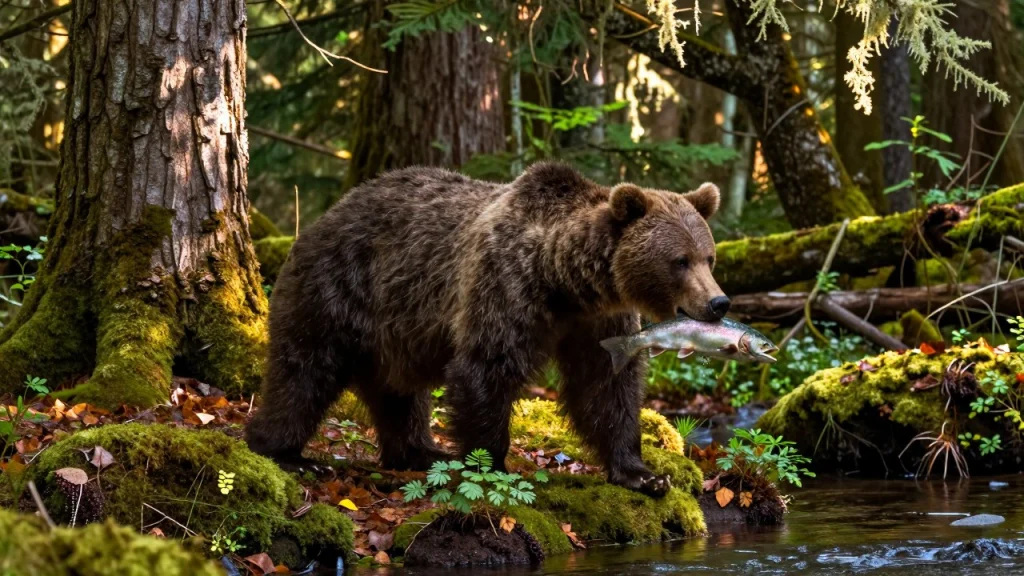
The dietary habits of wild bears play an essential role in maintaining healthy ecosystems. As large mammals moving across expansive territories, their feeding behaviors directly influence plant and animal communities.
- Seed Dispersal: By consuming vast quantities of berries and fruits, bears deposit seeds across large distances via their scat, encouraging plant regeneration.
- Nutrient Transport: Coastal bears carrying salmon into surrounding forests distribute marine-derived nitrogen and phosphorus into the soil, fertilizing forest vegetation.
- Soil Aeration: Digging for roots, tubers, and burrowing rodents churns the soil, promoting nutrient cycling and plant growth.
- Population Control: Preying on weak, young, or sick ungulates helps keep herbivore populations balanced and healthy.
Conclusion
What bears eat reflects their remarkable ability to adapt to diverse wild environments. From the plant-heavy diet of black bears to the specialized hunting of polar bears and the bamboo consumption of pandas, bears have developed tailored feeding strategies for survival. Their flexible omnivorous habits allow them to thrive across forests, mountains, tundras, and coastal ecosystems worldwide.