
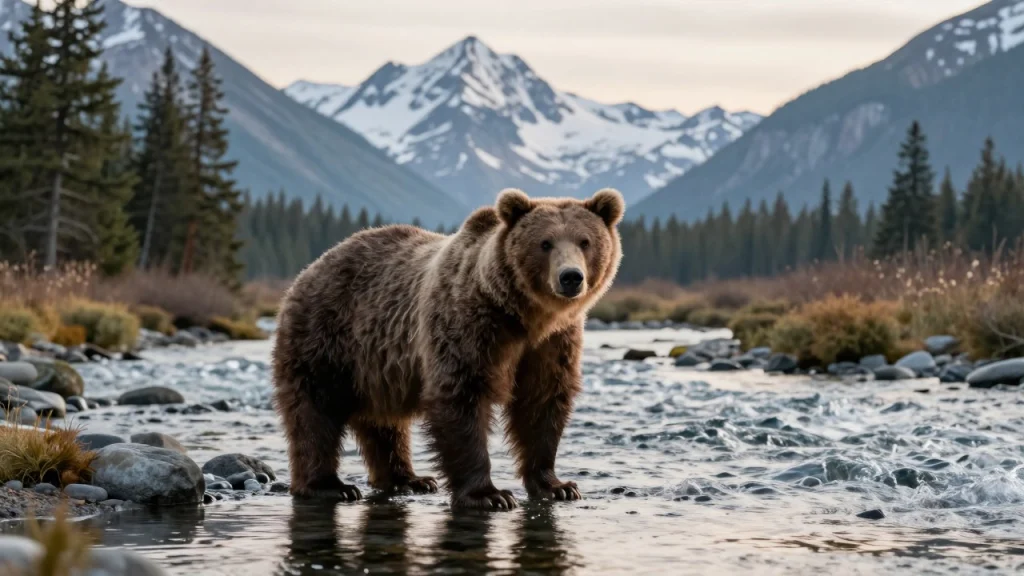
Bears are among the most adaptable large mammals on Earth, occupying a vast range of environments across the Northern Hemisphere and parts of the Southern Hemisphere. Wild bears live in habitats as diverse as frozen Arctic sea ice, dense temperate woodlands, tropical rainforests, high-altitude alpine meadows, and arid scrublands. Today, eight living bear species are native to North America, South America, Europe, and Asia.
Where a bear lives depends primarily on its species, food availability, and evolutionary adaptations. For instance, polar bears rely on Arctic sea ice to hunt marine mammals, while American black bears and brown bears thrive in forested landscapes and mountainous regions. Meanwhile, specialized species like the spectacled bear inhabit the tropical cloud forests of the Andes, making bears a truly global family of predators and omnivores.
Overview of global bear distribution
Bears inhabit four major continents: North America, South America, Europe, and Asia. They are entirely absent as native wild species from Australia, Antarctica, and modern-day Africa.
The modern distribution of bears reflects millions of years of evolutionary movement across land bridges and shifting climate zones. While some species roam territories spanning thousands of square miles, others are restricted to isolated mountain ranges or fragmented forest sanctuaries.
- North America: Home to the American black bear, brown bear (including grizzlies), and polar bear.
- South America: Home exclusively to the spectacled bear in the Andean mountain chain.
- Europe and Northern Asia: Dominated by widespread brown bear populations across boreal forests and mountains.
- East, South, and Southeast Asia: Host to the Asiatic black bear, giant panda, sloth bear, and sun bear.
Habitats of North American bear species
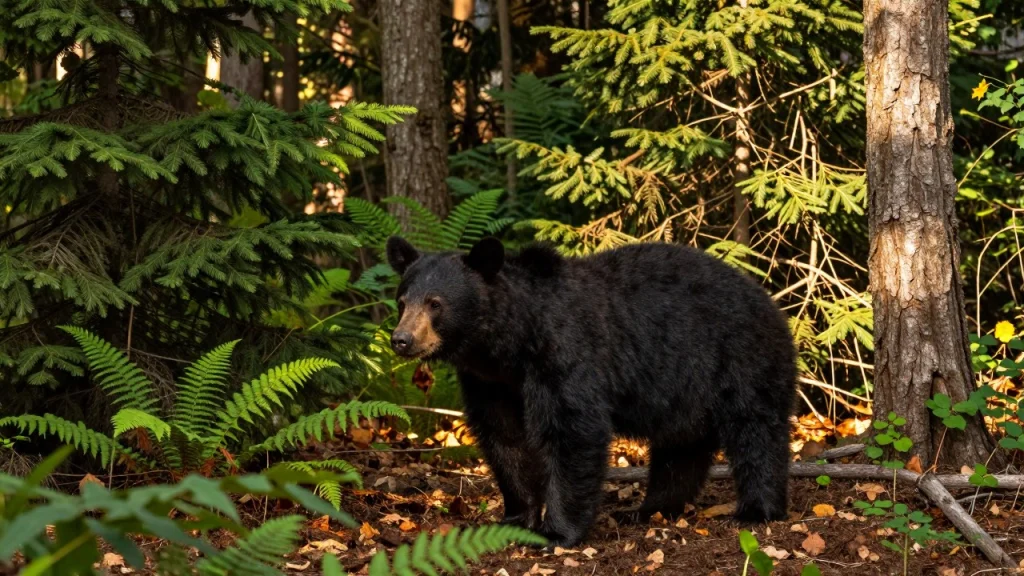
North America hosts three distinct bear species, each occupying separate environmental niches ranging from the sub-tropical south to the far northern Arctic.
American black bear (Ursus americanus)
The American black bear is the most common and widely distributed bear in North America. Its primary habitat consists of dense temperate forests, mixed hardwood woodlands, and brushy mountain slopes.
Black bears thrive where tree cover is abundant, as trees provide safety for young cubs, shelter from weather, and rich foraging grounds for nuts, berries, and insects. Their range extends from Alaska across Canada, down through much of the United States, and into central Mexico.
Brown bear (Ursus arctos)
Brown bears, which include both inland grizzly bears and coastal Kodiak bears, inhabit open tundra, river valleys, coastal estuaries, and alpine forests.
In North America, brown bears are predominantly found in Alaska, western Canada, and select regions of the northwestern United States, such as Wyoming, Montana, and Idaho. They favor expansive wilderness areas with access to spawning salmon streams and nutrient-rich root fields.
Polar bear (Ursus maritimus)
Polar bears are specialized marine mammals that live almost exclusively on the frozen sea ice of the Arctic Ocean. Their range spans the ice-covered waters of Canada, Alaska, Greenland, Norway, and Russia.
Because polar bears rely on sea ice to stalk seals (their primary prey), their spatial movement follows the seasonal freezing and thawing of Arctic pack ice. When summer ice melts, polar bears may temporarily move onto rocky Arctic coastal shorelines.
Habitats of Asian and South American bear species
Central, Southern, and Eastern Asia host the highest diversity of bear species on the planet, while South America shelters a single, unique mountain-dwelling bear.
Asiatic black bear (Ursus thibetanus)
Also known as the moon bear, the Asiatic black bear lives in deciduous and humid tropical forests across Asia. Its range includes Afghanistan, the Himalayas, Southeast Asia, China, Siberia, Thailand and Japan.
These bears prefer mountainous forest zones, often spending spring and summer at high elevations and descending into lower river valleys during the colder winter months.
Sun bear (Helarctos malayanus)
The sun bear is the smallest bear species and is natively adapted to the dense tropical rainforests of Southeast Asia. They are found from southern China to eastern India and as far south as Indonesia.
Sun bears are highly arboreal creatures that spend significant time high in the rainforest canopy, utilizing tropical trees for nesting, sleeping, and searching for wild honey and insects.
Sloth bear (Melursus ursinus)
Sloth bears inhabit the dry tropical forests, grasslands, and scrublands of South Asia, predominantly across India, Nepal, and Sri Lanka.
They prefer low-elevation forested regions with rocky outcrops, which provide denning sites and abundant termite mounds, their primary source of nutrition.
Giant panda (Ailuropoda melanoleuca)
The giant panda has one of the most restricted geographic ranges of any bear. Pandas live exclusively in the bamboo forest ecosystems of southwestern China, particularly in the Sichuan, Shaanxi, and Gansu provinces.
These high-altitude mountain forests feature dense bamboo understories that supply the pandas with the vast amounts of foliage required to sustain their daily diet.
Spectacled bear (Tremarctos ornatus)
The spectacled bear, or Andean bear, is the only native bear species in South America. It lives in the Andes and outlying mountain ranges, from western Venezuela south to Bolivia.
Spectacled bears occupy a diverse mix of habitats within the Andes, including humid cloud forests, high-altitude grasslands known as páramo, and dry lowland scrub forests.
Key habitat features bears need to survive
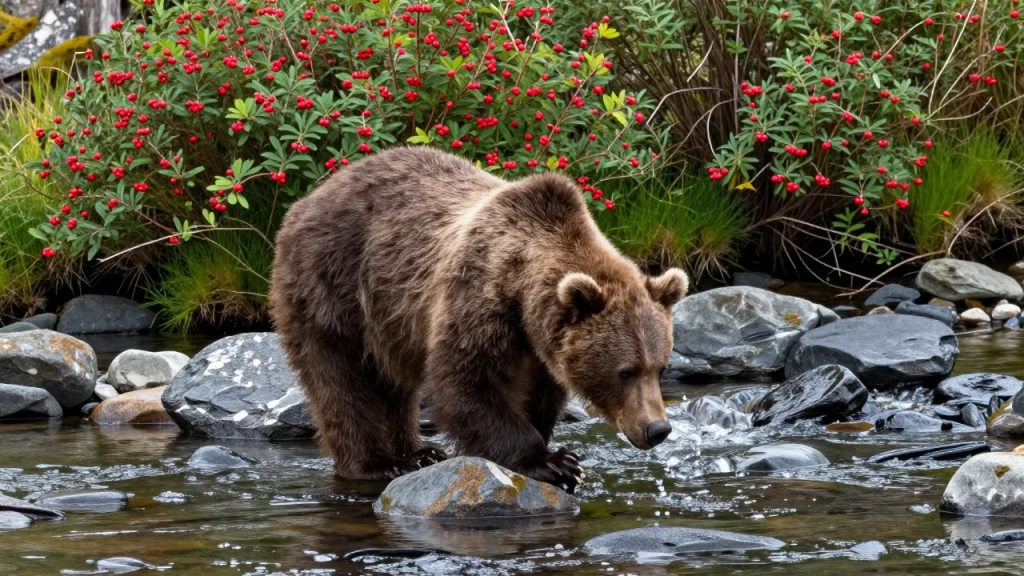
Despite differences in climate and terrain, all wild bear species require specific ecological conditions to sustain healthy populations over time.
- Abundant food sources: Bears rely on habitats that offer seasonal gluts of food, such as berry patches, nut-bearing hardwoods, salmon rivers, or insect colonies.
- Shelter for denning: Species in colder climates require secure natural caves, hollow trees, or earthen burrows to hibernate during winter months.
- Large territorial ranges: Because bears are large mammals with high energy requirements, they need vast expanses of connected wilderness to forage without constant competition.
- Access to water: Freshwater rivers, lakes, and wetlands provide critical drinking water, cooling areas, and foraging sites for aquatic plants and fish.
How habitat loss affects bear populations
Human expansion poses the greatest threat to bear habitats worldwide. Deforestation, agricultural development, and road construction divide continuous wilderness into isolated fragments, making it difficult for bears to find mates and food.
Climate change also dramatically alters bear ecosystems. Rising global temperatures reduce Arctic sea ice, directly restricting the hunting grounds of polar bears. In mountain regions, shifting climate zones alter the distribution of native fruit, nut, and bamboo species.
Conservation programs focus on establishing protected wildlife corridors and national parks to connect fragmented habitats, ensuring wild bears have room to roam safely.
Conclusion
Bears live in a wide diversity of global environments, ranging from northern Arctic ice packs and temperate forests to tropical Asian jungles and South American cloud forests. Each of the eight bear species has adapted to rely on the unique shelter, climate, and food sources provided by its specific habitat. Protecting these vast, wild ecosystems remains essential for ensuring the long-term survival of bears across the world.