
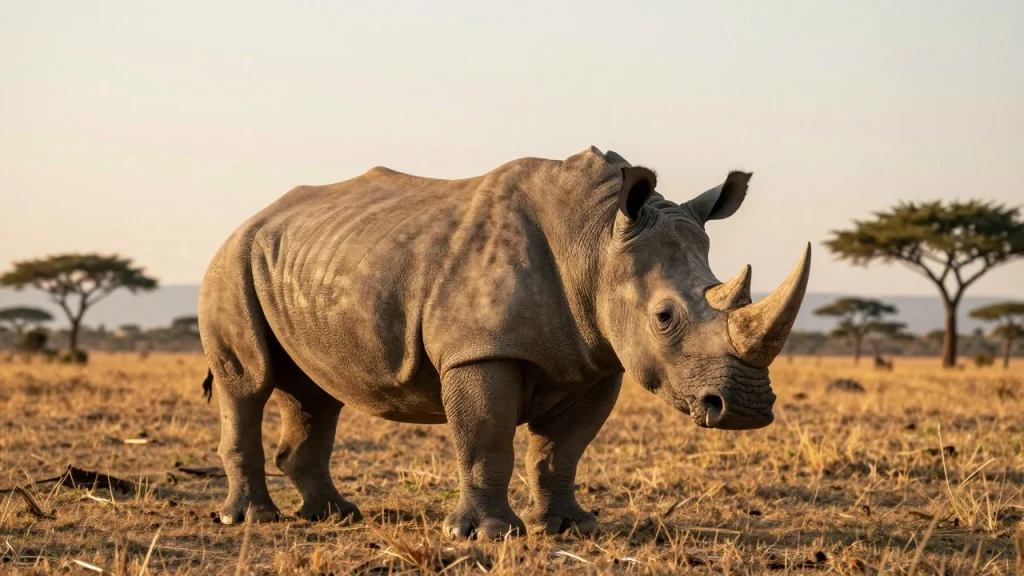
A rhinoceros gestation period generally lasts 15 to 16 months. The largest white rhino has a 16-month gestation, while the smallest Sumatran rhino has a 15- to 16-month gestation.
Because female rhinos typically give birth to a single calf at a time, this extended pregnancy cycle plays a critical role in how rhino populations grow, recover, and adapt in the wild.
Gestation length by rhino species
While all rhino species share a lengthy pregnancy, the exact number of months varies slightly across the five living species of rhinoceros:
- White rhinoceros: about 16 months
- Black rhinoceros: 15 to 16 months (roughly 450 to 480 days)
- Indian rhinoceros: 425 to 496 days of gestation (about 14 to 16.3 months)
- Javan rhinoceros: 16 months (approximately 480 days)
- Sumatran rhinoceros: 15 to 16 months in captivity; reproduction has not been observed in the wild.
The white rhino, one of the largest rhinoceros species, has a gestation period at the top of the typical range, around 16 months.
Why is rhino gestation so long?
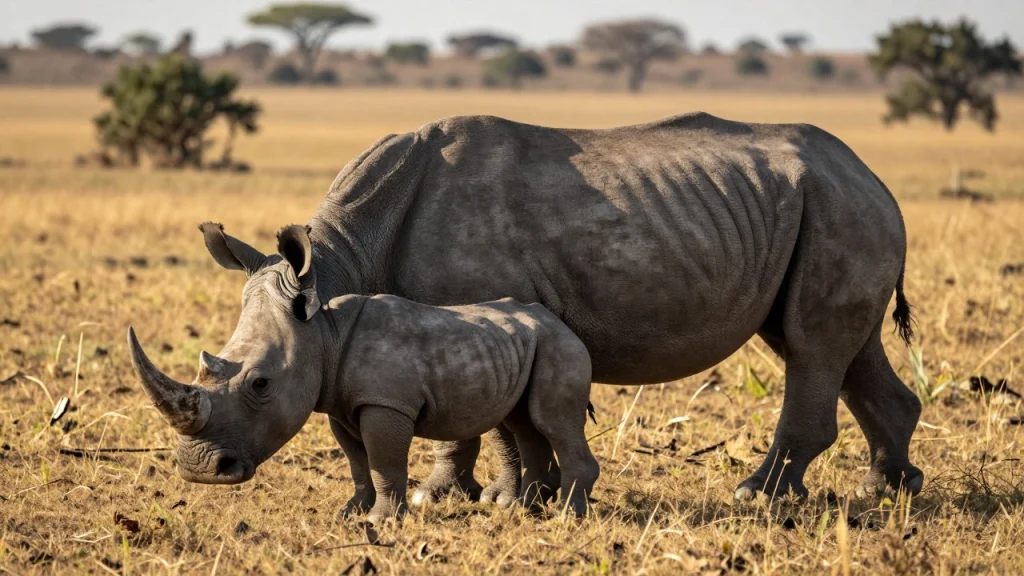
The primary reason for such an extended pregnancy is the physical size and developmental stage of the newborn calf. Rhinoceroses are massive megaherbivores, and a calf needs to be sufficiently developed at birth to survive environment threats.
A newborn rhino calf usually weighs 88 to 140 pounds (40 to 64 kilograms), depending on the species. Within just a few hours of birth, the calf must be able to stand, walk, and follow its mother across open savannahs or dense jungles to stay safe from predators like lions, hyenas, or tigers.
Biological factors contributing to this long duration include:
- Slow fetal development typical of large mammals.
- Complex placental attachment delivering nutrient-dense nourish over many months.
- The necessity for well-developed limbs and vital organs prior to birth.
The birth process and calf development
When a female rhino prepares to give birth, she generally seeks out a secluded, safe location away from the rest of her herd or territory.
Newborn calves begin nursing almost immediately. Rhino milk is rich in essential nutrients, supporting rapid growth during the first year of life. A calf stays by its mother’s side constantly for protection and guidance.
Key milestones in early calf development include:
- Standing and nursing: Can occur within 1 to 3 hours after birth, depending on the species.
- Introduction to solid food: Calves begin nibbling on solid food at 7 to 10 days of age.
- Weaning: Calves may suckle for 12 to 24 months, depending on the species.
Inter-birth intervals and conservation impacts
Because pregnancy lasts up to about 16 months, and calves remain dependent on their mothers for up to four years, female rhinos have a very low reproductive rate.
Under natural conditions, a healthy female rhino will only give birth to one calf every 2.5 to 5 years. If a calf dies early, the mother may enter her estrous cycle sooner, but under normal circumstances, population growth occurs slowly.
This low birth rate makes rhinoceros populations particularly vulnerable to threats such as poaching and habitat loss. Because it takes years for a population to replace lost individuals, conservation efforts focus heavily on protecting breeding females and securing safe habitats to ensure calf survival.
Sources
- San Diego Zoo Wildlife Alliance: Rhinoceros
- Animal Diversity Web, University of Michigan: White Rhinoceros (Ceratotherium simum)
- Animal Diversity Web, University of Michigan: Indian Rhinoceros (Rhinoceros unicornis)
- Animal Diversity Web, University of Michigan: Javan Rhinoceros (Rhinoceros sondaicus)
- Animal Diversity Web, University of Michigan: Sumatran Rhinoceros (Dicerorhinus sumatrensis)