
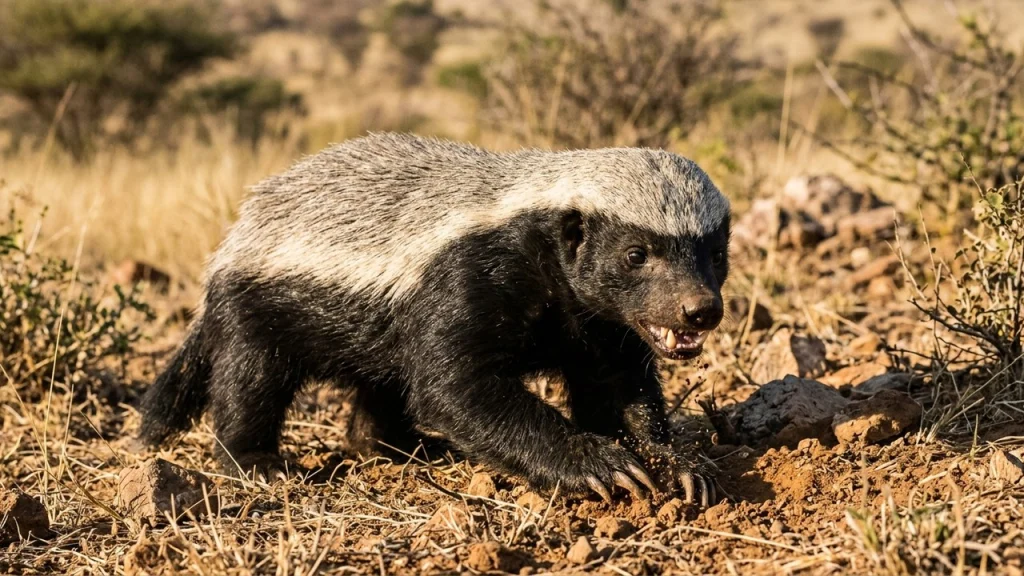
Researchers classify the ratel as Mellivora capensis, a mid sized member of the weasel group with an attitude far larger than its frame.
No zoo, museum or conservation profile reviewed here lists a laboratory PSI value, so power is best judged by structure, diet and defense rather than by a single number. This guide explains the mechanics in plain terms, linking head shape to feeding success and defense.
That practical test favors the honey badger. Field writers describe a bite that chills ectothermic foes, a colorful way of saying snakes and other cold blooded prey have good reason to fear these jaws.
Why a single number misses the point
Profiles point to an oversized cranium and rugged dentition as the center of biting ability, which means leverage and durability matter more than body mass. Anatomy guides add a broad head, small eyes and a brawny neck and shoulder complex, a build that anchors the jaw muscles and steadies the head during hard biting.
Body length reaches 60 to 70 cm, so the animal works close to the ground with short levers that help it control struggling food and keep wriggling prey near the mouth. Shoulder height sits about 25 cm, giving a low and stable stance for pulling, shaking and tearing while the head stays steady.
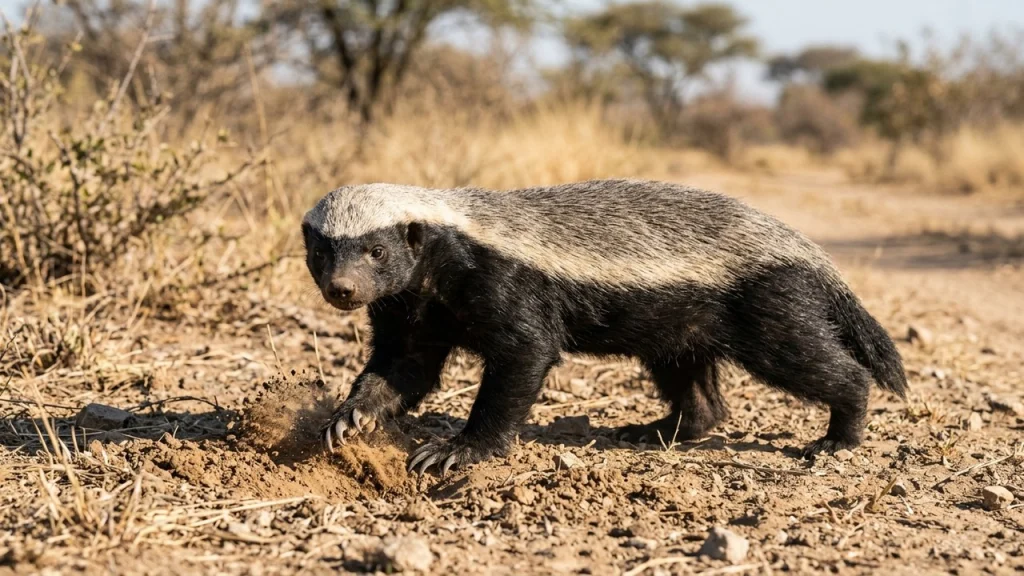
Zoo keepers portray a low flattened torso on short sturdy limbs, with extended digging claws on the forefeet. Those claws open burrows, pin prey and free the mouth to do finish work, which links foot strength directly to bite success.
Small frame, heavy work
Compact muscle beats sheer size. Weight spans 13.6 to 30 pounds, yet opponents that outweigh the badger still struggle to subdue it because strength concentrates in the neck, shoulders and jaws, and leverage, grip and persistence offset a small frame.
Prominent pointed dentition, lengthy front claws and a solid frame let the animal strip flesh from bone with ease, which turns small kills into full meals instead of scraps. Captive observers note that food gets pinned between the forefeet while the mouth works, a handling habit that keeps slippery prey still for precise bites.
What wild feeding shows about jaw strength
Wild individuals secure the bulk of meals by hunting, although they sometimes use carrion, so teeth must handle both fresh kills and tougher remains. They also chase their own prey yet readily take over kills made by larger carnivores when chances appear, a bold habit that demands a bite able to process food fast.
Staple fare centers on eggs, small rodents, serpents, birds and amphibians, an active prey mix that rewards quick killing bites over long pursuit. Small mammals plus reptiles form a large share of intake across seasons, so the same mouth must crack eggs, slice meat and chew through scaly skin.
The menu also stretches from little mammals to birds, reptiles and insects, with carrion as backup, which explains the reputation as an eater of almost anything. These hunters earn their sweet title from a liking for honey and bee young, not from honey alone, and that craving leads them straight into defended hives.
Hives get torn open because the predator wants both young bees and stored honey, a task that needs claw strength to break comb and tooth strength to chew larvae and wax. Most items come from excavation, so jaws often finish work that claws begin by dispatching buried rodents, lizards and snakes.
Whole prey use proves bite confidence:
- Feeding records show almost entire carcasses get eaten rather than only soft parts, so bone, skin and feathers pass through the same teeth.
- Heads of toxic serpents get struck at the start, which shows confidence in mouth strength and handling where many predators hesitate.
Turning defense into offense
Dense flexible hide blocks a firm grip and lets the trapped animal spin and snap back, so a predator that grabs the badger often receives a bite in return. Even when seized behind the neck, the animal can rotate and sink its teeth into the holder, which turns a classic killing grip into a risky hold.
That hide resists stings, quills and dog teeth, so the badger keeps biting through punishment that stops other mid sized carnivores. The species consumes scorpions plus serpents and carries rare tolerance for venom, which lets it hunt prey that defends itself with chemical weapons.
Observers add that it endures assaults from highly hazardous animals and lives on, a trait that extends bite opportunities after snakes sting or scorpions strike. Lions plus leopards usually kill just aged or weakened animals, because youthful hide slips from claws and the victim fights back hard.
Range, status and lifespan put the bite in context
The range covers much of Africa and extends onto the Arabian Peninsula and the Indian subcontinent, so the same tools serve across many climates and prey communities. Global assessors place the species in Least Concern under a 2015 review, which reflects wide distribution and flexible feeding rather than freedom from local threats.
Typical wild longevity reaches up to 7 years, a modest span despite strong defenses, and shows that even strong armor cannot remove every risk. Together those details explain the real answer: the honey badger bite is powerful because a compact skull, sharp teeth, steady paws, loose armor and fearless feeding turn every bite into completed work. Judge the bite by completed meals and escaped predators, not by a missing score.
Sources
- Animal Diversity Web: Mellivora capensis (honey badger) | INFORMATION | Animal Diversity Web
- San Diego Zoo Wildlife Alliance: Honey Badger (Ratel) | San Diego Zoo Animals & Plants
- National Geographic: Honey Badger Facts
- San Diego Zoo Wildlife Alliance: Ratel/Honey Badger (Mellivora capensis) Fact Sheet
- San Diego Zoo Wildlife Alliance: Diet & Feeding – Ratel/Honey Badger (Mellivora capensis) Fact Sheet
- San Diego Zoo Wildlife Alliance: Honey badger (ratel) | San Diego Zoo Wildlife Explorers