
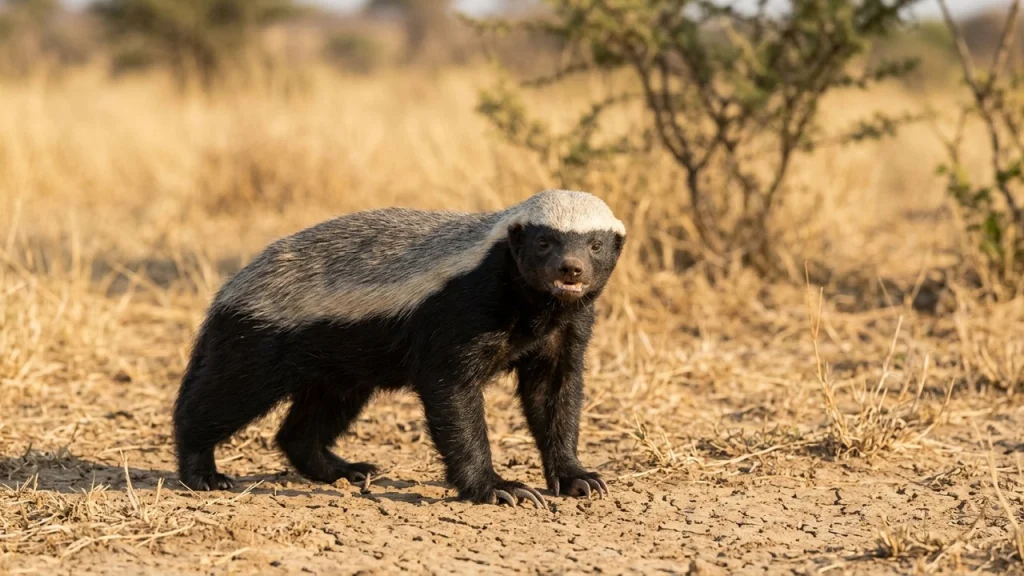
A wild honey badger is normally solitary and avoids human contact, but it can be dangerous to humans when startled, cornered, or infected with disease. Under undisturbed natural conditions, these carnivores lead a reclusive life across their range. Honey badgers can display intense aggression when people startle them, which creates a genuine hazard for bystanders. In their natural environment, these solitary carnivores remain secretive and avoid direct contact with people.
The greatest hazard to human life occurs when a honey badger contracts the rabies virus. Rabies transmission represents one of the most severe public health threats associated with honey badgers. When infected, the animal loses its instinctive wariness of human settlements, aggressively charging anyone in its path. These unpredictable attacks cause deep puncture wounds, severe flesh trauma, and lethal viral transmission without prompt medical care.
Physical anatomy and defensive weaponry
Taxonomically, the honey badger belongs to the weasel family, placing it alongside otters, ferrets, and skunks. Despite its relatively modest proportions, the animal possesses exceptional physical power and skeletal density. At the shoulder, adult honey badgers stand about 25 cm high, displaying a muscular neck and heavy skull. Adult individuals typically register an overall mass of 8 to 12 kg.
Their specialized limb structure supports both underground excavation and ferocious close-quarters combat. The species possesses broad front feet armed with substantial claws built for grasping prey and sprinting. In contrast to their heavy front limbs, their rear feet remain smaller with shorter claws. Using sturdy foreclaws, badgers excavate underground burrows reaching 3 meters long and 1.5 meters deep.
These physical adaptations make the animal a fearsome adversary:
- Compact muscular frame: The dense musculature around the neck and shoulders absorbs impact during violent scuffles.
- Heavy skull architecture: Reinforced jaw muscles deliver crushing bites capable of shattering bones and shells.
- Elongated front claws: Curved foreclaws dig through hard soil, tear open beehives, and inflict deep lacerations on attackers.
- Short rear legs: Lower center of gravity provides exceptional traction when anchoring against larger opponents.
Skin elasticity and extreme resilience

The primary anatomical shield that makes a honey badger nearly impossible for predators to subdue is its loose, rubbery hide. The animal possesses exceptionally durable, loose hide that stops predators from securing a stable grip, allowing it to twist around and bite its assailant. This remarkable elasticity allows the badger to turn completely within its skin to snap at an adversary even when seized by the scruff of its neck.
This impenetrable biological armor neutralizes many common weapons of the animal kingdom. The density of their hide shields them against bee stings, porcupine quills, and canine bites. Naturalists also observe that honey badgers exhibit physiological resistance to snake venom. When threatened, the animal deploys specialized anal glands that generate a nauseating liquid deterrent. This combination of sharp teeth, dense bone structure, and chemical odor creates a fearless adversary that never initiates combat without seeing it through.
Even the apex predators of Africa struggle to dispatch these tenacious mustelids:
- Defensive maneuvering: A badger grabbed from behind twists within its loose hide to bite the predator’s face or paws.
- Venom tolerance: Chemical resilience neutralizes toxic neurotoxins from cobras and vipers, allowing the badger to hunt deadly serpents safely.
- Predator deterrence: Large carnivores like lions and leopards rarely attempt to hunt healthy adults, killing primarily aged or debilitated individuals whose hide provides less defensive mobility.
Documented rabies transmission and attacks
While healthy honey badgers rarely attack humans unprovoked, rabies infection transforms them into relentless aggressors. When a rabid honey badger wanders into a populated village or agricultural estate, it bites domestic animals and people indiscriminately. The resulting injuries combine deep physical lacerations with exposure to a lethal neurological pathogen.
Clinical case reports provide clear medical confirmation of fatal honey badger encounters. Medical literature documents a tragic incident in rural Somalia where a honey badger bit a 14-year-old boy. During that attack, the honey badger bit the boy first and then leaped onto his younger sister’s neck. She died of rabies about two weeks before the boy was diagnosed with the disease himself. Because infected badgers act unpredictably, clinicians emphasize that healthcare workers must consider every wild carnivore bite a potential rabies contact.
A second severe incident in South Africa reveals how domestic disease cycles spill into free-ranging wildlife. In July 2021, a honey badger bit a domestic dog on a farm in the Kromdraai area of Gauteng Province. The following day, that identical badger attacked three adults, inflicting injuries severe enough to require emergency hospitalization for one woman. Laboratory testing of the viral glycoprotein confirmed an active rabies infection originating from domestic dog lineages. Even though the victims received prompt post-exposure prophylaxis, the hospitalized patient died from the severe physical trauma of the bite wounds.
These clinical reports underscore crucial safety rules for people living near badger habitats:
- Never corner or provoke a wild badger: Healthy individuals defend themselves with total commitment when trapped.
- Beware of erratic wildlife behavior: Any badger seen wandering boldly during daylight near homes may carry neurological infection.
- Seek urgent medical intervention: Victims of any bite require immediate wound cleaning and post-exposure rabies prophylaxis.
Agricultural conflict and apiary raiding
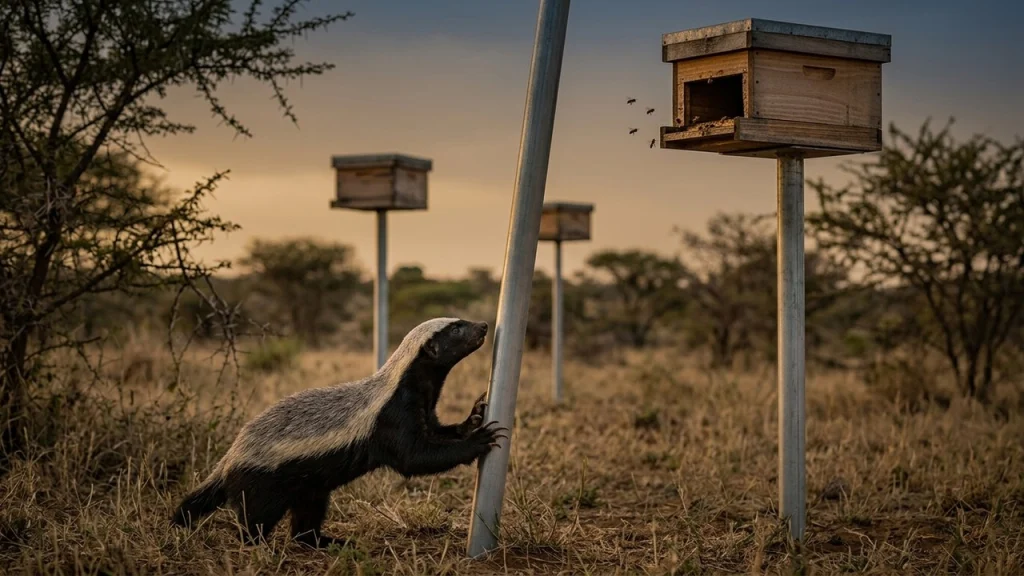
Human conflict with honey badgers frequently centers on agricultural resources and commercial beekeeping. In rural landscapes, foraging badgers occasionally venture across agricultural fields to prey on domestic livestock. Their predatory drive targets poultry, small goats, and penned livestock, inciting retaliatory action from farmers.
The carnivore’s fondness for honeybee brood produces acute friction with commercial honey producers. Beekeepers suffer substantial economic losses because honey badgers cause 26% of the damage inflicted on commercial apiaries by devouring honeybee larvae. Fearing hive destruction, rural beekeepers frequently kill any badgers sighted near their colonies. Field research demonstrates that honey badgers feed on comb wax strictly during nocturnal hours, visiting discarded wax sites after sunset.
Simple non-lethal modifications provide effective protection for beekeepers while preserving wild badgers. Because honey badgers cannot leap upward, beekeepers can easily protect apiaries by mounting hives several feet above the ground. Suspending hives from wires or elevating them on smooth metal poles prevents the badgers from climbing into the honey stores. These non-violent methods preserve beekeeper profits without destroying local wildlife.
Ecological value and safe coexistence
Despite their fearsome combat abilities, wild honey badgers face severe challenges in natural habitats. In the wild, injury risks and predator skirmishes shorten their lifespan to between 7 and 8 years. Protected animals in zoological facilities survive far longer, attaining a maximum lifespan of 26 years. Harsh competition, territorial fighting, and human persecution significantly reduce their natural longevity.
Conserving these animals remains vital because they provide significant ecological benefits to human communities. Despite potential human conflicts, honey badgers benefit local ecosystems by suppressing rodent and insect numbers, which curtails the transmission of pest-borne pathogens. Their voracious hunting keeps agricultural pests in check and reduces vectors of infectious disease across farming valleys.
Understanding the true nature of the honey badger allows people to respect their boundaries safely. Honey badgers do not actively hunt humans, nor do they seek conflict without reason. However, their extraordinary toughness, devastating bite, loose protective hide, and susceptibility to rabies make them formidable animals that demand complete respect. Maintaining a safe distance, securing apiaries with elevated stands, and ensuring swift medical treatment for wild bites ensures safe coexistence with one of nature’s most resilient survivors.
Sources
- Animal Diversity Web: Mellivora capensis (honey badger)
- San Diego Zoo Wildlife Alliance: Honey Badger (Ratel)
- Open Access Emergency Medicine: A Case Study on Unreported First Probable Human Rabies Following Honey Badger in Somalia
- Tropical Medicine and Infectious Disease: A Case Report on a Human Bite Contact with a Rabid Honey Badger Mellivora capensis (Kromdraai Area, Cradle of Humankind, South Africa)
- Proceedings of the Royal Society B: Biological Sciences: When wax wanes: competitors for beeswax stabilize rather than jeopardize the honeyguide–human mutualism