
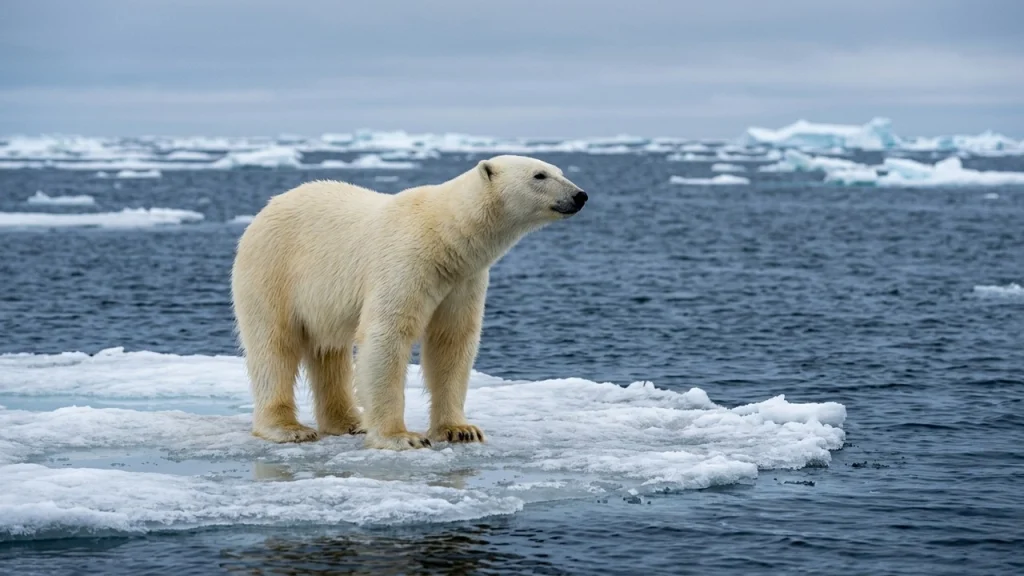
The IUCN SSC Polar Bear Specialist Group names the loss of Arctic sea ice, caused by climate change, as the most serious threat to polar bears across their circumpolar range. Its members completed an updated Red List assessment in 2015, and the result categorized the polar bear as Vulnerable. The group describes Vulnerable as the lowest of three threatened categories, one that indicates a species facing a high risk of extinction in the wild.
The question asks about polar bears being endangered, but the 2015 category was Vulnerable. The previous assessment, in 2008, also listed the polar bear as Vulnerable, the group says, and the polar bear has held that designation in most years since 1982. Animal Diversity Web says polar bears were listed as threatened in 2008 by the U.S. Fish and Wildlife Service.
How sea ice loss affects polar bears
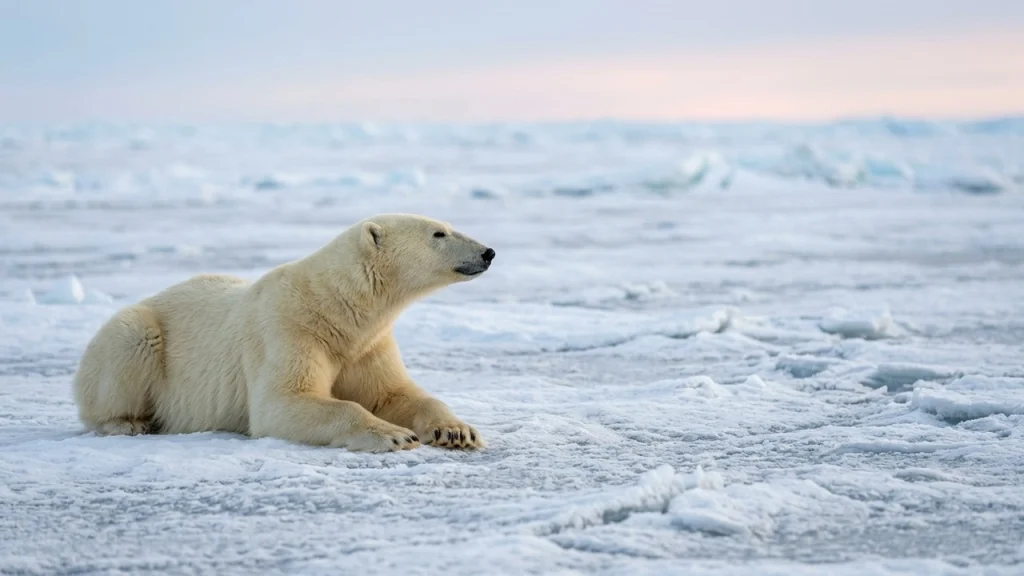
Polar bears depend on sea ice for hunting, migration and reproduction, the San Diego Zoo Wildlife Alliance says. Animal Diversity Web names the pack ice of the Arctic Ocean as their preferred habitat. The San Diego Zoo Wildlife Alliance adds that sea ice loss has been correlated with polar bear declines in body condition, reproductive success and survival. The Alaska Department of Fish and Game notes that thinner ice and longer ice-free summer periods may shorten the time polar bears have to hunt, and may result in population declines.
The San Diego Zoo Wildlife Alliance says that because sea ice has been lost, polar bears now have to make longer swims, as much as a few hundred miles. That swimming takes a toll on energy and fat storage. In areas where the ice melts away completely, polar bears have to come ashore for the summer. The Alliance adds that they may scavenge so as to avoid starving, or fast until the ice re-forms.
How fast the ice is changing
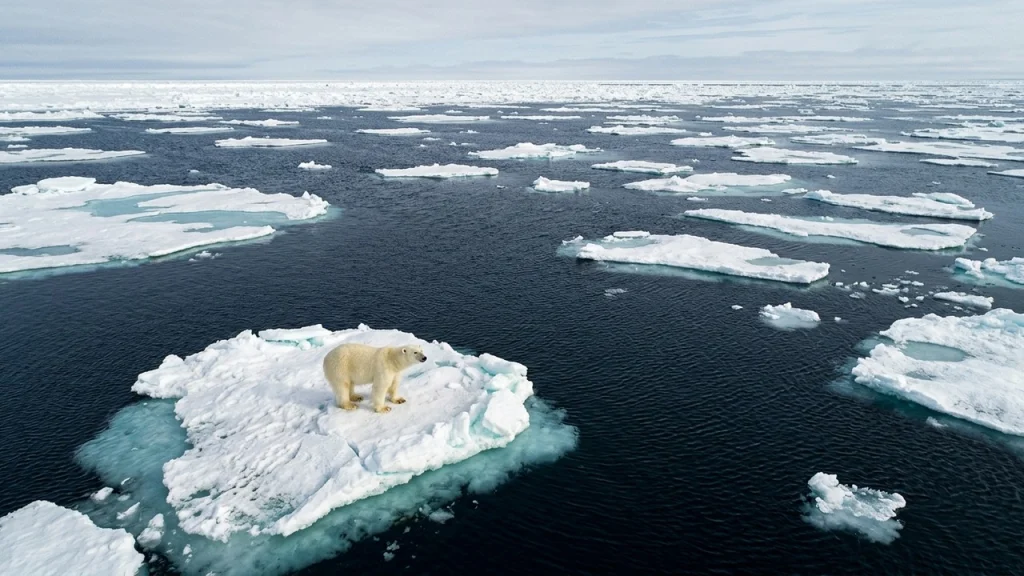
According to the San Diego Zoo Wildlife Alliance, the Arctic is warming at twice the speed of the rest of the planet because of climate change. Since satellite measurements began in 1979, it says, summer sea ice has declined by 40%. The IUCN SSC Polar Bear Specialist Group adds that in six scenarios that projected polar bear abundance three generations ahead, a reduction of more than 30% in the mean global population size had a median probability of approximately 0.71, with a range from 0.20 to 0.95.
Listings and other pressures
The Alaska Department of Fish and Game gives the reason for the threatened listing under the Endangered Species Act (ESA): the sea ice that polar bears depend on for hunting, feeding, reproduction and seasonal movements is declining. Animal Diversity Web describes polar bear populations as currently threatened by global warming trends, which it says continue to decrease the extent of their pack ice habitat and their prey base.
The San Diego Zoo Wildlife Alliance describes a conservation crisis for polar bears that climate change has created. It adds that their persistence is jeopardized by industrial-scale development, which is increasing, as well as record-breaking sea ice losses.
How many polar bears remain
Conservation scientists estimate the number of polar bears remaining in the Arctic at about 26,000, according to the San Diego Zoo Wildlife Alliance. Mark-recapture, tagging and genetic studies have shown 19 separate populations of polar bears, according to the Alaska Department of Fish and Game.
Sources
- IUCN SSC Polar Bear Specialist Group: IUCN Redlist
- San Diego Zoo Wildlife Alliance: Polar Bear
- San Diego Zoo Wildlife Alliance: Polar Bear
- Animal Diversity Web: Ursus maritimus (polar bear) | INFORMATION
- Alaska Department of Fish and Game: Polar Bear Species Profile, Alaska Department of Fish and Game