
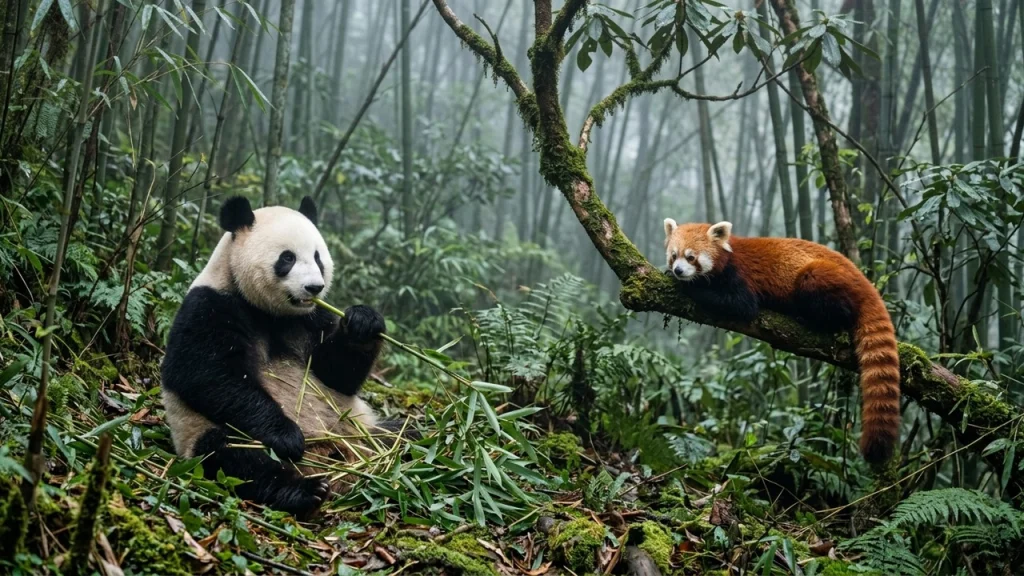
Red pandas and giant pandas are both bamboo eaters native to the high forests of Asia, according to Smithsonian’s National Zoo. The zoo adds that red pandas share a pseudo-thumb with giant pandas, a modified wrist bone that red pandas use to grasp bamboo while feeding. Despite their similarities and shared name, the zoo says, the two species are not closely related.
The San Diego Zoo Wildlife Alliance says the two animals had a common ancestor that lived millions of years ago. It lists both in the order Carnivora, with red pandas in the family Ailuridae and giant pandas in the family Ursidae.
Bamboo diets and digestion
Bamboo makes up about 95% of a red panda’s diet, according to Smithsonian’s National Zoo, and about 99% of the diet of giant pandas, according to the San Diego Zoo Wildlife Alliance. The Alliance adds that only about 24 percent of the bamboo a red panda eats is digested.
A giant panda’s digestive system resembles a carnivore’s more than an herbivore’s, Smithsonian’s National Zoo says, so much of what it eats passes through as waste. The zoo also says red pandas have a simple carnivore stomach even though leaves make up most of their diet. According to the San Diego Zoo Wildlife Alliance, giant pandas spend at least 12 hours a day eating bamboo, and red pandas might devote about half of their waking hours to foraging for bamboo.
Grip and teeth for bamboo
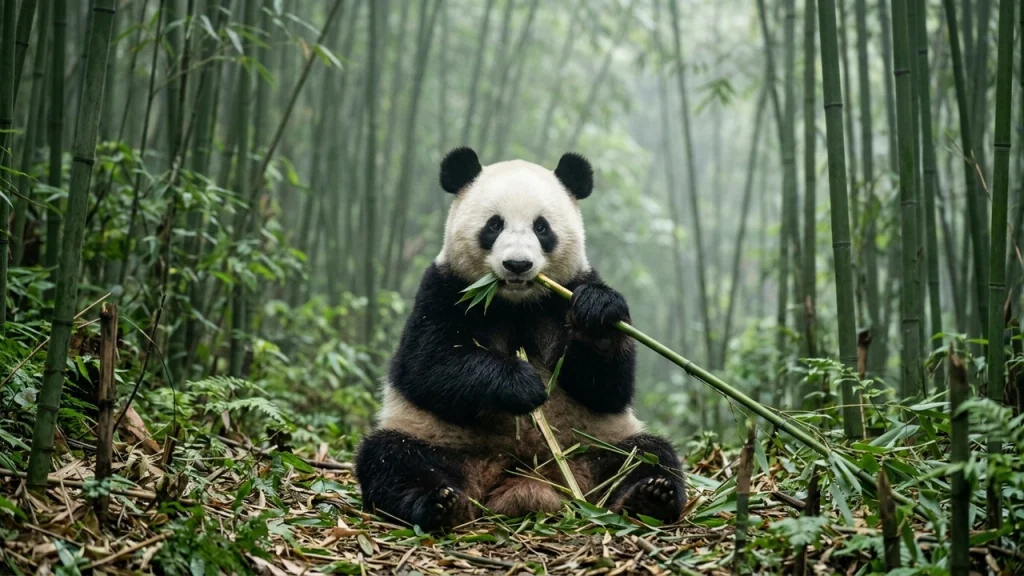
The San Diego Zoo Wildlife Alliance says a giant panda’s grip on bamboo stalks uses five digits together with an enlarged wrist bone, the pseudo-thumb. Smithsonian’s National Zoo describes giant panda molars as large and their jaw muscles as strong, both suited to crushing tough bamboo. Red pandas, according to the San Diego Zoo Wildlife Alliance, have powerful molars for chewing on tough bamboo.
Where they live
In China, red pandas and giant pandas share a habitat of bamboo forests, the San Diego Zoo Wildlife Alliance says. Smithsonian’s National Zoo says red pandas live in the Himalayas and other high mountains, in temperate forests at high altitude with bamboo understories. Their range runs from northern Myanmar (Burma) as far as the west Sichuan and Yunnan Provinces of China.
Giant pandas, Smithsonian’s National Zoo says, inhabit broadleaf and coniferous forests that have a dense bamboo understory, at elevations between 5,000 and 10,000 feet. The zoo describes central China as their native home, and says they have come to symbolize vulnerable species.
Solitary lives and scent marking
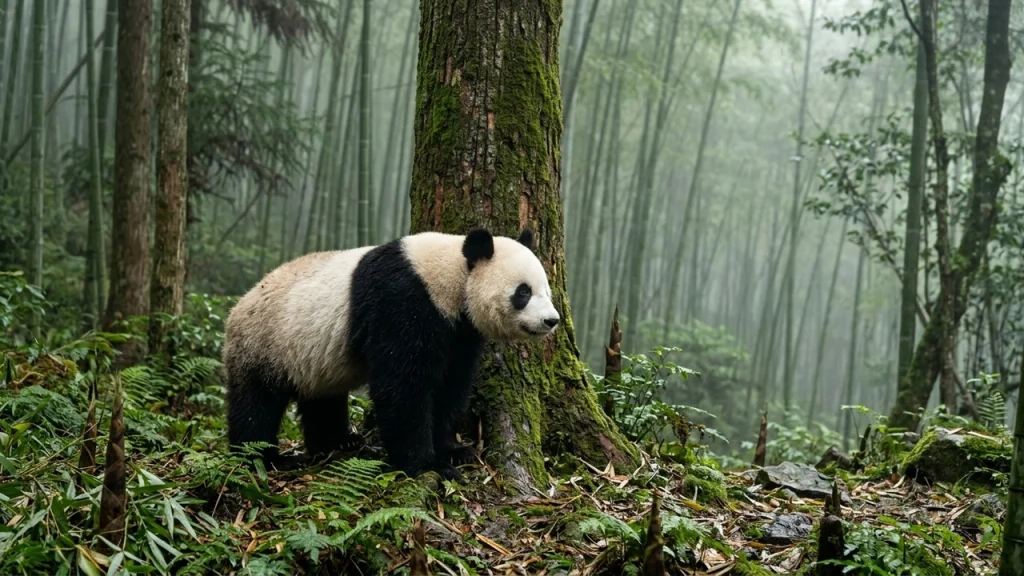
Smithsonian’s National Zoo describes red pandas as solitary outside the breeding season. Giant pandas are solitary by nature, the San Diego Zoo Wildlife Alliance says, and they take their own space seriously.
Both animals have scent glands, according to the San Diego Zoo Wildlife Alliance. Male and female giant pandas alike have a scent gland under the short tail that gives off a waxy substance for leaving scent marks, and red pandas, although largely solitary, exchange information using scent glands.
Conservation status
Red pandas are endangered, Smithsonian’s National Zoo says, and have legal protection in India, Bhutan, China, Nepal and Myanmar. The zoo names habitat loss and degradation, human interference and poaching as their primary threats.
Giant pandas are currently listed as Vulnerable, which the San Diego Zoo Wildlife Alliance credits to dedicated conservation efforts that have helped their population grow. Today, only about 1,800 giant pandas are left in their native habitats, the organization says.