
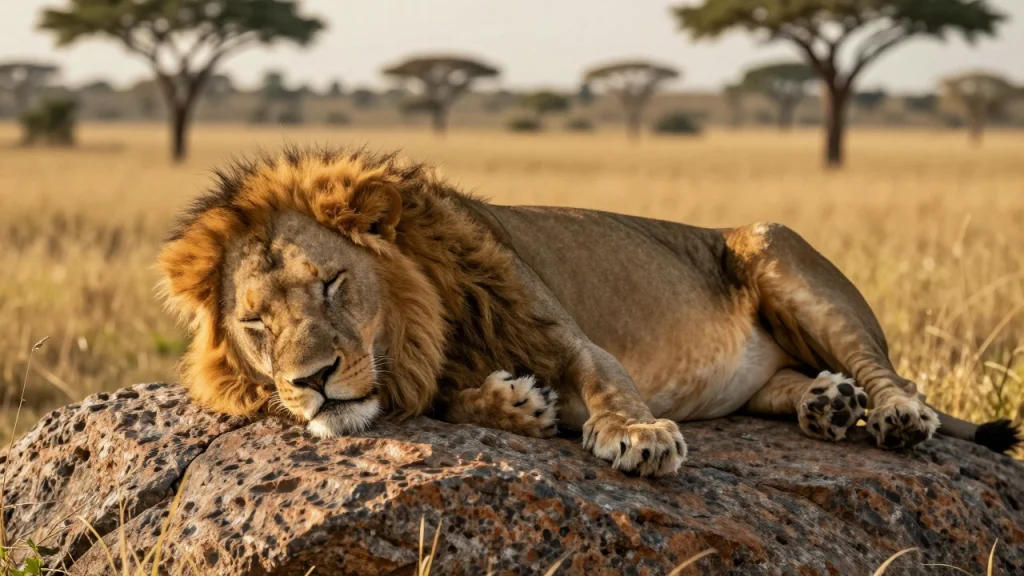
Lions spend an astonishing amount of time resting: they are typically active for only four to six hours a day and spend the remaining 18 to 20 hours resting or lounging. As apex predators living in warm African savannas and grassy plains, these large felines conserve their energy for short bursts of intense activity, such as hunting, territory defense, and social interactions.
While around 18 to 20 hours is the general standard, exact resting habits can vary somewhat from one lion to another. Male and female lions also take on different roles within the pride, with lionesses handling most of the hunting and cub-rearing.
Why Do Lions Sleep So Much?
The primary reason lions sleep for most of the day comes down to their energy-intensive lifestyle and digestive process. Unlike herbivores that spend long hours constantly grazing on low-calorie plant matter, lions consume large amounts of protein in single meals.
Digesting raw meat requires a massive amount of metabolic energy. A male lion can eat as much as about 140 pounds (63 kilograms) in a single meal.
Key evolutionary reasons for their long sleep hours include:
- Energy conservation: Stalking and sprinting after swift prey demands sudden, extreme exertion. Sleep ensures their muscles are fully rested.
- Heat avoidance: Saving activity for cooler night hours prevents overheating during blistering African afternoons.
- Lack of natural predators: Adult lions sit at the top of the food chain, allowing them to sleep deeply without the constant vigilance required by prey animals.
How Lions Sleep Throughout the Day
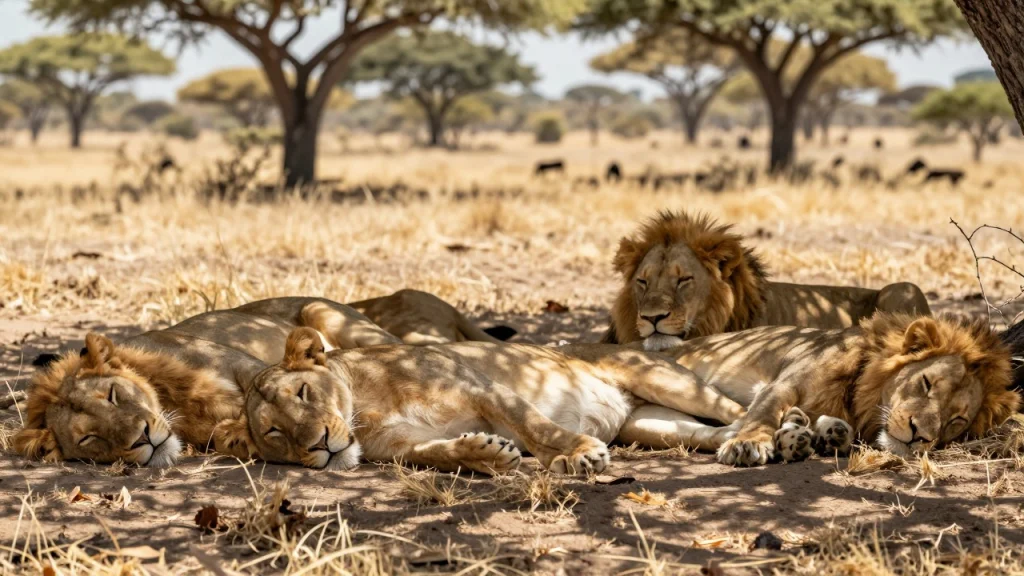
Lion sleep is not a single, continuous 20-hour block of unconsciousness. Instead, it consists of extended periods of drowsing, light napping, and deep sleep interspersed with brief moments of wakefulness.
During the hottest midday hours, lions often seek shade, sometimes climbing into trees to catch a cool breeze or escape flies. Lions sometimes lie around in crazy poses, such as on their backs with their feet in the air.
Do Lions Sleep at Night?
Lions are primarily crepuscular and nocturnal, meaning they are most active during dawn, dusk, and nighttime. When the sun sets and temperatures drop, the pride wakes up to patrol territory, groom one another, and begin stalking prey under the cover of darkness.
Lions hunt mostly at night and are typically active for four to six hours per day. They frequently take short naps between hunts or while guarding a kill site.
Male vs. Female Lion Sleep Patterns
While all lions rest for large parts of the day, males and females take on different roles within the pride.
Lions can spend up to 21 hours of a 24-hour period lying around or resting. Males patrol, mark, and guard the pride’s territory, and a new male must fight the males already there.
Lionesses also rest for most of the day, even though they do most of the pride’s hunting. Lionesses work together to hunt and help rear cubs.
Comparing Lion Sleep to Other Big Cats
Sleep needs vary across the cat family, and other big cats show similarly long resting periods.
- Leopards: Spend long periods resting and use trees for eating and caching prey.
- Tigers: Are seldom far from a water source and are often found during the day relaxing or waiting to ambush prey in ponds, streams, and rivers.
- Cheetahs: Naturally hunt in the morning and again at dusk, hunt by sight, and prefer to rest when temperatures rise.
The lion is the most social of all cat species, living in complex social systems called prides, and spends large parts of the day and night resting.
Understanding how many hours a day lions sleep highlights how perfectly adapted these magnificent big cats are to their environment. Lions spend large parts of the day and night resting and hunt mostly at night.
Sources
- IUCN/SSC Cat Specialist Group: Living Species – Lion | IUCN CatSG
- San Diego Zoo Wildlife Alliance: Lion | San Diego Zoo Animals & Plants
- IUCN/SSC Cat Specialist Group: Living Species – Leopard | IUCN CatSG
- San Diego Zoo Wildlife Alliance: Tiger | San Diego Zoo Animals & Plants
- San Diego Zoo Wildlife Alliance: Cheetah | San Diego Zoo Animals & Plants