
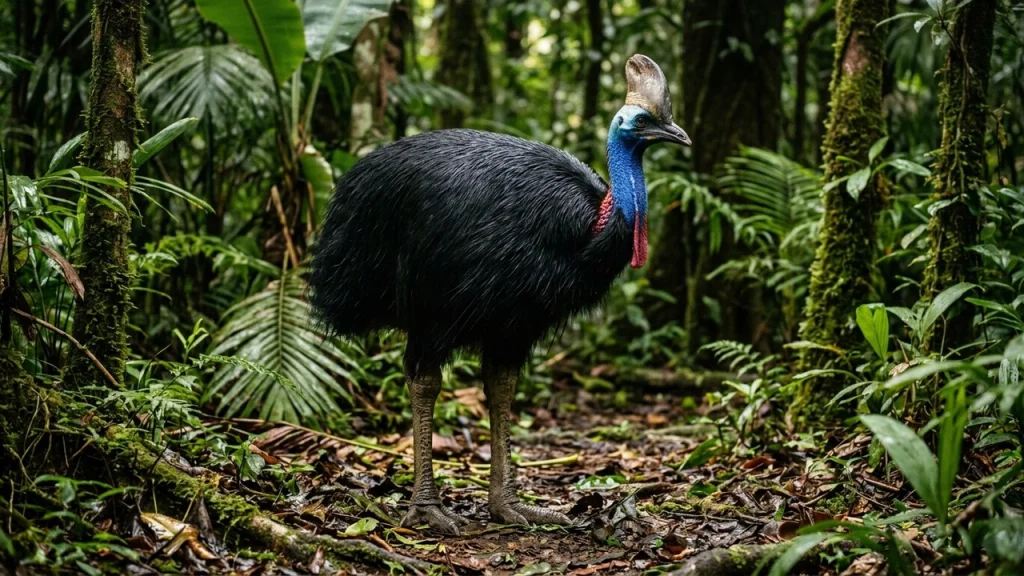
None of the zoo, wildlife agency or research sources behind this article records a cassowary and a shoebill facing off or any fight between the two. With nothing like that on record, the question can only be approached through the figures each bird is given: a female southern cassowary reaches about 167 pounds, while a shoebill weighs up to 16 pounds.
Those numbers describe the size of each bird rather than any meeting between them, and the cassowary figure covers females only. The San Diego Zoo Wildlife Alliance says only the ostrich is heavier than the southern cassowary.
The shoebill: tall, and not very heavy
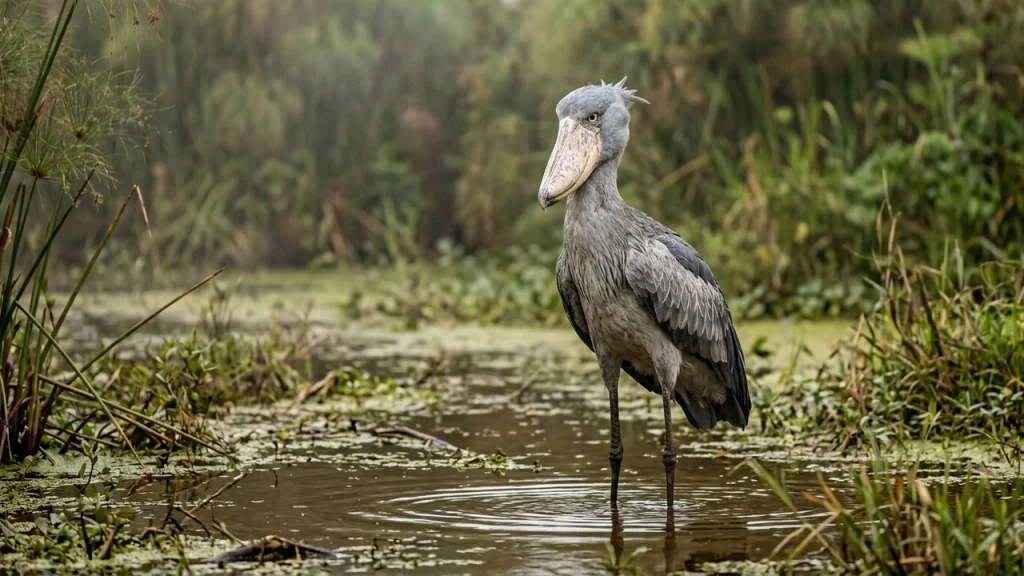
A shoebill stands 110 to 140 cm tall, while the San Diego Zoo Wildlife Alliance says the shoebill can be up to five feet tall. Weight tells a different story, since that same zoo describes the bird as not very heavy and gives a maximum of only up to 16 pounds.
The San Diego Zoo Wildlife Alliance calls the structure on a shoebill’s face enormous, and says it can be nine inches long and four inches wide. Putting it to work is physical business: a shoebill scoops up large fish with the bill, spears them on the hook at the end and cuts off their heads before swallowing. A hunt begins with a sudden lunge forward, the wings spreading as the bird drops bill-first into the water to surprise a fish.
Animal Diversity Web calls shoebill storks very docile with humans, noting that researchers studying them have managed to come within 6 feet of a bird on its nest.
The southern cassowary: mass, claws and armor

The southern cassowary is the largest cassowary, and the San Diego Zoo Wildlife Alliance gives it a height of 5.8 feet (170 centimeters). Females reach about 167 pounds, while males top out at 121 pounds.
A cassowary’s large feet carry three toes, and each foot has a five-inch-long dagger-like claw, with the legs and feet sheathed in armor-like scutes. The cassowary has a short black bill. Southern cassowaries also charge people, jumping at them and slashing with their claws, and can cause serious injury and sometimes death.
Speed comes in short bursts, and the same fact sheet lists a maximum pace of 30 miles per hour (48 kilometers per hour). In 2004 the Guinness Book of World Records voted southern cassowaries the most dangerous bird in the world.
Reading the two figures side by side
One set of figures covers the cassowary’s armor-like scutes and five-inch dagger-like claw, and the other covers the structure on a shoebill’s face, which can be nine inches long. These figures describe the birds themselves, not an encounter between them.
Sources
- San Diego Zoo Wildlife Alliance: Southern Cassowary
- Animal Diversity Web: Casuarius casuarius (southern cassowary)
- San Diego Zoo Wildlife Alliance: On the Road to Survival
- Animal Diversity Web: Balaeniceps rex (shoebill)
- San Diego Zoo Wildlife Alliance: 7 Revealing Facts about Shoebills
- BirdLife International: Shoebill