
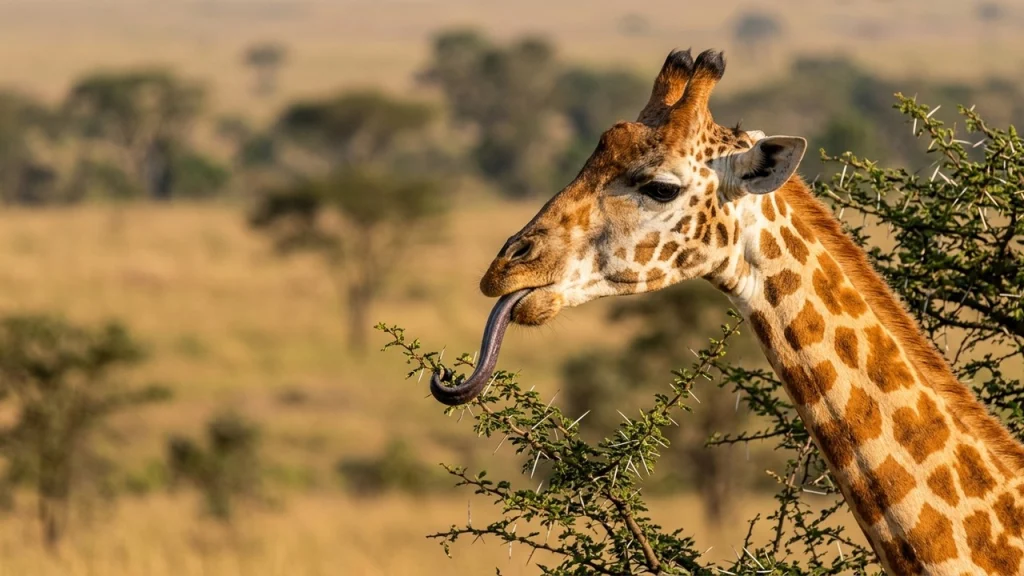
Melanin gives a giraffe’s tongue its purple, blue or black color, according to Washington State University’s Ask Dr. Universe. The same page adds that the tongue, packed with melanin, protects the DNA inside its skin cells.
The San Diego Zoo Wildlife Alliance says the dark color of the tongue is thought to protect giraffes from sunburn while they reach for leaves. Washington State University says UV light from the sun can mess up DNA.
Melanin, the pigment behind dark colors
Washington State University says dark colors come from a pigment called melanin. A person quoted on the page said melanin is behind the way human skin darkens in the sun, too.
A tongue at the treetops
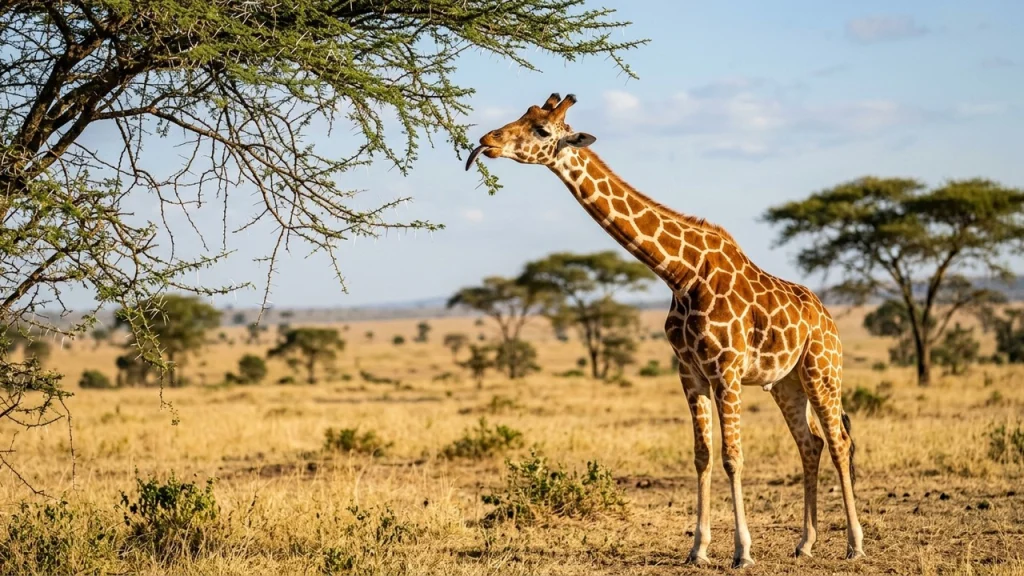
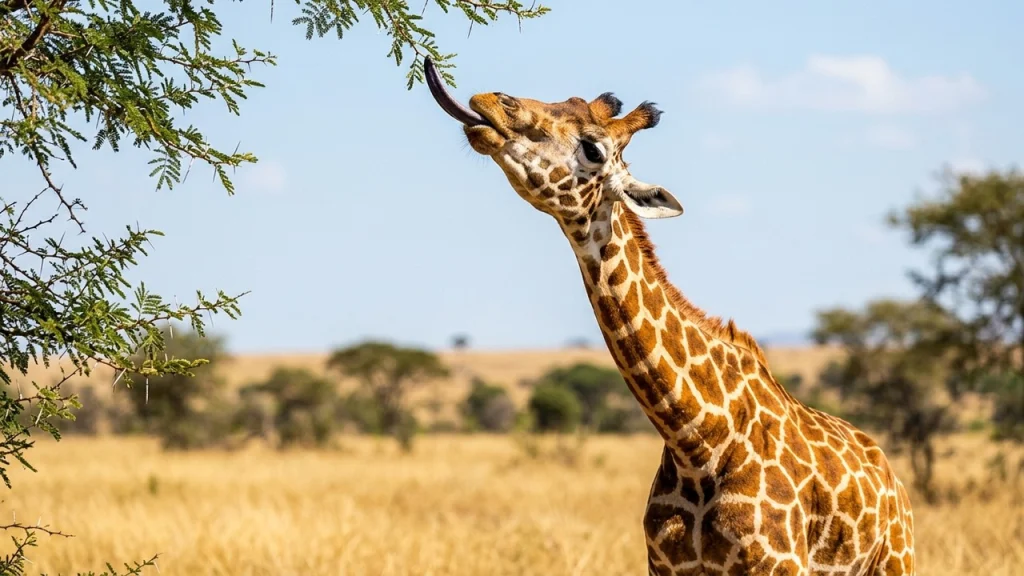
Washington State University says giraffes spend about 12 hours a day munching leaves at the tops of trees. A photo caption on that page says a giraffe uses its purple, prehensile tongue to gather leaves from treetops.
The San Diego Zoo Wildlife Alliance says giraffes reach around thorns with an 18-inch (46-centimeter) tongue and prehensile lips. Animal Diversity Web’s giraffe account describes a black tongue that takes hold of prickly food from the very tops of trees.
Ancestors and a close relative
Washington State University says giraffes descend from ancestors that adapted to live in sunny places. It also says the okapi, described there as the giraffe’s closest living relative, has a purple tongue too.
Sources
- San Diego Zoo Wildlife Alliance: Giraffe | San Diego Zoo Animals & Plants
- Animal Diversity Web: Giraffa camelopardalis (giraffe) | Animal Diversity Web
- National Geographic: Giraffe | National Geographic
- Washington State University: Why are giraffes’ tongues purple? | Ask Dr. Universe
- Oakland Zoo: Reticulated Giraffe | Oakland Zoo