
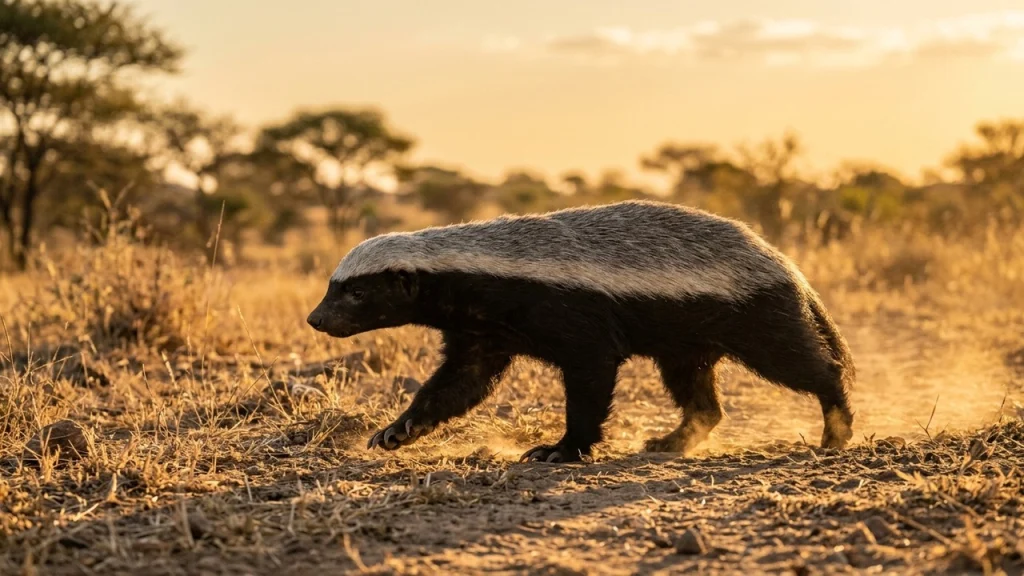
The animal called ratel or honey badger carries the scientific label Mellivora capensis and sits among weasel kin that include otters and skunks. Its toughness comes from a linked set of traits: hide that shifts over muscle, feet and jaws built to dig and rip, tolerance for stings and snakebite, plus a confrontational temper backed by foul odor.
Adults measure about 73 to 96 cm in body length and weigh about 6.2 to 13.6 kg, so defense matters more than bulk. They range across Africa and Asia, from southern Morocco to the southern tip of the continent, and they also range through sub-Saharan Africa plus Saudi Arabia, Iran and western Asia. Life as a habitat generalist helps, since arid desert outskirts pose very different challenges than rainforests.
Skin that slips, stretches and shields
Loose armor explains much of the legend. The hide can feel so dense that bee stings, porcupine quills and even dog bites fail to pierce it quickly, which lets badgers raid hives and grapple with spiny mammals without immediate injury. Thickness buys time, and time lets a small carnivore decide whether to press an attack or break away.
The same hide stays baggy over the frame, so a seized badger can rotate inside its own skin and snap back at an attacker that grips the neck. That freedom keeps the jaws ready to counter. That combination turns a grabbed neck from a death sentence into a chance to wound the grabber.
Head structure reinforces the defense. A heavy skull paired with sturdy teeth delivers deep bites that deter rivals before prolonged contact. Together those tools convince many larger animals that the meal is not worth the damage.
Claws, jaws and a stocky frame built for work
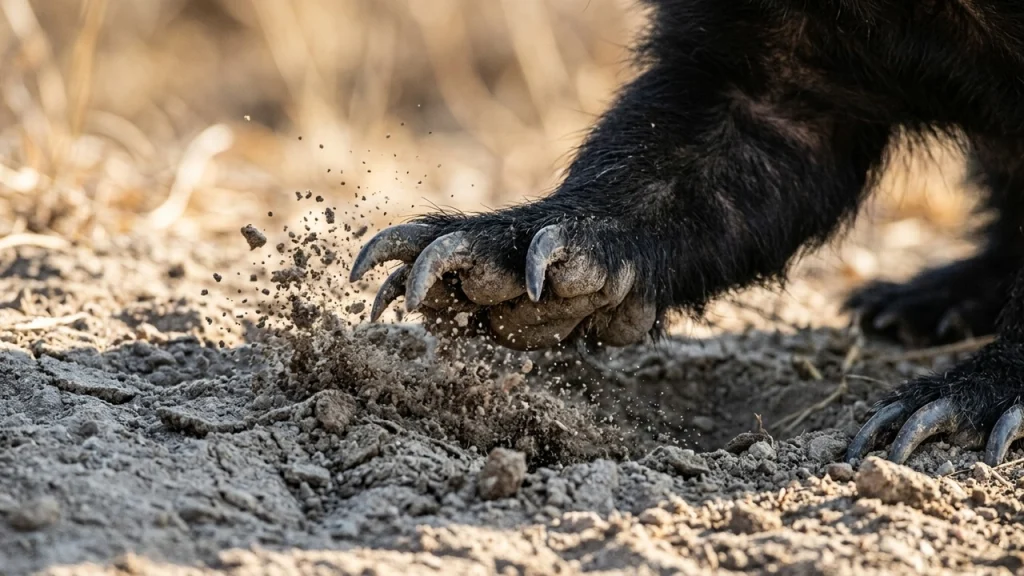
Digging weapons start with build. A low, flattened torso rides on short and powerful legs, and the front feet carry extended claws that cut soil and flesh with equal ease. The low center of gravity adds leverage when the badger wedges under cover or anchors against a lunging dog.
That front-end power helps seize small mammals and pin snakes. That power makes every burrow, hive and carcass easier to open.
Feeding anatomy completes the kit. Pointed teeth, elongated front claws and a compact torso let the animal shear flesh from bone with surprising speed. The design also supports theft, because a badger can rush a kill, tear off a chunk and retreat before the owner reacts.
A diet that invites danger
Bold eating drives many risks. These hungry omnivores prize honey and honeybee larvae. The reward repays the risk of stings.
The menu stretches far beyond hives:
- insects and amphibians
- reptiles, birds, mammals, roots, bulbs, berries and fruits
Such breadth keeps the badger fed when a prey type crashes, and it explains persistence across dry and forested regions.
Mole snakes, puff adders and Cape cobras all appear as recorded prey, and cobras plus adders count as highly venomous snakes. Hunting them demands thick skin and caution, and success removes competitors that many predators avoid.
Physiology likely helps after the bite lands, and researchers consider resistance likely even though the exact mechanism remains unproven in this species. The protection is partial rather than absolute, since swarms of bees have still killed trapped animals through sheer numbers of stings.
Foraging style multiplies the advantage. Badgers unearth most meals by digging instead of chasing, yet they readily steal kills or scavenge larger carcasses when chances appear. Digging opens burrows, theft saves energy, and both habits reduce time spent exposed in the open.
Temper, odor and constant movement
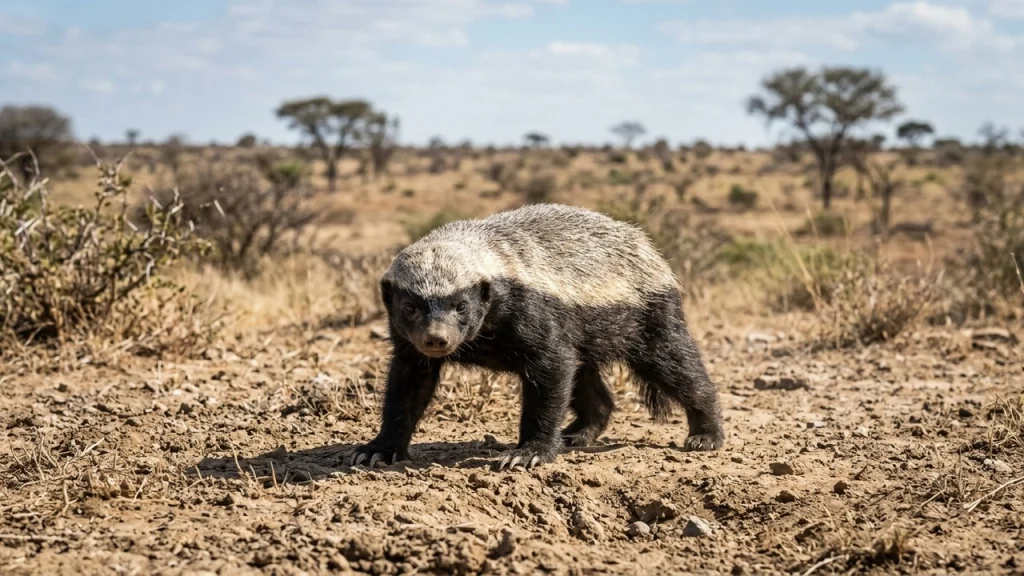
Confrontational nerve makes the physical tools more effective. Observers describe an unusually quarrelsome mammal that charges and refuses to yield ground out of proportion to its weight. Bluff and counterattack often persuade rivals to disengage rather than prolong a bloody grapple.
Chemical defense backs the display: a frightened or threatened animal can release a sudden stink bomb instead of spraying like a skunk. The cloud creates a memorable warning during conflicts.
Solitary roaming spreads risk across large areas. Individuals live alone and wander widely while searching for food, with females covering around 10 km per day and males pushing as far as 27 km per day in tracking studies. Some ranges swell to about 500 square kilometers, so each animal uses very large areas.
Shelter use stays flexible. Badgers readily remodel empty burrows left by porcupines and yellow mongooses. Reproduction fits that mobile life: pregnancy lasts 7 to 10 weeks, and mothers usually raise a single cub at a time, sheltered in dens.
Even lions and leopards respect the cost. Those cats usually kill only older and weaker badgers, because younger animals twist free and inflict wounds. Survival therefore depends less on outrunning hunters than on making every capture attempt expensive.
Wide range, flexible habits and human pressure
Ecological flexibility underpins current status. The global listing remains Least Concern under a 2015 assessment. Broad distribution plus varied food buffers the species against local shortages that would doom a specialist.
That buffer has limits. Numbers trend downward in places where badgers clash with farmers and beekeepers, leading to direct persecution. Animals also die for bushmeat and for trade in traditional medicine.
Lifespan reflects the trade-off. Free-living adults often live between 7 and 8 years, cut short by injury and predation, while captives can reach a maximum lifespan of 26 years. In short, the honey badger stays tough by wearing loose armor, carrying excavation tools on its feet, digesting danger, advertising ferocity with odor, and walking far enough each night to find the next meal.
Sources
- San Diego Zoo Wildlife Alliance: Honey Badger (Ratel) | San Diego Zoo Animals & Plants
- National Geographic: Honey Badger Facts | National Geographic
- Animal Diversity Web, University of Michigan: Mellivora capensis (honey badger) | Animal Diversity Web
- San Diego Zoo Wildlife Alliance Library: Ratel/Honey Badger (Mellivora capensis) Fact Sheet: Summary
- San Diego Zoo Wildlife Alliance Library: Ratel/Honey Badger (Mellivora capensis) Fact Sheet: Diet & Feeding