
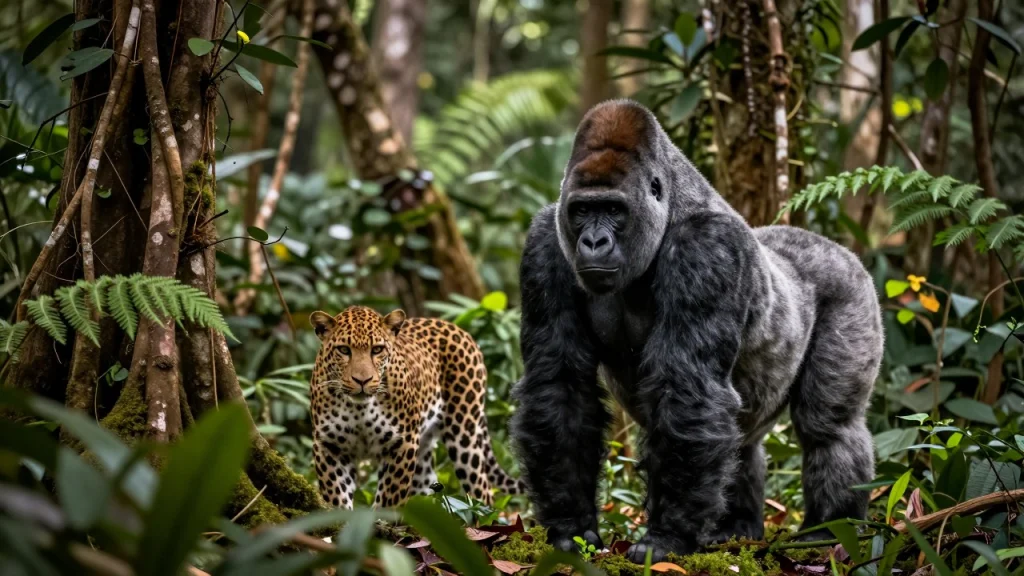
In ecological terms, adult gorillas inhabit tropical environments where virtually no wild carnivores consistently challenge them due to their formidable size. Instead, human beings represent the true worst enemy of these great apes, exerting devastating pressures through illegal hunting, deforestation, and deadly disease transmission.
While non-human predators exist in African forests, the African leopard (Panthera pardus) remains the solitary natural carnivore capable of taking down a gorilla. However, confirmed interactions between the two species occur so infrequently that wildlife biologists consider feline predation to have an inconsequential impact on overall gorilla populations. The true existential crisis confronting gorillas stems almost entirely from anthropogenic activities.
The Natural Predator: How Leopards Threaten Wild Gorillas
Leopards share dense forest canopies and lowland jungles with wild gorillas across equatorial Africa. These stealthy cats possess sufficient strength and hunting prowess to strike vulnerable apes, making gorillas technically susceptible to feline predation. Yet direct scientific observations of leopard attacks on gorillas remain extraordinarily rare in field studies.
Much of the physical evidence linking leopards to gorilla mortality comes from microscopic and genetic examinations of predator droppings. Field researchers frequently discover gorilla hair, bone fragments, and DNA in leopard scat gathered within overlapping habitats. Even this evidence raises biological debates, because opportunistic big cats could simply be scavenging carcasses rather than hunting them down.
Because feline predation events happen so sporadically, biological researchers conclude that the actual demographic toll of leopards on wild gorilla numbers is virtually negligible.
Social Defense and Physical Deterrents in the Forest
Gorillas actively counteract potential dangers by organizing themselves into tight-knit social groups. Although they can climb trees with ease, these massive primates spend the vast majority of their daily lives foraging and resting on the forest floor in communal troops of up to 30 individuals. Living in coordinated groups provides continuous vigilance against lurking carnivores.
Group cohesion provides crucial defensive benefits for mothers and dependent young. Female gorillas avoid wandering alone with their offspring, actively choosing to stay within communal troops consisting of unrelated adult females to reduce the likelihood of leopard ambushes. Mutual vigilance within the band guarantees that multiple sets of eyes monitor the surrounding undergrowth.
A mature silverback commands each troop, recognized by the prominent blanket of silvery-gray fur across his back. This seasoned patriarch shoulders complete responsibility for guiding daily troop movements, selecting bountiful foraging grounds, organizing midday rests, and deciding where the entire family beds down for the night.
Whenever potential threats appear, gorillas communicate immediate warnings using an intricate acoustic repertoire. Field researchers have cataloged as many as 22 separate gorilla vocalizations, with each sound conveying specific social or environmental information. In situations involving outside hazards or rival incursions, apes sound sharp alarm barks or launch into intense hooting series accompanied by rhythmic chest slapping to warn their group members.
If a predator or rival ignores initial warnings, the silverback unleashes an intimidating physical performance. The massive male rises onto two legs, bares his sharp canines, screams loudly, pounds his chest with cupped palms to produce reverberating acoustic booms, and charges violently forward. This imposing display usually convinces any intruder to flee immediately.
Physical Dimensions and Strength Comparison
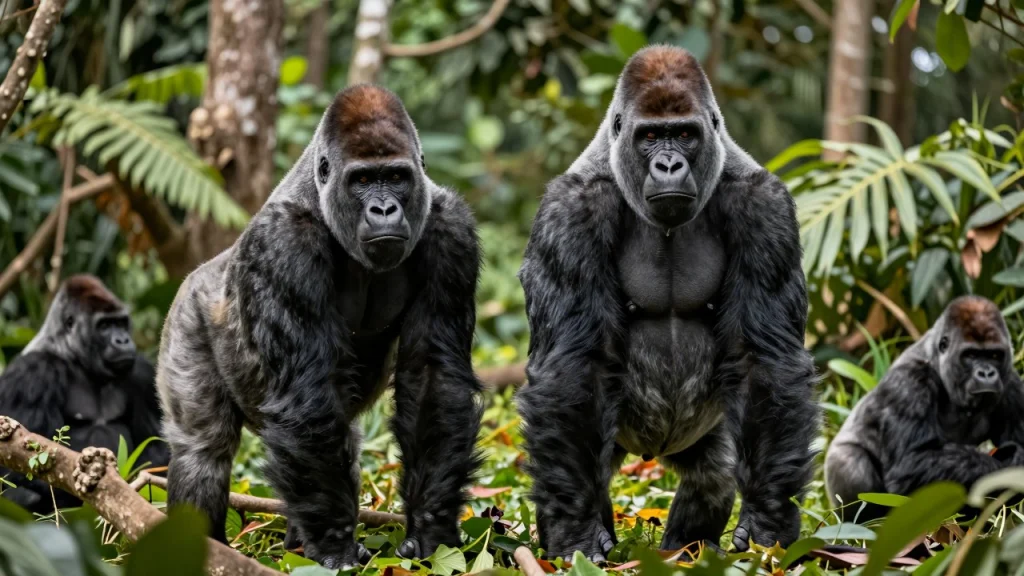
The imposing physical dimensions of mature gorillas serve as a powerful natural armor against forest predators. Adult males can reach a standing height of up to 5.7 feet. In addition, a mature male attains an impressive weight between 300 and 400 pounds. This formidable bulk gives the silverback overwhelming leverage in physical combat.
Adult females exhibit smaller body frames, reaching heights of up to 5 feet. In terms of mass, a mature female typically weighs between 159 and 216 pounds. Their physical heft, combined with social unity and the silverback’s fierce protection, makes confronting an adult gorilla group an unappealing prospect for any solitary carnivore.
The Human Threat: Poaching, Bushmeat, and Wire Snares
While big cats pose minimal danger to healthy troops, human activities constitute the overwhelming peril that pushes gorillas toward extinction. Native to the lush Congo Basin, peaceful western lowland gorillas have suffered staggering population crashes caused by relentless poaching syndicates and commercial bushmeat enterprises.
Expanding commercial bushmeat networks systematically target forest animals to feed expanding regional urban markets. Commercial hunters shoot gorillas directly for meat, but commercial logging roads also open previously inaccessible deep jungle canopies to poachers, accelerating the slaughter of wildlife.
In addition to targeted firearms hunting, indiscriminate trapping mechanisms cause tragic casualties among great apes. Rural bushmeat trappers set thousands of concealed wire snares aimed at catching smaller mammals:
- Forest duikers
- Wild bush pigs
- Terrestrial rodents
While these deadly traps target other wildlife species, wandering gorillas regularly step into the hidden loops. Innocent primates suffer horrific lacerations, lose hands or feet to constricted cables, or die lingering deaths from gangrenous snare wounds before rangers can locate them.
Wildlife trafficking syndicates inflict further catastrophic devastation on wild gorilla families. Poachers seeking lucrative profits on the black market attempt to capture defenseless baby gorillas for illegal pet collections. Because adult gorillas defend their offspring with their lives, hunters routinely execute several protective family members to tear away a single infant.
Forest Destruction and Civil Instability
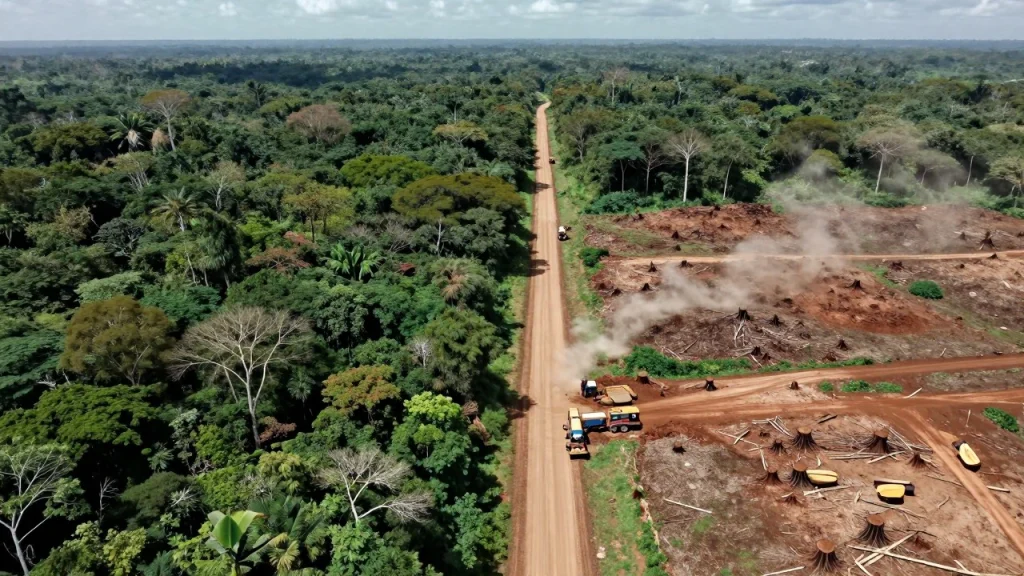
Beyond direct hunting, the progressive demolition of ancestral forests strips wild gorillas of their native habitats. Human activities driving landscape degradation include:
- Agricultural expansion for crops
- Commercial timber harvesting
- Charcoal production operations
- Unregulated mineral and gold mining
As heavy machinery and agricultural clearances fragment equatorial woodlands, gorilla communities find their traditional home ranges compressed into isolated vegetation pockets.
Armed civil conflicts across Central Africa have compounded environmental destruction over recent decades. Armed groups sheltering in the forest during periods of war and civil unrest have added to the loss of wildlife.
Epidemics and Lethal Pathogens
Disease transmission represents one of the deadliest threats in modern gorilla history. Because gorillas share an extraordinarily close evolutionary kinship with humans, they remain exceptionally susceptible to infectious human illnesses and viral outbreaks.
Conservation authorities reassessed the western lowland gorilla as critically endangered after concluding that commercial bushmeat exploitation, timber logging roads, and Ebola outbreaks had together devastated native populations. During recent epidemics, Ebola outbreaks devastated western lowland gorilla numbers, wiping out approximately one-third of the total gorilla population inhabiting protected reserves within a 15-year window.
Human encroachment also exposes immunologically vulnerable primates to everyday respiratory pathogens and infectious microbes. People moving through gorilla habitat can pass ordinary human illnesses on to these highly susceptible apes.
Current Population Status and Survival Outlook
Cumulative anthropogenic pressures have precipitated alarming demographic declines across Africa’s ape habitats. During a single 20 to 25 year interval, western lowland gorilla numbers plummeted by more than 60 percent, prompting international conservation bodies to classify these peaceful primates as critically endangered.
A comprehensive wildlife survey published in 2018 offered encouraging news, calculating that over 360,000 gorillas continue to survive across the forests of Western Equatorial Africa. Nevertheless, roughly 80 percent of these surviving apes dwell completely outside officially protected national parks, leaving them exposed to poachers and encroaching development.
In undisturbed wild environments, gorillas typically achieve average lifespans of 33 years among males, whereas females reach approximately 39 years. Safeguarding these remarkable great apes requires intensive anti-poaching patrols, snare removal operations, strict wildlife corridors, and continuous veterinary surveillance. Only by curbing human destruction can Africa’s gentle giants escape their single most dangerous adversary.
Sources
- Smithsonian’s National Zoo and Conservation Biology Institute: Western Lowland Gorilla
- San Diego Zoo Wildlife Alliance: Gorilla
- University of Wisconsin-Madison: Primate Factsheets: Gorilla (Gorilla) Taxonomy, Morphology, & Ecology
- National Geographic: Mountain Gorilla
- Animal Diversity Web: Gorilla beringei (eastern gorilla)