
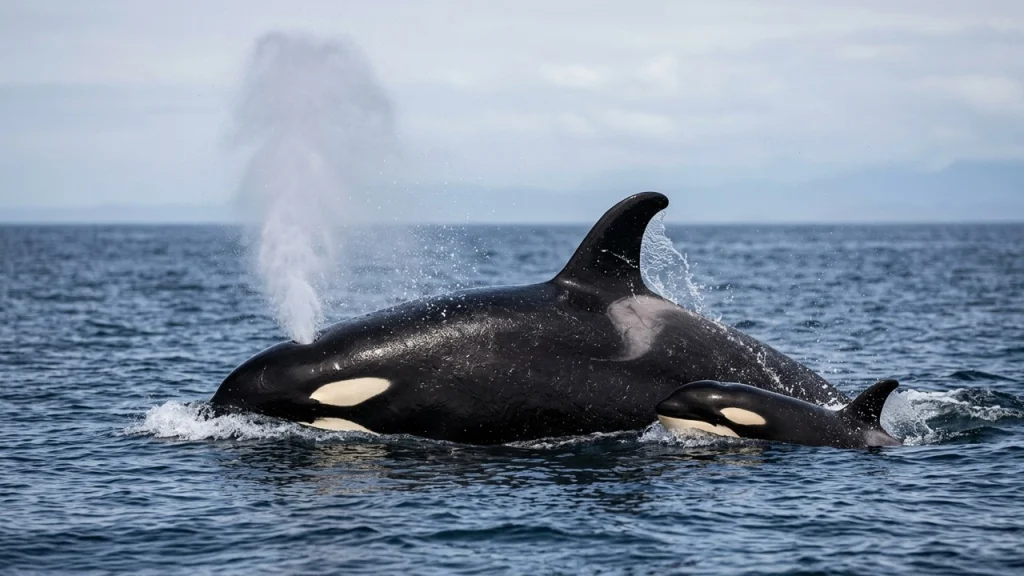
NOAA Fisheries lists an orca lifespan of 30 to 90 years, and the figures for the two sexes are far apart. In the wild, males average about 30 years and can live to at least 60, while females typically live about 50 years and can reach at least 90.
Animal Diversity Web gives around 63 years as the average for females in the wild, with a maximum of 80 to 90, and describes male life expectancy as a bit shorter, at around 36 years, with 50 to 60 as the maximum. National Geographic lists an average life span in the wild of 50 to 80 years.
How the wild estimates compare
Where a source splits its figures by sex, females come out well ahead, both in the averages and in the maximums.
The National Park Service gives another estimate. It says scientists estimate 30 to 50 years for orcas, and several females in the resident pods of Alaska have lived past 50. It also says some individuals, mostly female, are believed to occasionally reach 80 to 90 years.
Maturity, calves and menopause
NOAA Fisheries says females reach sexual maturity at 10 to 13 years old, while Animal Diversity Web gives 6 to 10 years for females and 10 to 13 for males. The National Park Service says a female’s first calf usually arrives when she is 12 to 17 years old. NOAA describes a pregnancy of typically 15 to 18 months that ends in a single calf.
National Geographic puts the interval between births at three to ten years, after a 17-month pregnancy. Animal Diversity Web says a female has a calf every 6 to 10 years and stops breeding around age 40. NOAA adds that calves feed only on milk for at least a year and stay close to their mother for at least the first two years.
Orcas are among a handful of mammals that go through menopause. Scientists think the trait may have evolved so that grandmother orcas can help raise their grandcalves. In captivity, Animal Diversity Web reports neonatal mortality of 37% to 50%, and it says mortality rates steadily decline after six months as young orcas learn to protect and feed themselves.
Life inside a matriarchal pod
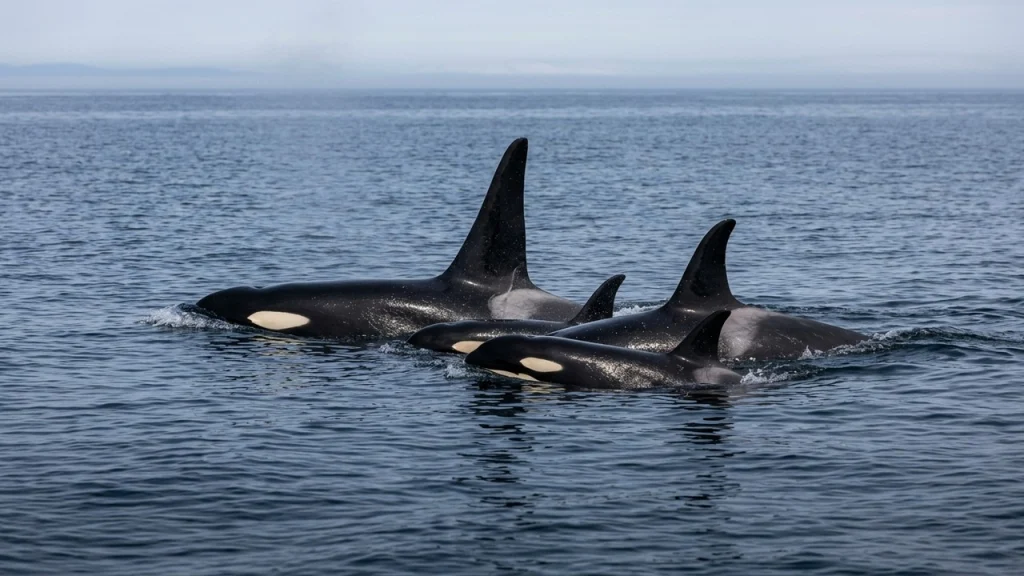
Orcas hunt in pods, which National Geographic describes as family groups of up to 40 individuals. Animal Diversity Web says pods can contain several to as many as 50. Pods are matriarchal societies of multigenerational groups, and both sons and daughters usually stay with their mother’s pod for life. A pod’s dialect has been shown to stay the same for up to six generations.
Resident pods generally favor fish, and transient pods hunt marine mammals. All pods hunt cooperatively, a technique some compare to wolf packs. Orcas also use echolocation to communicate and hunt: the sounds they make travel through the water, hit objects and return, revealing where the objects are and their size and shape.
Size and habitat
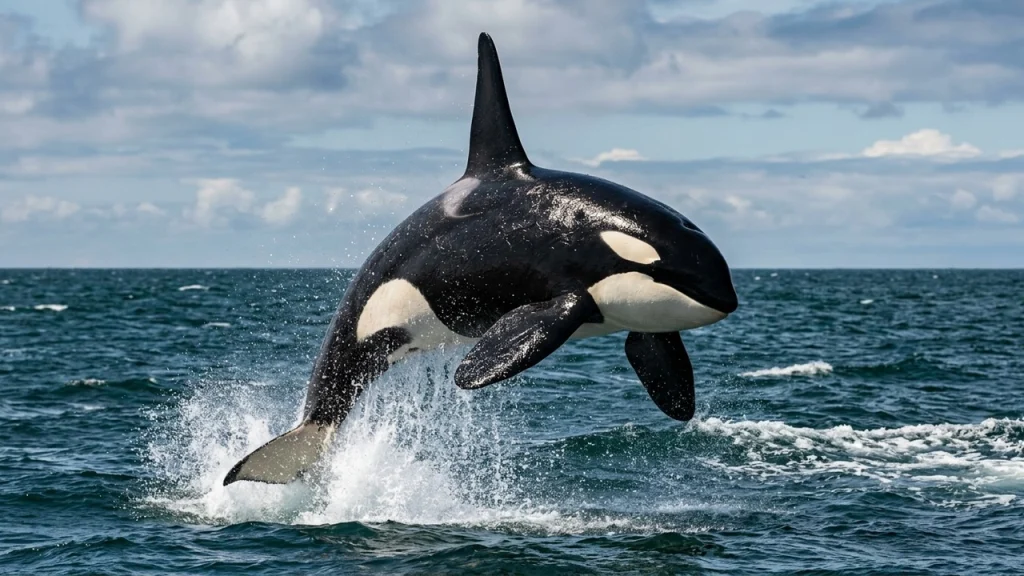
The orca (Orcinus orca) is the ocean’s top predator and the largest member of the dolphin family. Adults measure 23 to 32 feet and can weigh up to 6 tons. The dorsal fin of a mature male is roughly triangular and can rise up to six feet out of the water.
Orcas are found in all oceans. Animal Diversity Web says they normally prefer depths of 20 to 60 m, but also visit shallow waters along coastlines and dive to 300 m in search of food.
Threats and conservation status
NOAA Fisheries names these threats: oil spills, food limitations, entanglement in fishing gear, disturbance from vessel traffic and noise, and chemical contaminants. Under the ESA, the Southern Resident population is listed as endangered. National Geographic gives the IUCN Red List status of orcas as Data deficient.