
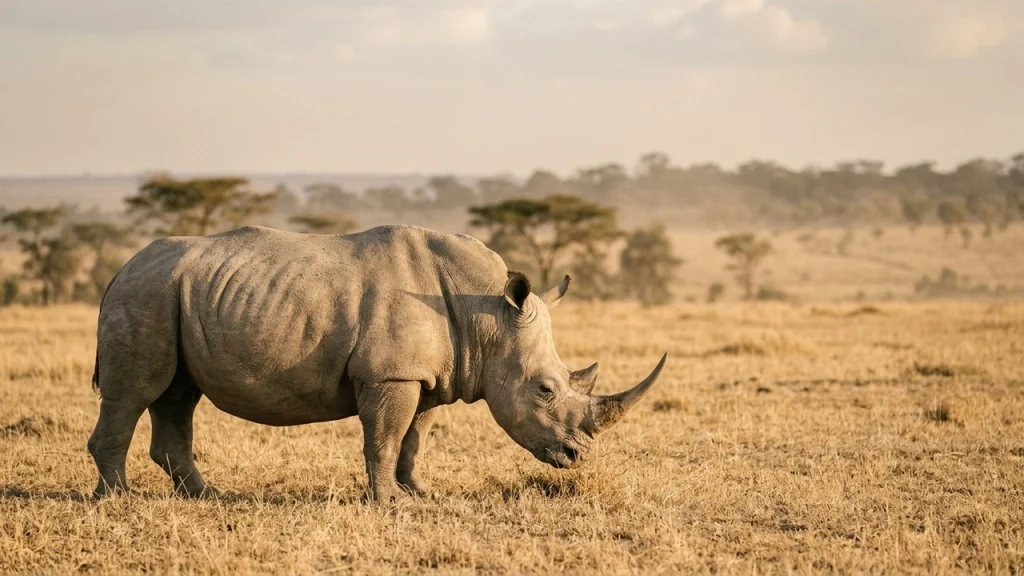
A rhino’s life span is listed at 40 to 45 years by the San Diego Zoo, though figures differ by species and setting. For white rhinos in the wild, Animal Diversity Web gives an expected lifespan of 39 to 43 years on average, and it also gives an average lifespan of 46 to 50 years for wild males and females.
In human care the figures vary too. Animal Diversity Web puts the average for white rhinos in captivity at 27 to 30 years, while San Diego Zoo Wildlife Alliance gives a median life expectancy of about 36 to 37 years for white rhinos in managed care. For the eastern black rhino (Diceros bicornis michaeli), the median life expectancy in managed care is about 19 years.
Asian one-horned rhinos in the wild
Animal Diversity Web says species in the genus Rhinoceros, the Asian one-horned rhinos, have a lifespan of 30 to 40 years in the wild. The oldest recorded Rhinoceros unicornis, the greater one-horned rhino, reached 40 years old. Javan rhinos (Rhinoceros sondaicus) are seen so rarely in captivity that little is known about their longevity there.
The San Diego Zoo says white rhinos and greater one-horned rhinos share second place among land mammals for size, and only elephants are bigger.
What ends a rhino’s life
Most rhinoceroses die unnaturally because of human poaching, according to Animal Diversity Web. Other causes of white rhinoceros death, the same account says, include drowning, being stuck in mud, falls from cliffs and being burned in runaway wildfires.
San Diego Zoo Wildlife Alliance lists humans as predators of the black rhino and adds that young rhinos may be at risk from lions and hyenas. Poaching for rhino horn grew again to unsustainable levels in the early 2000s, driven by increased market demand, the San Diego Zoo reports.
Conservation status by species
The San Diego Zoo and San Diego Zoo Wildlife Alliance report these IUCN statuses and wild numbers.
- Black rhino: Critically Endangered, with approximately 3,100 mature individuals in the wild.
- Southern white rhino: Near Threatened (2020 assessment), with approximately 20,000 individuals.
- Northern white rhino: Critically Endangered, with 2 individuals remaining.
- Javan rhino: about 70 remain, living in a protected national park on Java, Indonesia.
A slow start to life
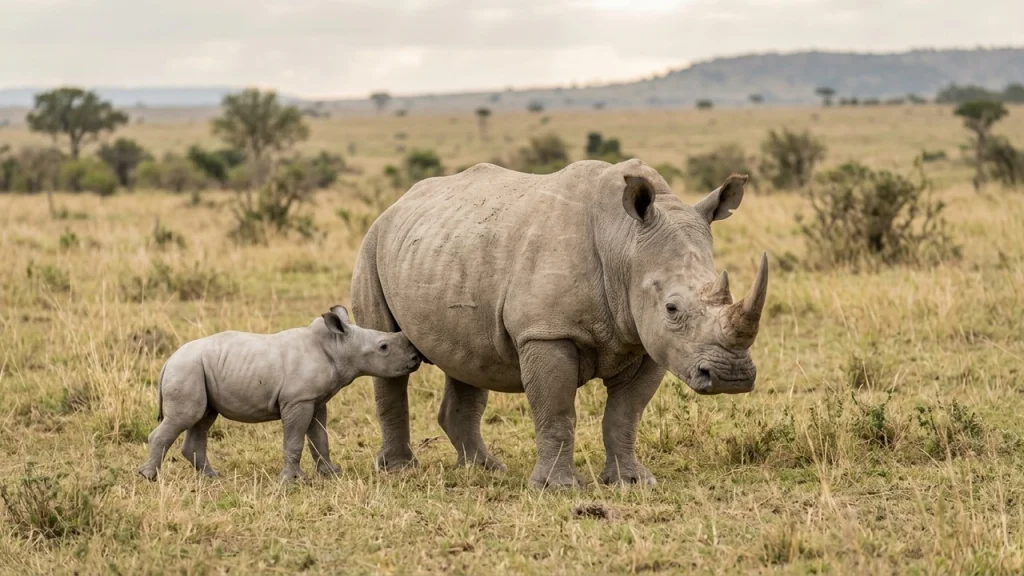
On its rhinoceros page, the San Diego Zoo gives the age of maturity as 5 to 6 years for females and 7 to 8 years for males. White rhinos mature later, at 6.5 to 7 years for females and 10 to 12 years for males. Gestation lasts 15 to 16 months, and births usually produce a single calf, with twins rare.
A newborn is wobbly at first, but two to three hours after birth it can stand and begins to nurse. The calf begins nibbling solid food at 7 to 10 days of age and keeps nursing until it is 12 to 18 months old. San Diego Zoo Wildlife Alliance gives about 1 year of age as the age at weaning for white rhinos.
Rhinos in human care and daily habits
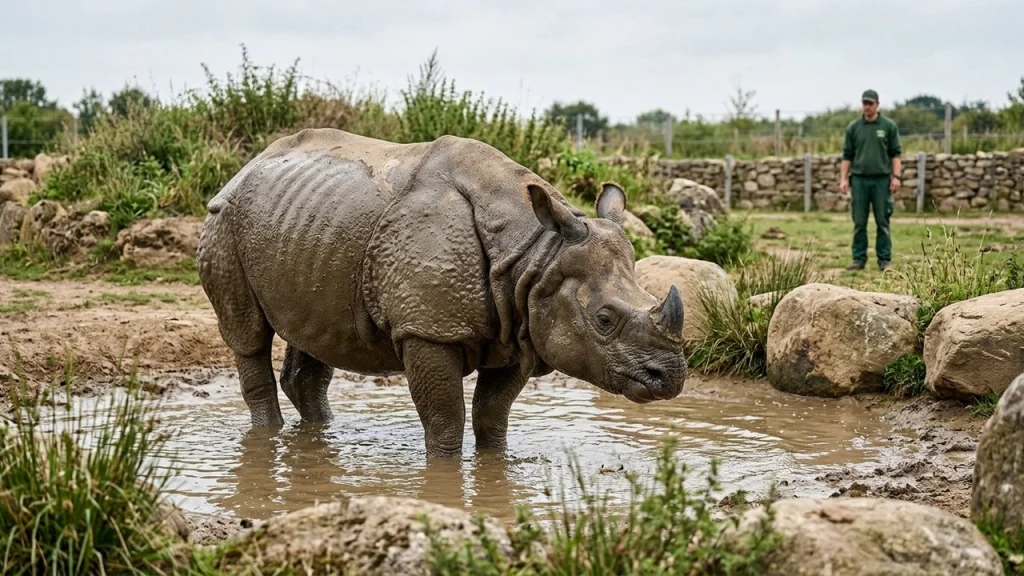
The San Diego Zoo has cared for rhinos since 1952, and its Safari Park welcomed greater one-horned rhinos in 1963. More than 100 calves have been born at the Safari Park, and the zoo counts itself among the world’s leaders in white rhino conservation.
White rhinos, like other rhinos, wallow in watery depressions in the ground so that mud covers their skin, which works as a natural sunscreen and insect repellent. Black rhinos eat leaves and small twigs and are active both day and night. They can go up to five days without drinking water, getting the moisture they need from succulent plants.
Sources
- San Diego Zoo Animals & Plants: Rhinoceros
- San Diego Zoo Animals & Plants: White Rhinoceros
- San Diego Zoo Wildlife Alliance Library: White Rhinoceros (Ceratotherium simum) Fact Sheet: Summary
- San Diego Zoo Wildlife Alliance Library: Black Rhinoceros (Diceros bicornis) Fact Sheet: Summary
- Animal Diversity Web: Rhinoceros (Asian one-horned rhinoceroses)
- Animal Diversity Web: Ceratotherium simum (white rhinoceros)