
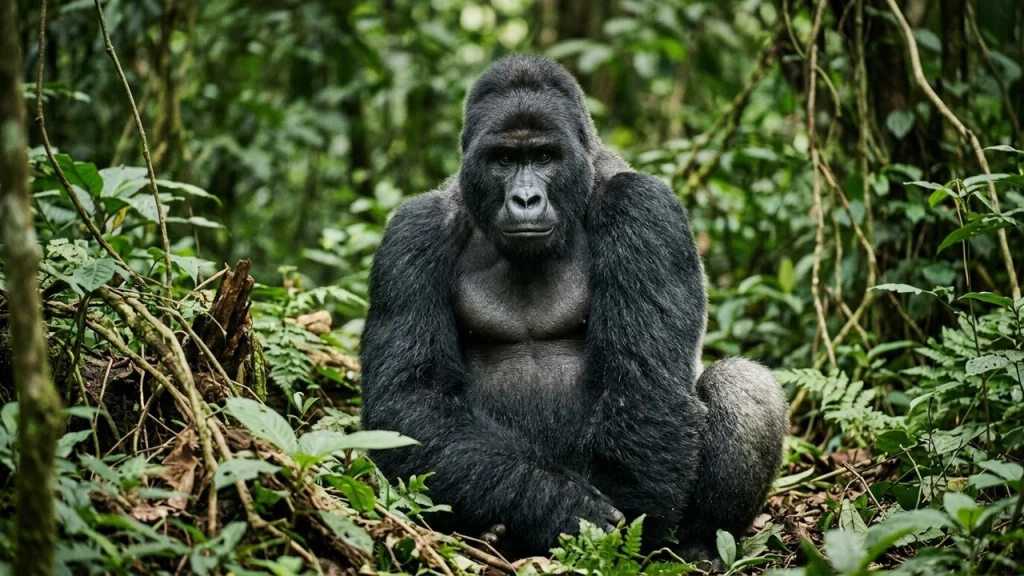
None of the zoo, wildlife database or research sources behind this article gives a measured bite force for gorillas. They describe the gorilla’s skull crests, jaw muscles and teeth instead.
The one journal study among them appeared in Interface Focus (The Royal Society) and deals with estimating jaw-muscle and bite force in primates. Its sample covered five primate species and included just one gorilla.
Crests, jaw muscles and teeth
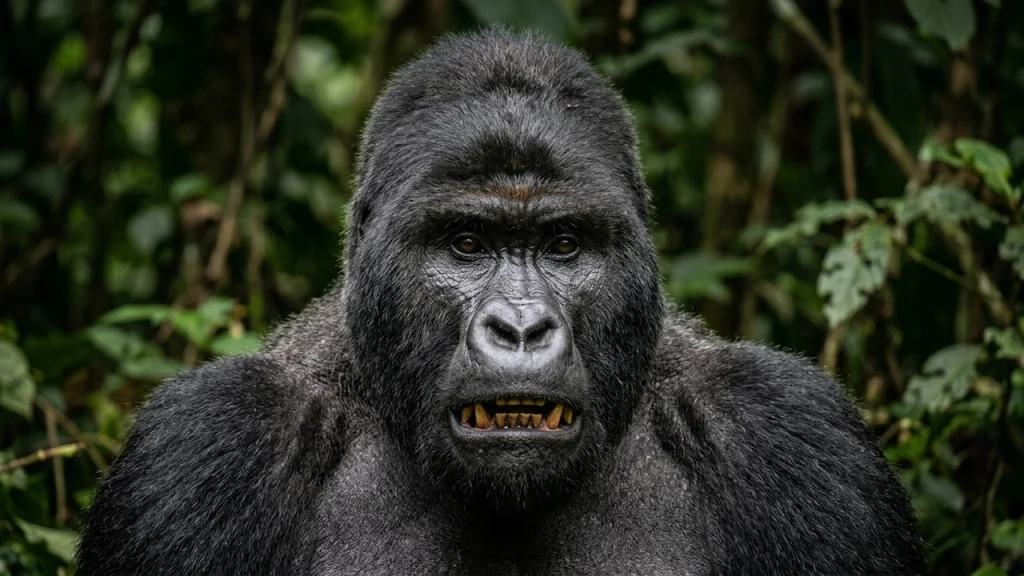
Smithsonian’s National Zoo attributes the conical look of an adult male gorilla’s head to large bony crests along the top and back of the skull. The crests anchor the massive muscles that support and operate the large jaws and teeth. Adult females have the crests too, but much less pronounced.
Animal Diversity Web describes western gorillas as having large jaw muscles and broad, strong teeth. In large males, it says, big bodies, canines and jaw musculature come with more physical and social power within the group. Smithsonian’s National Zoo says adult males weigh 300 pounds (136.1 kilograms) on average and up to 500 pounds (226.8 kilograms).
What the jaw-muscle study found

The authors report that treating the jaw muscles as either uniformly slow or uniformly fast may overestimate average maximum muscle force by as much as about 44%. They conclude that accounting for fibre types and their specific tensions is likely to improve estimates of jaw-muscle and bite force in primates. All the tissue came from captive individuals with no evidence of muscle atrophy.
What gorillas eat
Smithsonian’s National Zoo calls gorillas primarily herbivorous and lists leaves and stems from herbs, shrubs and vines, along with the fleshy fruits of close to a hundred tree species that fruit seasonally. San Diego Zoo’s list also includes seeds, roots, ants and termites, and its Safari Park gorillas use their teeth to peel radishes before eating them.
The Smithsonian’s National Zoo says an adult male gorilla takes in about 45 pounds (32 kilograms) of food a day, and a female about two-thirds of that.
When gorillas bare their teeth
Animal Diversity Web describes gorillas as generally peaceful, shy and amiable unless threatened. San Diego Zoo describes the routine a male uses to drive off unwanted gorillas: a chest beat with cupped hands that makes a loud noise, screaming, bared teeth and then a charge.
Where western gorillas stand today
Animal Diversity Web lists western gorillas as critically endangered in the wild. Smithsonian’s National Zoo says IUCN changed the status of western gorillas from endangered to critically endangered in 2007.
The zoo’s western lowland gorilla page reports a population decline of more than sixty percent over 20 to 25 years, a result of exceptionally high levels of disease and hunting. It adds that the commercial bushmeat trade, Ebola and the spread of logging had devastated the western lowland gorilla.