
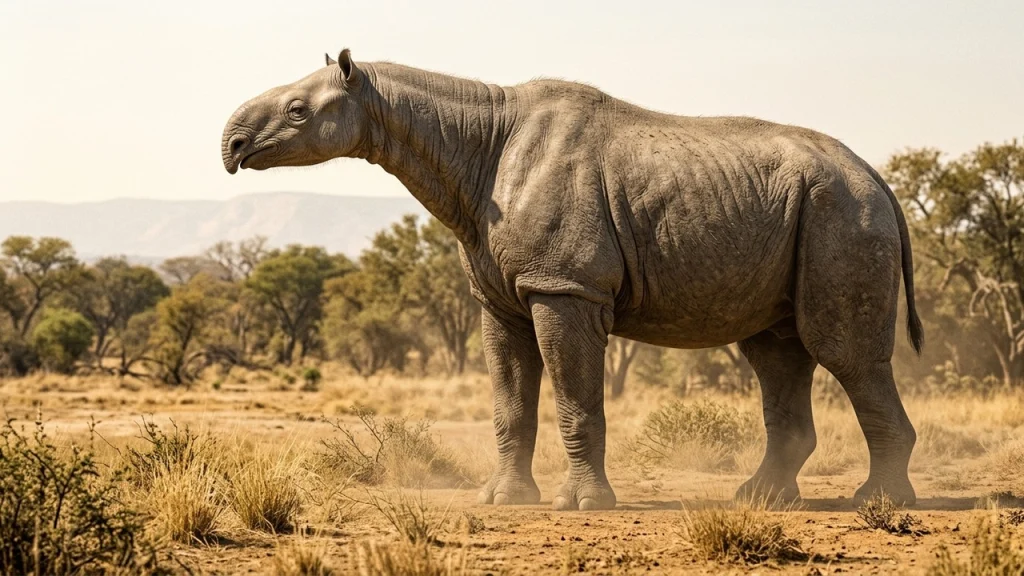
According to Animal Diversity Web, this rhinoceros is believed to have reached 5.4 m in height at the shoulder and likely weighed around 30,000 kg, which is over 4 times what a modern elephant weighs.
The San Diego Zoo gives the paraceratherium a length of 7.6 meters, while Animal Diversity Web states that this rhino was believed capable of browsing vegetation higher than 8 m above ground.
None of the zoo, animal reference or research sources behind this article states outright that Paraceratherium was the largest rhino ever lived; they give its size but never rank it against other rhinos. The family Paraceratheriidae is known for its immense body size and its specialized rostral region.
Three names for one animal
A study in Communications Biology sets Indricotherium and Baluchitherium down as junior synonyms of Paraceratherium.
Skull and legs
The Communications Biology study reports a skull and legs longer than those of all reported land mammals. The same study notes that the metapodials are not massive in outline.
Giant rhinos across Asia
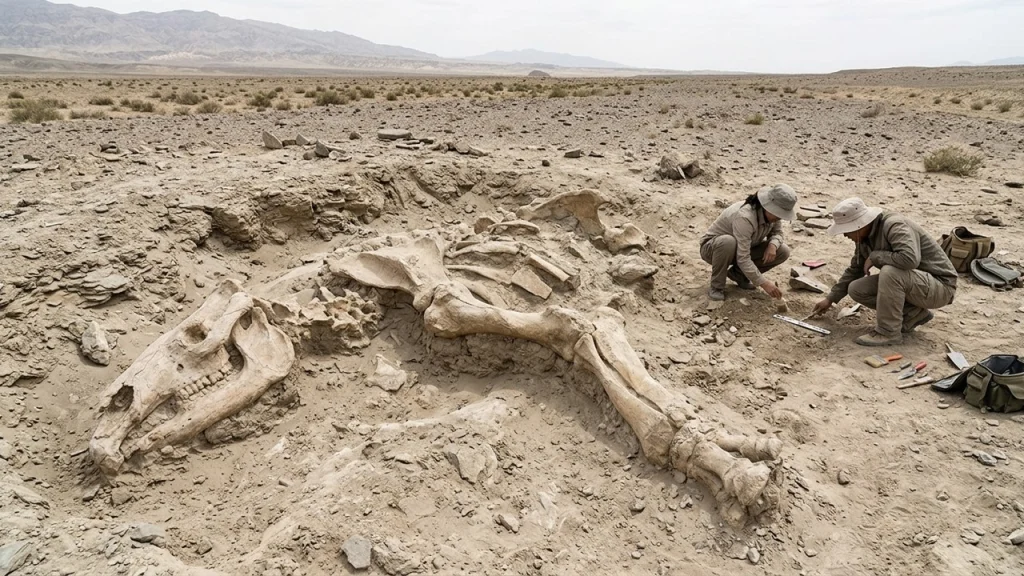
Asia was their main range: China, Mongolia, Kazakhstan and Pakistan. The Chinese record holds six genera of giant rhino, spread from the middle Eocene to the late Oligocene.
The Communications Biology study traces the Juxia stock into Urtinotherium in the late Eocene and into the derived genus Paraceratherium in the Oligocene. It treats Juxia from the middle Eocene as the unequivocal ancestor of all giant rhinos, a lineage that had split from a related clade at about 40 Ma.
Animal Diversity Web reports fossil rhinos from the late Eocene. The Communications Biology study suggests the Tibetan area probably held low ground, possibly under 2000 m, in the Oligocene. A body of this size fitted open woodlands whether the climate was humid or arid.
Fossils from western China
A study in Scientific Reports describes a new species within the family Paraceratheriidae, named from a mandible found in rocks of the Early Oligocene of Northwest China. The same study recorded 91 perikymata in the third lower molar of the new paraceratheriid and read from those lines a crown formation time of no less than 637 days for that single tooth.
The same study puts minimum suckling time for this giant rhino at 427 days. Full body maturity came around 17 years of age, and its potential lifespan was up to 40 years.
Turpanotherium is probably the smallest genus of the group. The fossil came from upper Oligocene rocks of the Jiaozigou Formation in the Linxia Basin, Gansu, China, and the new species was dated to 26.5 Ma and placed as the most derived member of its genus.
Where living rhinos stand
According to the San Diego Zoo, close to 100 rhinoceros species are known across the eons, and five are alive today: the white, black, greater one-horned, Sumatran and Javan rhinos.
The San Diego Zoo Wildlife Alliance lists the white rhino as the heaviest rhino, at 6,000 pounds (2,300 kilograms), and as the tallest, up to 6 feet (1.8 meters). Animal Diversity Web puts adult white rhinos at roughly 1000 to 3600 kg, and gives an average head and body length of 3.35 to 3.77 m.
That reference counts white rhinoceroses among the largest terrestrial mammals. The Sumatran rhino averages 1,765 pounds (800 kilograms), and it stands up to 145 centimeters at the shoulder.
The San Diego Zoo gives living rhinos a life span of 40 to 45 years. Females reached maturity at only 5 to 6 years and males at 7 to 8 years.
Two northern white rhinos are all that remain alive, both of them female, which leaves the subspecies functionally extinct. About 70 Javan rhinos are left in a single protected park on Java, Indonesia, and Animal Diversity Web reports that the IUCN Red List gives the northern white rhino a status of Critically Endangered, possibly extinct in the wild, and the southern white rhino a status of Near Threatened.
Sources
- San Diego Zoo Wildlife Alliance: Rhinoceros | San Diego Zoo Animals & Plants
- Animal Diversity Web: Rhinocerotidae (rhinoceroses)
- Communications Biology: An Oligocene giant rhino provides insights into Paraceratherium evolution
- Animal Diversity Web: Ceratotherium simum (white rhinoceros)
- Communications Biology: The origin of Rhinocerotoidea and phylogeny of Ceratomorpha (Mammalia, Perissodactyla)
- Scientific Reports: Life history of a new Paraceratheriid from the Early Oligocene of Northwest China