
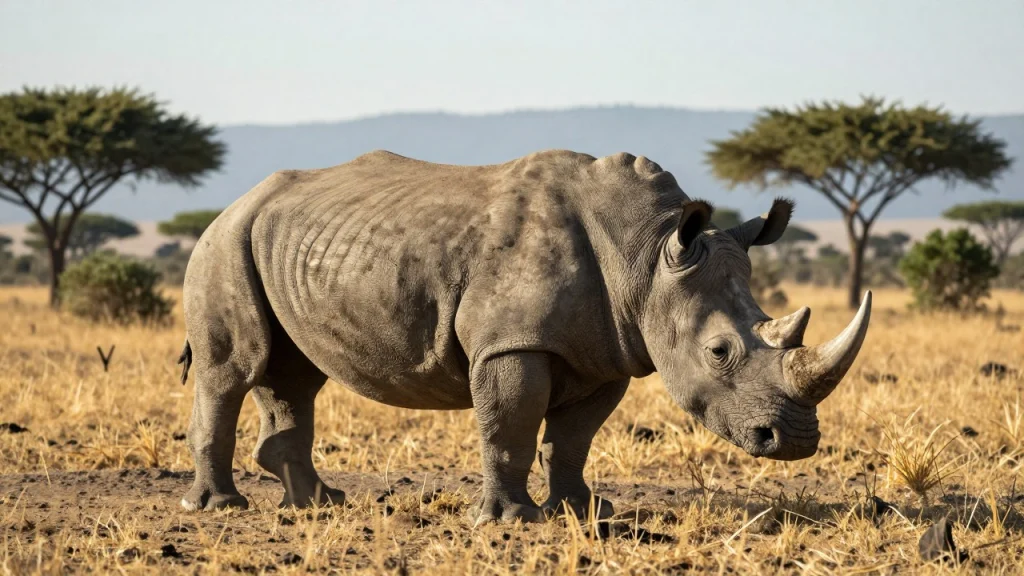
The maximum weight of a rhinoceros depends largely on the species, but the largest individuals can weigh up to 3,600 kilograms (8,000 pounds). The white rhinoceros is the heaviest of all five living rhino species, ranking as the second-largest land mammal on Earth, trailing only the elephant.
While the white rhino reaches massive proportions, other species are noticeably smaller. For instance, black rhinos typically range between 800 and 1,400 kilograms, Indian rhino males weigh about 2,200 kilograms on average, and the critically endangered Sumatran rhino rarely exceeds 1,000 kilograms. Understanding these differences provides clear insight into how body mass varies across rhino species and habitats.
How much do different rhinoceros species weigh?
Rhinoceroses belong to the family Rhinocerotidae, which includes five extant species native to Africa and Asia. Body size varies significantly depending on evolutionary adaptation and geographic distribution.
African rhinoceros species
Africa is home to two distinct rhinoceros species: the white rhino (Ceratotherium simum) and the black rhino (Diceros bicornis). Despite their names, both species are gray; their distinction lies primarily in body shape, diet, and overall mass.
- White Rhinoceros: Adult males weigh about 2,300 kilograms (5,100 pounds), though exceptional individuals have been documented reaching 3,600 kilograms (8,000 pounds). Females weigh about 1,800 kilograms and are smaller than males.
- Black Rhinoceros: Noticeably smaller than their white counterparts, adult black rhinos generally weigh between 800 and 1,400 kilograms (1,800 to 3,100 pounds).
Asian rhinoceros species
Asia features three species, ranging from the massive greater one-horned rhino to the smaller, hairy Sumatran rhino.
- Greater One-Horned Rhinoceros (Indian Rhino): This species is the second-largest rhino species. Mature males weigh about 2,200 kilograms on average.
- Javan Rhinoceros: Adults range from about 1,500 to 2,000 kilograms; the species is the rarest of the five rhinos, with fewer than 70 individuals remaining in the wild.
- Sumatran Rhinoceros: The smallest living rhino species, with mature adults weighing about 600–1,000 kilograms.
Key factors influencing rhinoceros body mass
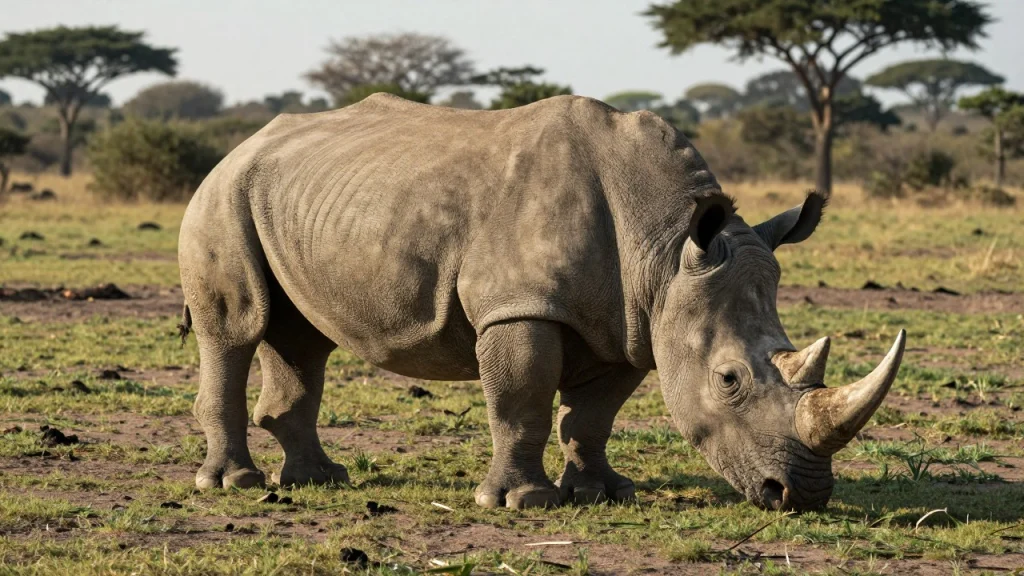
Several natural biological and environmental parameters influence how heavy an individual rhinoceros can get during its lifespan.
Diet and nutritional availability
Rhinoceroses are strict herbivores, but their feeding strategies dictate their body structures:
- Grazers: White rhinos possess wide, flat lips suited for cropping grass. Because grass is abundant in savanna biomes, grazing rhinos consume vast amounts of plant material daily to support their huge body mass.
- Browsers: Black and Sumatran rhinos have prehensile upper lips designed for plucking leaves, twigs, and fruit from bushes and trees. Browsing offers high nutrition, but forage can be more dispersed than grassland vegetation.
Age and sexual dimorphism
Like many large land mammals, rhinos exhibit sexual dimorphism, meaning males generally outgrow females in both mass and skeletal size.
- Growth rate: A newborn rhino calf typically weighs between 40 and 65 kilograms (90 to 140 pounds) at birth.
- Adult maturity: Rhinos keep growing until they mature, at about 5 to 7 years in females and about 7 to 12 years in males, depending on the species.
Physical structure and support of massive weight
Supporting several tons of body weight requires robust anatomical adaptations. A rhinoceros’s skeletal and muscular structures are built specifically to distribute heavy weight efficiently across four legs.
- Columnar leg bones: Rhino limbs are short, thick, and positioned vertically under the body, functioning like supporting pillars.
- Three-toed foot structure: Each foot features three functional toes padded by a tough, flexible cushion of fat and fibrous tissue that absorbs shock when walking or running.
- Thick hides: White rhinoceros skin can be as thick as 45 millimeters (4.5 centimeters) in certain areas, providing protection and structural support for internal organs without restricting mobility.
Despite their heavy builds, rhinos can achieve impressive bursts of speed when startled or threatened: white rhinos have been estimated to reach about 25 km/h and black rhinos about 43 km/h.
Comparing rhinoceros weight to other large land mammals
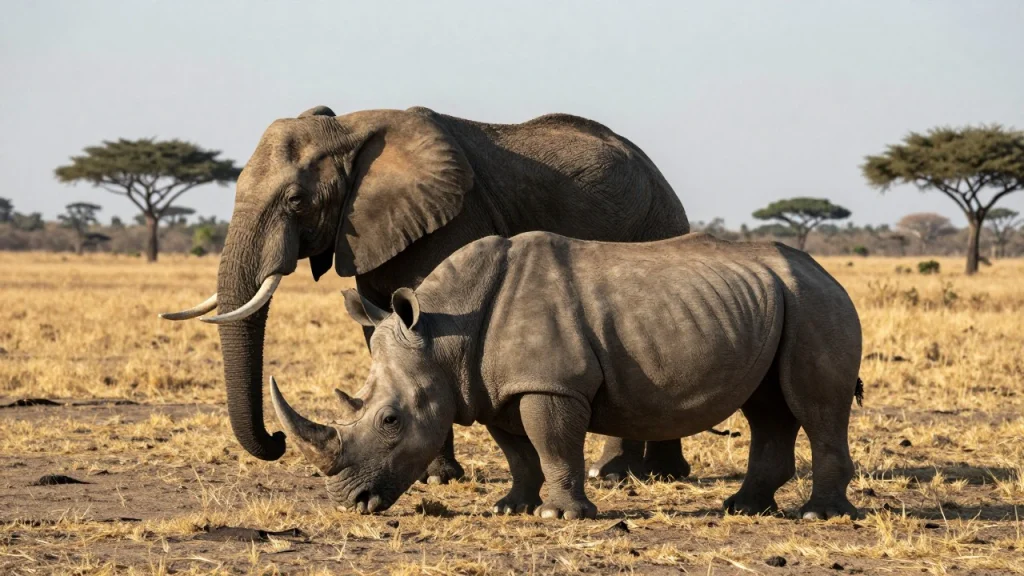
To appreciate the scale of a rhinoceros, it is helpful to compare its body weight with other prominent terrestrial mammals:
- Elephants: African bush males weigh about 4,500–6,100 kilograms, while females weigh about 2,000–3,500 kilograms.
- White Rhinoceroses: Ranking second among land mammals, top weights reach up to 3,600 kilograms.
- Hippopotamuses: Often comparable in mass to rhinos, adult hippos weigh between 1,300 and 1,800 kilograms, with large males reaching up to approximately 2,065 kilograms in the wild.
- Giraffes: Tall but slender by comparison, adult male giraffes usually weigh around 1,200 to 1,900 kilograms.
Summary of rhinoceros weight ranges
Maintaining large body mass is essential for wild rhinoceroses, as size acts as a deterrent against natural predators such as lions and cheetahs. However, human activities, habitat loss, and illegal poaching remain critical threats to the survival of these iconic megafauna across Africa and Asia.
Sources
- San Diego Zoo Wildlife Alliance: Rhinoceros | San Diego Zoo Animals & Plants
- Animal Diversity Web: Ceratotherium simum (white rhinoceros) | INFORMATION | Animal Diversity Web
- PeerJ: Limb myology and muscle architecture of the Indian rhinoceros Rhinoceros unicornis and the white rhinoceros Ceratotherium simum (Mammalia: Rhinocerotidae)
- PLOS ONE: Histological study of white rhinoceros integument
- San Diego Zoo Wildlife Alliance Library: Hippopotamus (Hippopotamus amphibius) & Pygmy Hippopotamus (Choeropsis liberiensis) Fact Sheet: Summary