
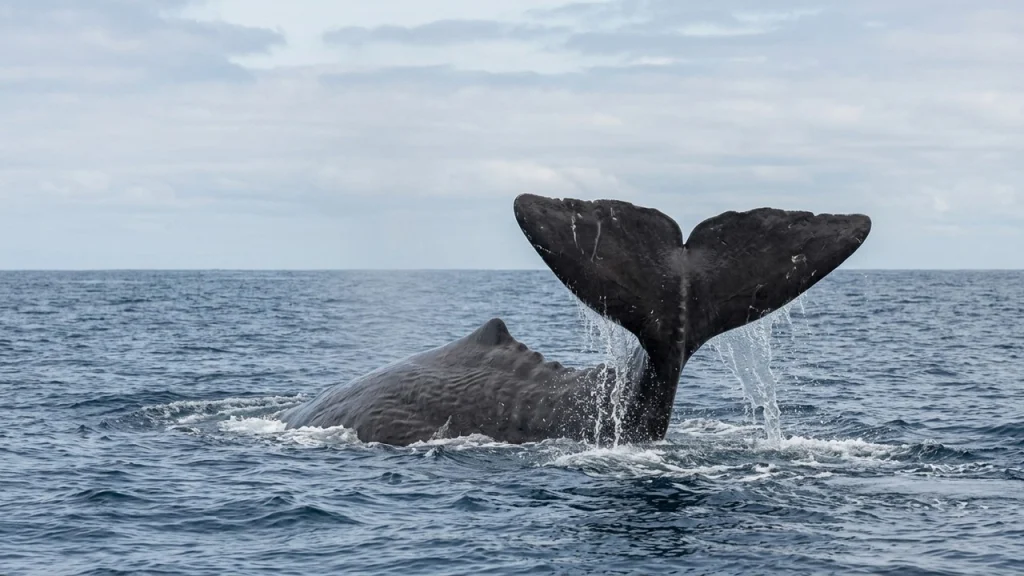
A study in PeerJ reports that within their analyzed dataset, the maximum measured length reached 24 m, recorded from a wild male taken during 1933 across the South Pacific. A separate paper in the same journal highlights that Guinness Records lists a 20.7 m specimen captured near the Kuril Islands in 1950 as the largest known individual.
Beyond that single whale, the dataset contains eight subsequent animals spanning 22.9 to 20.8 m. Each of these eight measurements surpasses the top figure compiled by Carwardine (1995) and accepted by Guinness Records. Additionally, the paper mentions an unconfirmed specimen: a jaw preserved at London’s Natural History Museum is alleged to come from an individual that reached 25.6 m.
Measurement standards and twentieth century whaling
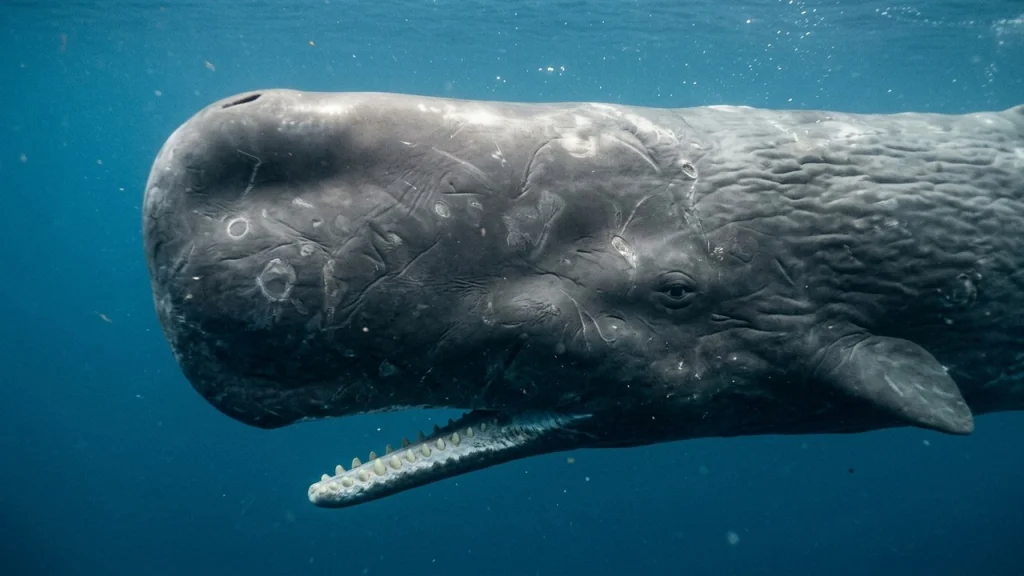
Whaling measurements analyzed in PeerJ were taken while the animals rested on a flat surface, recording the distance from the fluke notch apex to the foremost point of the head. Even though the maximum reported length for the species reaches 24 m, the vast majority of animals remain smaller: 95% of measured individuals fall below 15 m, and 75% measure under 14.3 m.
A paper in Royal Society Open Science notes that hunters killed more than 760 000 sperm whales during the twentieth century alone. Of that total, nearly 315 000 were caught across the North Pacific, with the vast majority taken by Japan and the USSR. The same study reports that whaling stations based on the coastlines of northern Japan and the Kuril Islands conducted extensive harvesting.
Whaling operations took a disproportionate share of males, suggesting they selectively took larger animals to extract more oil in a practice termed gunner selection. A paper in PeerJ found a significant temporal decrease in the sizes of both male and female sperm whales.
Adult dimensions and sexual dimorphism
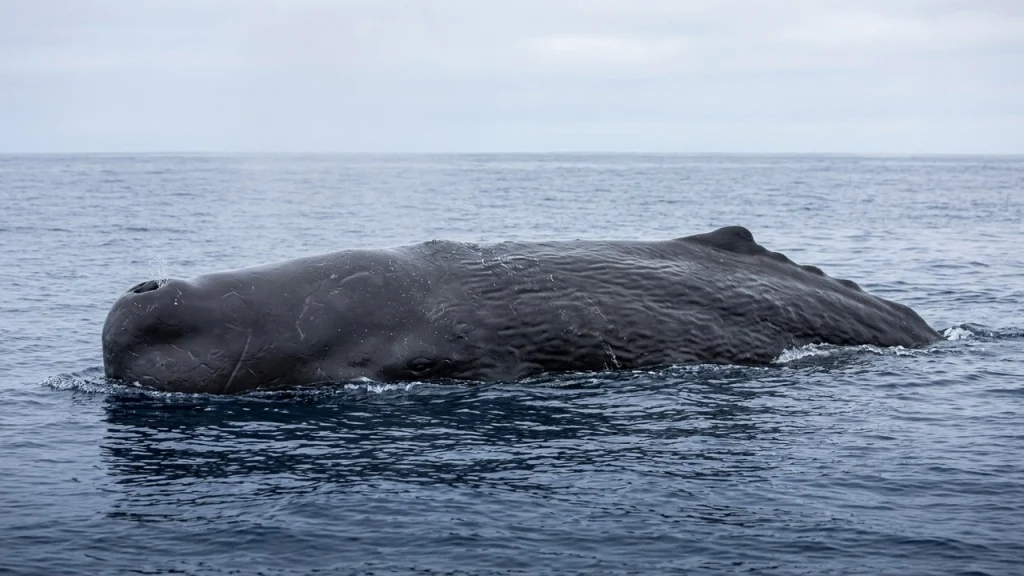
A study in PeerJ identifies Physeter macrocephalus as the largest species among all toothed whales. The paper highlights that Physeter macrocephalus ranks as the most sexually dimorphic cetacean, attributing the difference to competition among males for breeding opportunities.
Adult females cease growth around 30 years old, reaching roughly 10.6 m. By comparison, males continue developing until age 50, attaining lengths of 16 m.
NOAA Fisheries records body weight at 15 tons for females and 45 tons for males, with lengths of 40 feet for females and 52 feet for males, alongside an expected lifespan of up to 60 years. For Physeter catodon, Animal Diversity Web records a mass range of 35000 to 50000 kg, observing that males can attain 19 m whereas females reach 12 meters.
Head proportions and cranial anatomy
Animal Diversity Web notes that the square, box-like head of Physeter catodon can extend up to 1/3 of total body length, an anatomical feature distinguishing this whale from any other species. Within that cranial structure rests the largest brain of any mammal by sheer mass, estimated at approximately 9 kg.
The head also holds 3 to 4 tons of spermaceti. Historically, processors valued this oily substance as a specialized lubricant for fine machinery and an ingredient in automatic transmission fluid.