
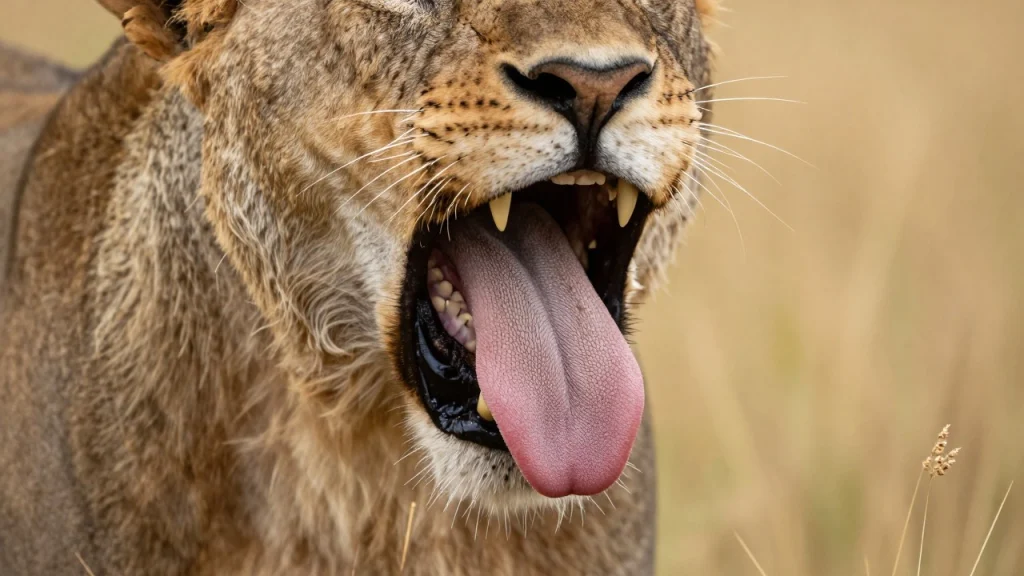
Lion tongues are rough because they are covered in hundreds of sharp, backward-facing keratin spines called filiform papillae. If a lion were to lick human skin, it would feel similar to coarse sandpaper scraping across the flesh. This distinct texture is not random; it serves vital survival functions that allow these big cats to thrive in the wild.
A lion’s tongue is covered in hundreds of sharp, backward-facing keratin spines called filiform papillae. These hard, hook-like structures turn the tongue into a specialized tool for feeding, grooming, and maintaining health. From stripping meat clean off bone to keeping their coats free of parasites, the rough tongue is an essential evolutionary adaptation for apex predators.
The Structure of a Lion’s Tongue
To understand why a lion’s tongue feels like sandpaper, it helps to examine its unique surface structure. The surface is not smooth like a human tongue; instead, it is densely packed with specialized anatomical structures that give it its rasping texture.
What Are Filiform Papillae?
The sharpness and rough texture of a lion’s tongue come from filiform papillae. These are tiny, backward-facing hooks distributed across the central surface of the tongue. Unlike regular taste buds, filiform papillae do not detect flavors. Instead, they serve purely mechanical purposes.
Each papilla points backward toward the lion’s throat. This unidirectional arrangement ensures that anything the tongue grabs (whether fur, meat, or debris) is pulled inward toward the digestive tract.
The Role of Keratin in Spines
The papillae are composed of keratin, the same fibrous protein found in human fingernails, hair, and animal hooves and claws. This rigid material gives the spines their tough, fingernail-like firm texture. Because keratin is exceptionally durable, these tiny hooks can withstand constant friction against tough hides and bones without wearing down.
       /\       <- Backward-facing hook (Papilla)
      /  \      <- Composed of tough keratin
     /    \
==============  <- Tongue surface
Primary Functions: Why Lions Need Rough Tongues
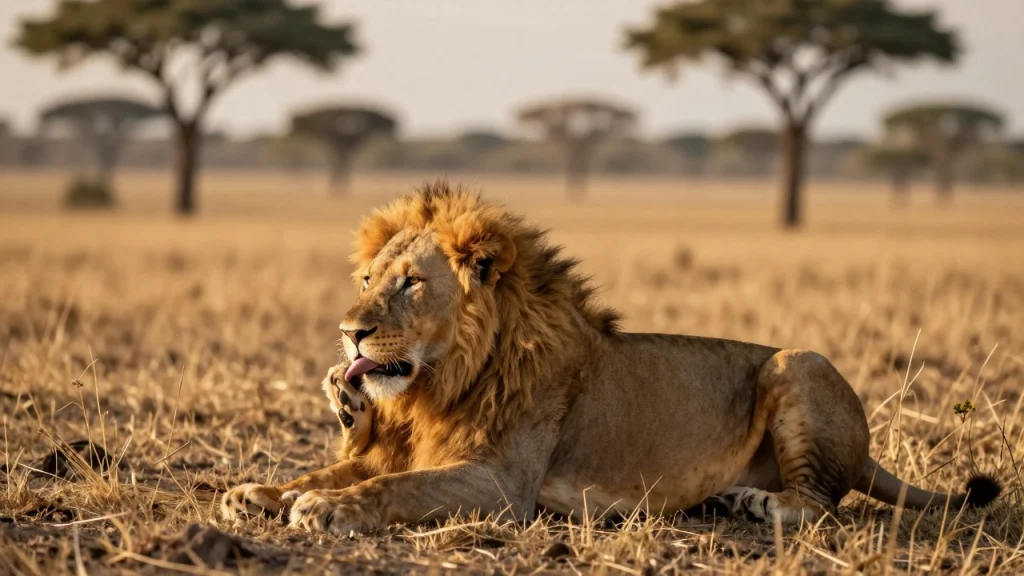
The rough texture of a lion’s tongue is an evolutionary advantage tailored to their predatory lifestyle. It fulfills several critical roles in their day-to-day survival.
Efficient Feeding and Meat Stripping
Lions are hypercarnivores, meaning their diet consists almost entirely of meat. When feeding on large prey like zebras, wildebeests, or buffaloes, lions must extract as much nutrition as possible from every carcass.
The rough tongue acts like a natural file or rasp:
- Scraping meat from bones: The sharp keratin papillae can strip remaining bits of tissue, cartilage, and flesh from dense bones that teeth cannot easily reach.
- Tearing tough hides: The hooks help grip and hold onto slippery or tough animal tissue while eating.
- Maximizing calories: By thoroughly cleaning carcasses, lions ensure minimal food waste, which is crucial during times of prey scarcity.
Advanced Grooming and Hygiene
Grooming is vital for all felids, and lions spend a significant amount of time cleaning themselves and members of their pride. Their tongues serve as built-in hairbrushes and hygiene tools.
- Removing dirt and parasites: The rough papillae help remove fleas and loose hair from the coat.
- Unmatted fur: Regular rasping untangles matted hair, keeping the coat in good insulating condition.
- Scent control: Grooming removes dried blood and foreign odors after a hunt, helping lions stay concealed from potential prey and rival predators.
Thermoregulation and Body Temperature
Lions live in harsh, hot environments across African savannas and open woodlands. Cats have sweat glands only on their paws, and grooming may help them thermoregulate.
When a lion licks its fur, saliva deposits onto the coat. As this moisture evaporates into the warm air, it produces a cooling effect similar to sweating. The deep penetration of the rough tongue ensures moisture reaches near the skin surface.
How Lion Tongues Compare to Other Animals
While rough tongues are a hallmark of the cat family (Felidae), the intensity and scale of this feature vary across different species and animal groups.
Lions vs. House Cats
If you have ever been licked by a domestic house cat, you have experienced a smaller version of this rough texture. Both domestic cats and wild lions possess keratinized filiform papillae.
In one study, a female lion had the longest papillae measured, at 2.7 mm, or 35% longer than a domestic cat’s.
| Feature | Domestic Cat | African Lion |
|---|---|---|
| Papillae Size | Very small (sub-millimeter) | Large and rigid (up to several millimeters) |
| Primary Use | Detangling fine hair, grooming | Stripping tough flesh from bone, heavy grooming |
| Skin Impact | Ticklish to mildly scratchy | Capable of scraping away skin tissue |
Big Cats vs. Canids and Other Mammals
Unlike felids, canids such as wolves and domestic dogs lack the hooked, keratinized papillae that give cat tongues their rough texture. Canids have crushing-type molars and strongly built carnassial pairs. Lions, by contrast, use their specialized tongues to meticulously clean prey down to the skeleton.
Evolutionary Significance of the Rough Tongue
The evolution of backward-facing keratin papillae represents a remarkable adaptation for carnivorous mammals. Felids have specialized mechanical papillae that help scrape meat from bones.
Because hunting requires immense energy expenditure and carries a risk of injury, lions cannot afford to waste food. Papillae may help scrape meat from bones and grip food during eating.
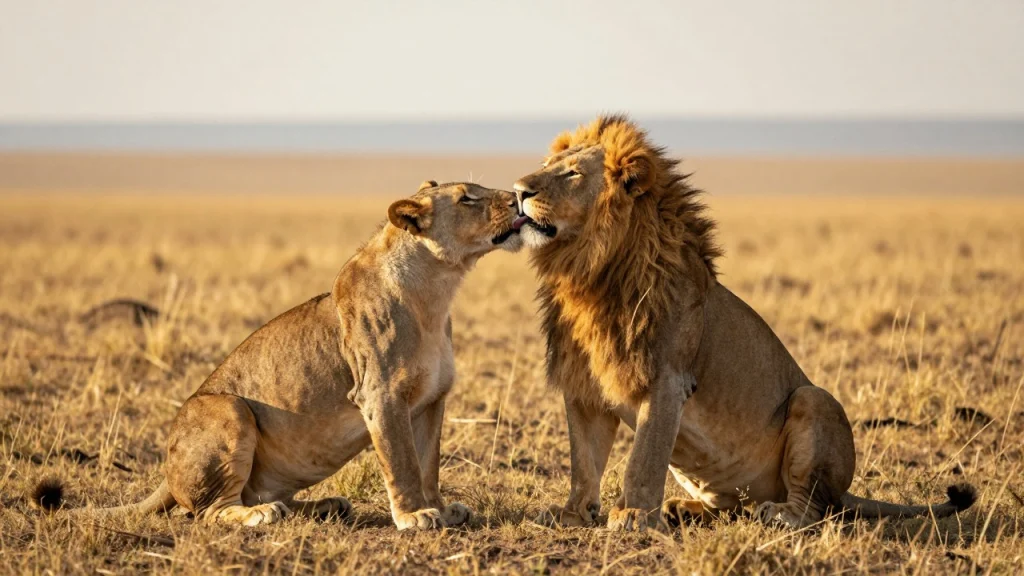
Additionally, social grooming, known as allogrooming, strengthens social bonds within the pride. Lions frequently lick one another’s heads, necks, and manes. The rough tongue not only cleans hard-to-reach areas for pride mates but also releases social tension and reinforces hierarchical bonds within the group.
Summary of Key Takeaways
- Keratin Spines: A lion’s tongue is covered in tiny, backward-facing spines called filiform papillae, made of the same tough protein as fingernails and claws.
- Meat Stripping: The primary feeding function of these hooks is to scrape stubborn meat, muscle, and cartilage cleanly off bones.
- Coat Maintenance: The tongue acts as a natural comb, removing fleas, loose hair, and post-hunt odors.
- Shared Felid Trait: All cats possess rough tongues, but lions have papillae up to about 35% longer than a domestic cat’s (in the one lion measured), suited for processing large prey carcasses.
The rough texture of a lion’s tongue is a perfect example of natural engineering. Far from being a simple organ for taste, it operates as a multi-purpose survival tool essential for feeding, cleaning, cooling, and social bonding in the African wild.
Sources
- San Diego Zoo Wildlife Alliance: Small Cat
- National Academy of Sciences: Cats use hollow papillae to wick saliva into fur
- MDPI: Comparative Study of Lingual Papillae, Lingual Glands and Lyssa of the Tongue of Selected Wild Felids (Carnivora, Felidae) in Biological Aspects
- Smithsonian’s National Zoo and Conservation Biology Institute: Lion
- Animal Diversity Web, University of Michigan: Canidae (coyotes, dogs, foxes, jackals, and wolves)