
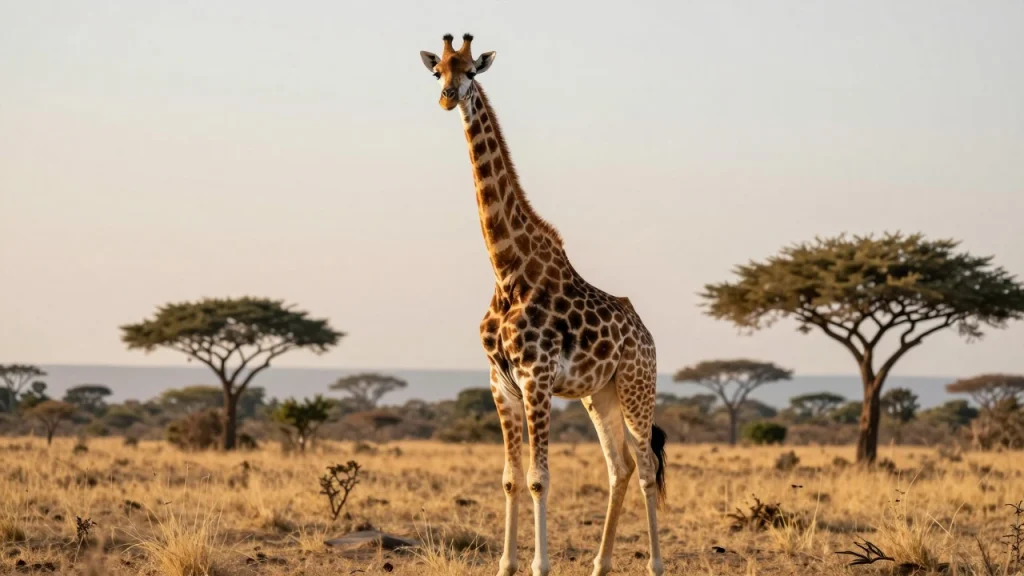
The gestation period of a giraffe is typically 14 to 15 months, or approximately 400 to 460 days. This extended pregnancy allows the calf to develop significantly before entering the wild.
Compared to other terrestrial mammals, giraffes invest a substantial amount of time in fetal development. This extended gestation ensures that newborn giraffes are physically advanced enough to stand, walk, and keep pace with the herd shortly after birth.
Why Giraffes Have Such a Long Gestation Period
The long pregnancy of a giraffe is closely tied to its environment and survival needs. Developing a giant frame, long limbs, and complex circulatory organs takes time.
Key factors influencing this extended gestation include:
- Advanced birth stage: Newborns are born precocial, meaning they enter the world fully developed and capable of mobility.
- Large calf size: A newborn calf stands about 2 m (6.6 feet) tall at the shoulders and weighs 50 to 55 kg (about 110 to 121 pounds).
- Predator evasion: Surviving open African savannas requires young calves to stand within an hour of birth to run from predators.
Stages of Giraffe Pregnancy and Fetal Development
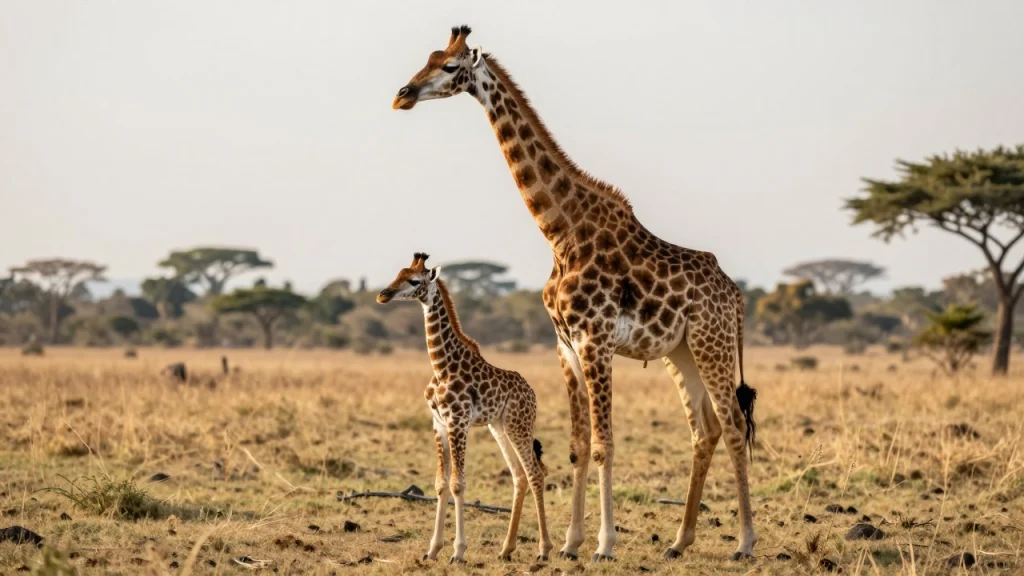
Throughout the roughly 15-month pregnancy, a female giraffe’s fetal growth starts slowly before accelerating later on.
By the time of delivery, the calf has developed strong legs, a fully functioning heart capable of pumping blood up its long neck, and a dense coat pattern.
Birth and the Early Hours of a Newborn Calf
Giraffe mothers give birth standing up. A newborn giraffe calf drops about 2 m (about 6.6 feet) to the ground.
This fall breaks the amniotic sac and stimulates the calf’s initial breath. Newborn giraffe calves can get to their feet and begin suckling about 15 minutes after birth.
- Standing up: Crucial for reaching maternal milk and avoiding predators.
- Maternal care: The mother licks the calf to clean it and establish a strong bond.
- Joining the herd: Mother and calf remain close, eventually rejoining the herd’s nursery group within a few weeks.
Giraffe Reproduction vs. Other Large Mammals
When comparing reproductive cycles among large wild mammals, giraffes fall between large felines and elephants in terms of pregnancy duration.
African elephants have the longest pregnancy of any mammal at almost 22 months; giraffe gestation averages about 15 months, compared with 15 to 16 months for rhinos and 8 months for hippos.
This long reproductive cycle means female giraffes most often give birth to a single calf every 20 to 30 months (about 1.7 to 2.5 years), making calf survival vital for maintaining herd populations.
Sources
- Animal Diversity Web: Giraffa camelopardalis (giraffe) | INFORMATION | Animal Diversity Web
- National Geographic: African elephant, facts and photos | National Geographic
- San Diego Zoo Wildlife Alliance: Rhinoceros | San Diego Zoo Animals & Plants
- San Diego Zoo Wildlife Alliance: Hippo | San Diego Zoo Animals & Plants