
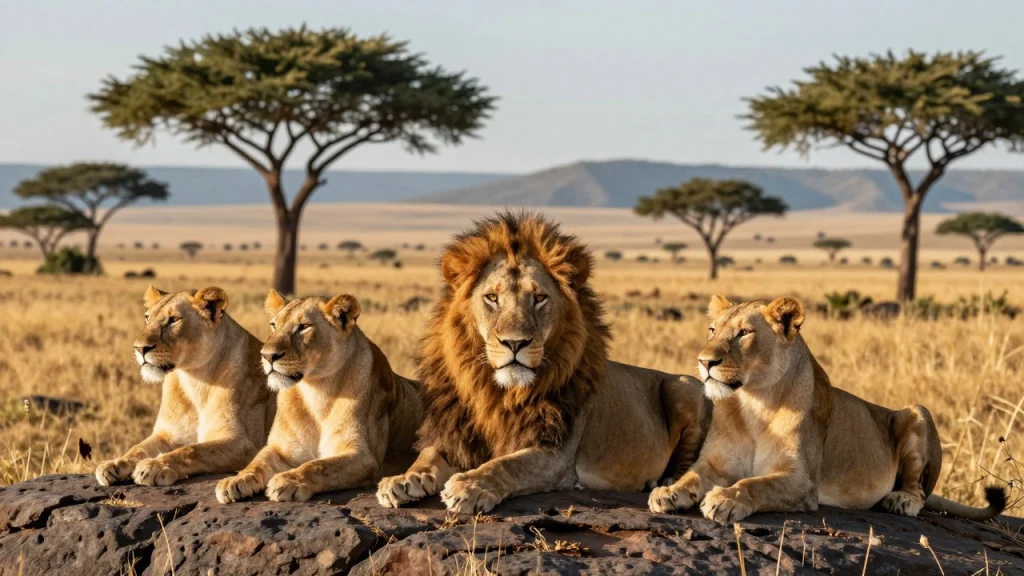
Lions are among the most iconic large carnivores on Earth, yet their natural range in the wild is far more restricted today than it was in historically recent times. Once spanning vast stretches of Africa, Eurasia, and North America, wild lions are now confined to specific regions where open spaces, adequate prey, and protective reserves exist.
Understanding where lions live in the wild requires looking at both their geographic strongholds and the distinct habitats they inhabit. Today, wild lion populations are primarily found in sub-Saharan Africa, with a small, isolated population surviving in western India.
Geographic distribution of wild lions
The overwhelming majority of wild lions live in sub-Saharan Africa. Their distribution, however, is not uniform across the continent. Instead, populations exist in fragmented pockets across East Africa, Southern Africa, West Africa, and Central Africa.
- East Africa: Countries like Tanzania and Kenya host some of the largest and most famous wild lion populations. Iconic protected regions, such as the Serengeti Ecosystem and the Masai Mara National Reserve, provide vital sanctuary for large pride networks.
- Southern Africa: South Africa, Botswana, Namibia, Zambia, and Zimbabwe support significant lion populations. Protected areas like Kruger National Park and the Okavango Delta offer stable habitats rich in game.
- West and Central Africa: Lions in West Africa are critically endangered and geographically isolated, while populations in Central Africa are regionally endangered. Small numbers survive in scattered national parks, such as the W-Arly-Pendjari Complex in West Africa.
Outside of Africa, the only place where wild lions exist is the Gir Forest National Park and surrounding wildlife sanctuaries in Gujarat, India. This population consists of Asiatic lions, classified within the subspecies Panthera leo leo (formerly known as Panthera leo persica), a distinct population that survived historic hunting and habitat loss.
The natural habitats lions call home
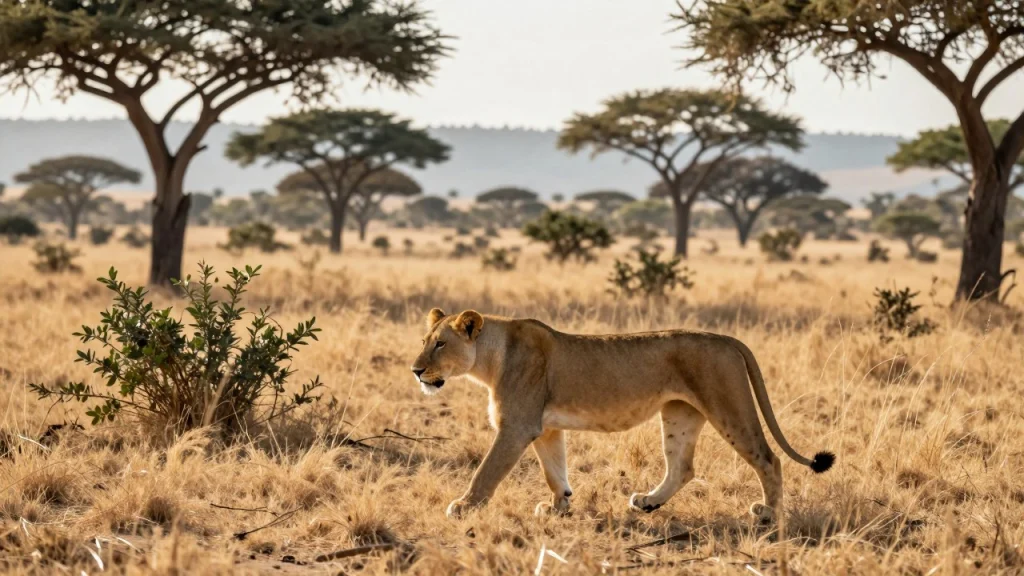
Contrary to popular belief, lions do not live in dense tropical rainforests or true deserts. Instead, they prefer open and semi-open landscapes that allow them to hunt effectively using stealth and cooperative strategies.
Lions thrive in a variety of key habitats across their range:
- Savannas and grasslands: The classic habitat for lions. Open plains allow visibility for spotting prey herds, while tall grasses provide cover for stalking during ambushes.
- Dry woodlands and bushveld: Areas with scattered trees and thick brush offer shaded resting spots during the hottest hours of the day and shelter for young cubs.
- Scrublands and semi-arid regions: In drier areas like the Kalahari, lions adapt to harsh environments by tracking migratory game across vast distances and utilizing ephemeral water sources.
These habitats all share essential characteristics necessary for lion survival: abundant prey species, cover for hunting, and access to water, even if seasonal.
How habitat structure supports lion social groups
Lions are unique among big cats because they live in social family groups called prides. A pride typically consists of several related females, their offspring, and a small coalition of dominant males. The structure of their physical habitat plays a direct role in maintaining these pride territories.
A pride’s territory must be large enough to sustain its members year-round. In rich savannas with abundant prey, a pride’s territory may cover only a few dozen square miles. In sparser, drier environments, territories can expand to cover hundreds of square miles.
Territories are defended against intruding prides, ensuring that the pride has exclusive hunting rights to local ungulate populations like zebras, wildebeests, and buffaloes.
Conservation challenges facing lion habitats
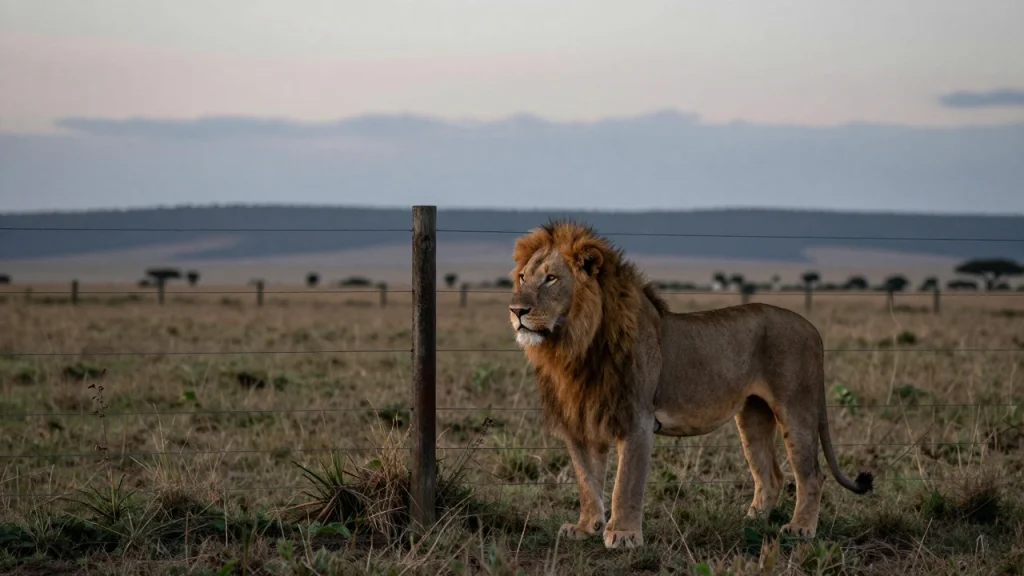
Despite their status as apex predators, wild lions face serious threats that continue to shrink their geographic range. Habitat loss and fragmentation are the primary drivers behind declining wild populations.
Human population growth, agricultural expansion, and livestock grazing have converted former lion territories into farmland and pasture. This creates several conservation hurdles:
- Habitat fragmentation: Dividing wilderness areas isolates prides, limiting genetic diversity and making populations more vulnerable to disease.
- Human-wildlife conflict: As livestock encroaches on natural lion habitats, lions may target domestic animals, often leading to retaliatory killing by farmers.
- Prey depletion: Overhunting of wild herbivore populations by humans leaves lions without an adequate food supply, forcing them to wander further into riskier territories.
Conservation organizations and governments are working to establish protected corridors, support community-led wildlife management, and secure national parks to ensure wild lions have safe spaces to live and reproduce.
The future of wild lion habitats
Securing a future for wild lions depends heavily on preserving and connecting large, continuous landscapes. Effective management of protected areas in sub-Saharan Africa and India remains the cornerstone of lion conservation efforts.
Through dedicated anti-poaching initiatives, habitat restoration, and human-lion coexistence programs, conservationists aim to stabilize existing wild populations. Protecting these vast habitats not only ensures the survival of lions but also preserves entire ecosystems that support countless other wild species.
Sources
- Smithsonian’s National Zoo: Lion | Smithsonian’s National Zoo and Conservation Biology Institute
- San Diego Zoo Wildlife Alliance: Lion | San Diego Zoo Animals & Plants
- WWF: Top 10 facts about Lions | WWF
- Animal Diversity Web: Panthera leo (lion) | INFORMATION | Animal Diversity Web
- National Geographic: African lion, facts and photos | National Geographic
- IUCN/SSC Cat Specialist Group: IUCN/SSC Cat Specialist Group