
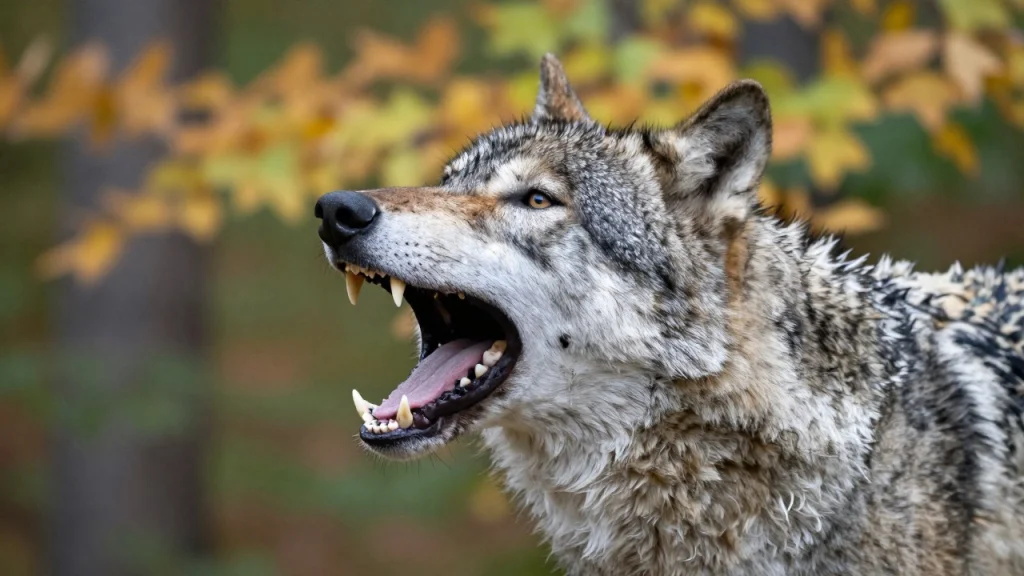
An adult wolf’s permanent dentition comprises 42 teeth; canid dental totals can range from 38 to 42. This dental set includes 20 teeth in the upper jaw and 22 in the lower jaw. Each type of tooth is specialized for grabbing, holding, tearing, and crushing food in the wild.
Compared to adult domestic dogs, which also have 42 teeth, a wolf’s dentition is built for tackling large, powerful prey in the wild. This powerful dental anatomy provides the bite force necessary to bring down large ungulates like elk, moose, and deer.
The Dental Formula of an Adult Wolf
Wolves reach dental maturity, with the full set of 42 teeth in place, at 4 to 6 months of age. Wolf pups are born toothless, and the primary or deciduous dentition is followed by a secondary or permanent dentition.
Upper Jaw (20 teeth): 6 Incisors, 2 Canines, 8 Premolars, 4 Molars
Lower Jaw (22 teeth): 6 Incisors, 2 Canines, 8 Premolars, 6 Molars
The extra two teeth in the lower jaw are accounted for by an additional pair of molars at the very back of the dentition, helping the animal grind tough bone matter and dense tissue.
Anatomical Types and Functions of Wolf Teeth
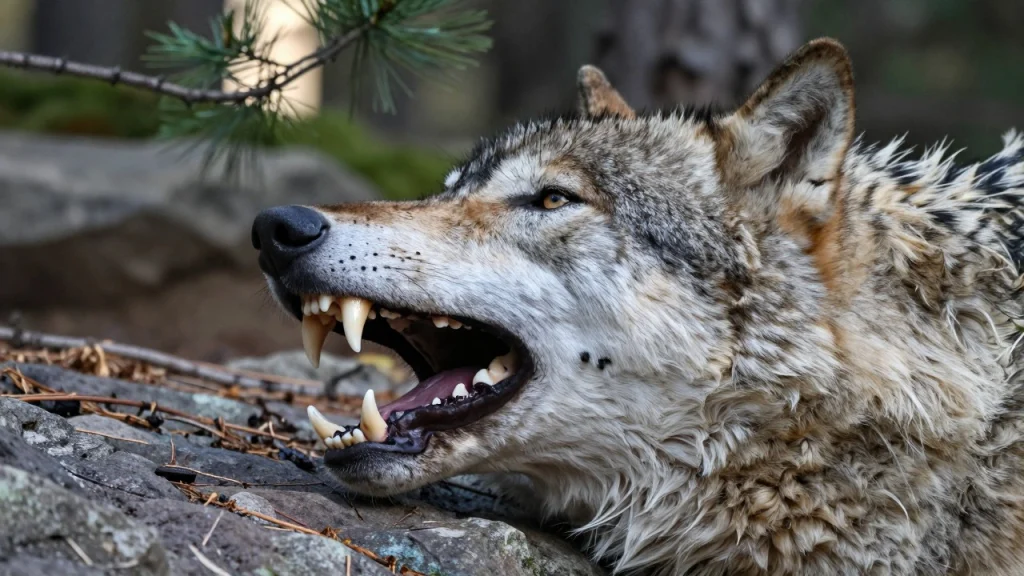
A wolf’s mouth features four distinct types of teeth, each playing a vital role in prey acquisition, processing, and social interactions within the pack.
Incisors for Nibbling and Grooming
Located at the front of the jaw between the large canine teeth, there are 12 small incisors (6 upper and 6 lower). Wolves use these sharp, narrow teeth for delicate tasks such as:
- Scraping small bits of meat off bone.
- Grooming fur to remove parasites, dirt, and burrs.
- Nibbling gently during pack social interactions.
Canines for Grasping Prey
Flanking the incisors are 4 large canine teeth (2 upper and 2 lower), commonly known as fangs. Canines are designed to puncture thick hide and hold onto struggling prey during a hunt.
Premolars for Tearing and Cutting
Behind the canines sit 16 premolars (8 upper and 8 lower). Featuring sharp, jagged edges, these teeth function like shears to tear away chunks of flesh and muscle tissue from carcasses.
Molars and Carnassials for Bone Crushing
At the rear of the jaw are 10 molars (4 upper and 6 lower). The most important of these are the carnassial teeth: the upper fourth premolar and the lower first molar. Acting like heavy-duty blades, the carnassial pair works together to crush bone, crack dense cartilage, and shear through tough connective tissue.
How Wolf Teeth Compare to Dog Teeth
While wolves and domestic dogs share the exact same count of 42 permanent teeth, one key difference sets them apart:
- Bite Force Efficiency: Wolves have a bite pressure of about 1,200 pounds per square inch (PSI).
Tooth Wear, Health, and Survival in the Wild
In the wild, a wolf’s teeth are constantly subjected to severe mechanical stress. Crushing hard bones during feeding gradually wears down enamel over time.
Older wolves frequently suffer from chipped, broken, or heavily worn teeth. Because wolves rely entirely on their jaw strength to hunt and consume food, severe dental wear or tooth loss directly impacts an individual’s ability to survive in its natural habitat.
Sources
- National Park Service: Wolf Ecology – Yellowstone National Park
- National Geographic: Wolf | National Geographic Animals Photo Ark
- Animal Diversity Web: Canidae (coyotes, dogs, foxes, jackals, and wolves) | INFORMATION | Animal Diversity Web
- Veterinary and Animal Science: Dental pathology of the wild Iberian wolf (Canis lupus signatus): The study of a 20th century Portuguese museum collection