
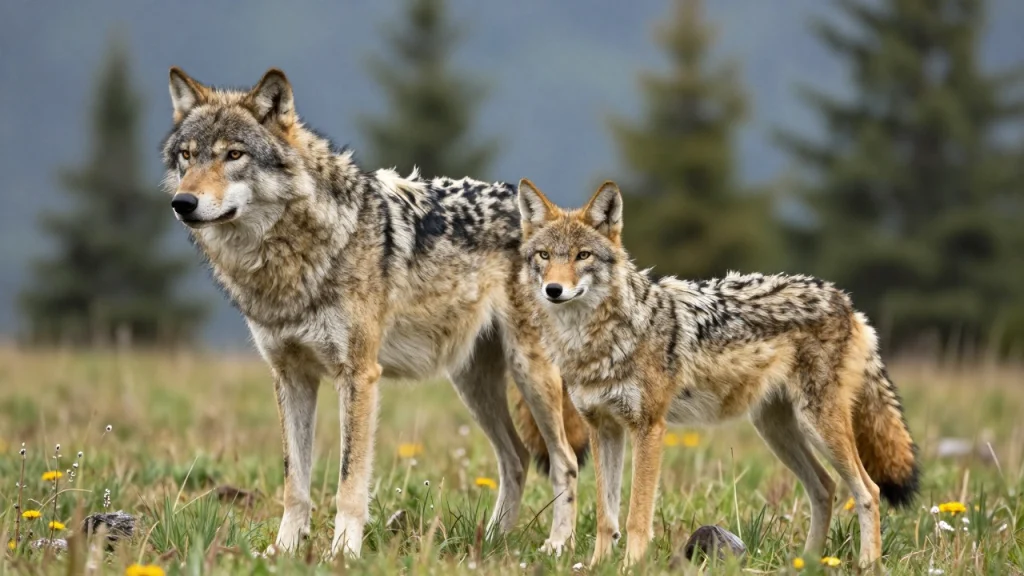
The difference between a wolf and a coyote comes down to size, physical appearance, social structure, and diet. While both belong to the Canidae family and share overlapping habitats across North America, grey wolves (Canis lupus) are 50 to 100% larger than coyotes, with broader snouts, larger feet, and complex pack systems, whereas coyotes (Canis latrans) are extremely adaptable and often hunt alone, in pairs, or in family units.
Recognizing these key distinctions helps wildlife enthusiasts and outdoor lovers identify which wild canine they are observing. From skull structure to vocalizations, clear biological traits set these two species apart.
Physical Differences: Size, Weight, and Appearance
The most noticeable distinction between a wolf and a coyote is overall body size and proportion.
- Body mass and weight: An adult grey wolf typically weighs between 70 and 120 pounds (32 to 54 kg), with some large males exceeding 130 pounds. In contrast, an adult coyote weighs between 20 and 50 pounds (9 to 23 kg), making it roughly the size of a medium-sized domestic dog.
- Facial features and ears: Wolves feature broad, blocky snouts with short, rounded ears that sit low on the head. Coyotes possess narrow, pointed muzzles and long, upright, triangular ears that appear disproportionately large for their heads.
- Paw size and tracks: A wolf’s paw print is substantial, measuring about 5 inches long by 4 inches wide, built to support its heavy frame over snow and tough terrain. A coyote print measures roughly 2.5 inches long, about half the size of a wolf’s track.
       Trait                 Wolf (Canis lupus)           Coyote (Canis latrans)
 ------------------ ------------------------------------ -------------------------
  Average Weight     70 – 120 lbs                         20 – 50 lbs
  Snout Shape        Broad and blocky                     Narrow and pointed
  Ear Shape          Short and rounded                    Long and triangular
  Social Structure   Tight-knit packs (5–9 individuals)   Solitary, pairs, or small family units
  Primary Diet       Large ungulates (elk, deer, bison)   Small mammals, rodents, fruit, carrion
Social Structure and Habitat Behavior
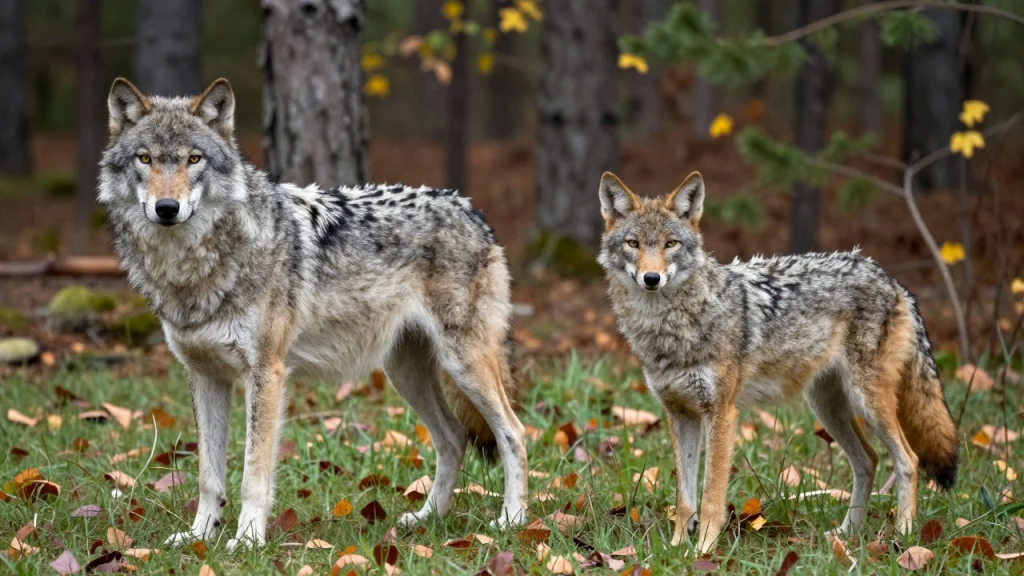
Wolves and coyotes interact with their environment in fundamentally different ways based on their social organization.
Pack Dynamics and Territory
Wolves are highly social animals that live in packs, most having 5 to 9 individuals and typically led by an alpha pair and their offspring. They maintain massive territorial boundaries, traveling vast distances together to protect their home range.
Coyotes display far more flexible social structures. While they can form small family groups to hunt larger prey, coyotes frequently live solitary lives or travel in male-female pairs.
Range and Adaptability
While wolves require expansive, undisturbed wild habitats such as deep forests, tundra, and mountainous regions, coyotes are extremely adaptable opportunists that will eat almost anything. Coyotes thrive in diverse landscapes ranging from open prairies and dense woodlands to suburban neighborhoods and urban parks.
Dietary Differences and Hunting Strategies
Their physical size directly dictates what wolves and coyotes hunt for survival.
- Wolf diet: As apex predators, wolves specialize in hunting large ungulates such as elk, deer, moose, and bison. Killing such massive prey requires coordinated group hunting strategies, endurance tracking, and immense bite force.
- Coyote diet: Coyotes are omnivorous scavengers and hunters of small prey. Coyotes mainly eat small mammals such as rabbits, ground squirrels, and mice; they occasionally eat birds and large insects, while fruit is significant in the diet in fall and winter. When food is scarce, coyotes readily feed on carrion or accessible human garbage.
Because wolves consider coyotes direct competitors for food, wolves frequently drive coyotes out of their established territories or kill them on encounter.
Vocalizations and Communication
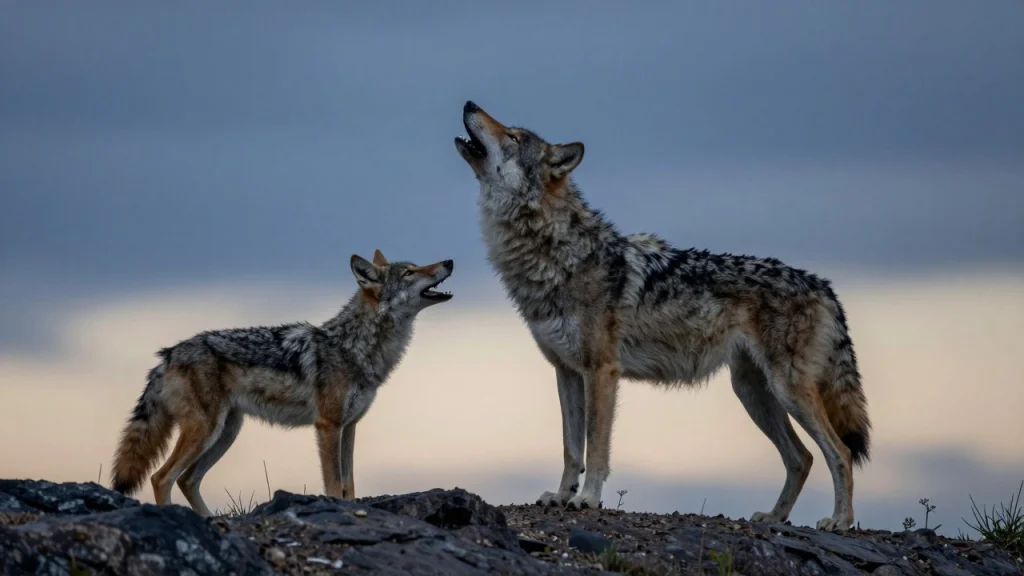
Both species use vocalizations to communicate across long distances, but the sounds they produce are distinctly different.
Wolves produce deep, low-pitched, long howls that sustain a continuous tone to gather pack members or declare territory. They rarely bark, using short huffs or growls primarily to alert the pack to danger.
Coyotes generate high-pitched, vocal sounds composed of yips, barks, whines, and short howls. The howling of two or three coyotes has often been reported to sound like a dozen or more animals are involved.
Key Takeaways
Understanding the difference between a wolf and a coyote involves looking at their scale, ecology, and natural behaviors:
- Size matters: Wolves weigh about three to five times as much as coyotes, with broader snouts and larger feet.
- Behavioral flexibility: Coyotes adapt easily to human landscapes, while wolves depend on wilderness zones.
- Vocal clues: Deep, steady howls signal wolves, while high-pitched yips and quick barks belong to coyotes.
Both species play vital ecological roles as predators, helping maintain healthy herbivore populations and balance wild ecosystems across North America.