
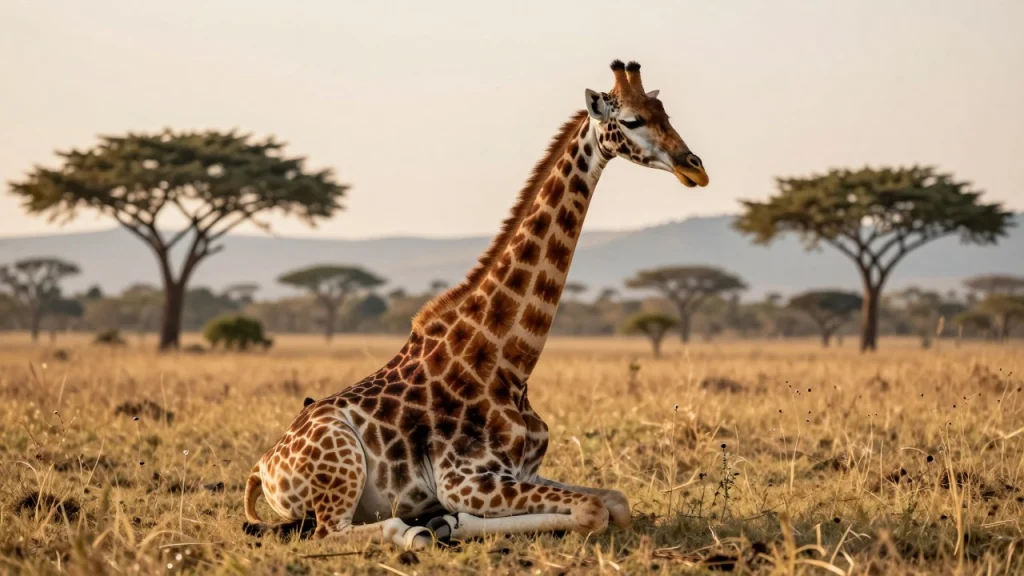
Giraffes are among the mammals with the shortest sleep requirements, needing as little as 5 to 30 minutes of sleep each day in the wild. Unlike humans and many other mammals that sleep in continuous multi-hour stretches, giraffes meet their rest requirements through short naps spread throughout a 24-hour period. These brief rest cycles usually last only a minute or two at a time.
This unusual sleep pattern is an evolutionary adaptation directly linked to their enormous physical size and their constant vulnerability to predators in the African savanna. Understanding how giraffes sleep reveals how wild herbivores balance essential physiological rest with relentless survival pressures.
How many hours do giraffes sleep each day?
In the wild, an adult giraffe typically sleeps only 5 to 30 minutes in total in a 24-hour cycle. Young giraffe calves may sleep slightly more, but fully grown adults maintain remarkably short cumulative rest totals. Research shows that even captive giraffes, which face no danger from predators and have consistent food supplies, usually sleep only around four to six hours per day.
Giraffe sleep is categorized primarily into light sleep and rapid eye movement (REM) sleep:
- Dozing and light sleep: Giraffes spend much of their resting time standing upright with their eyes partially open or closed, remaining fully conscious of ambient sounds and movement.
- Deep REM sleep: Deep sleep makes up only a small part of their already short daily sleep and comes in brief bursts that may last only a minute or two.
Why do giraffes sleep so little?
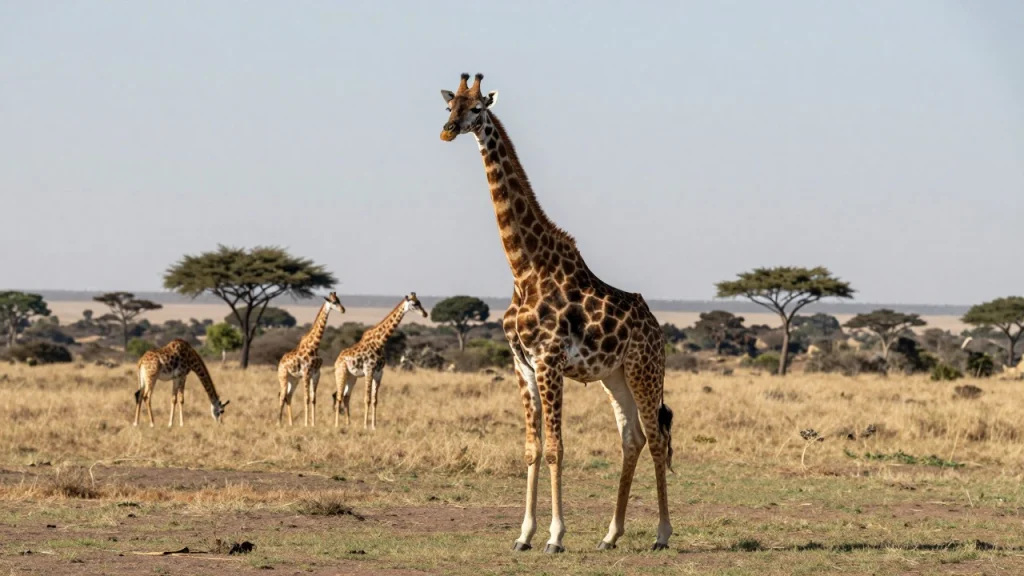
The primary reason giraffes sleep so little is predator avoidance. Apex predators such as lions, hyenas, and leopards inhabit the same African landscapes. Because of a giraffe’s massive height and long limbs, lowering itself to the ground or relaxing completely leaves it severely exposed and unable to react quickly to an attack.
Beyond predator defense, two other physiological factors shape their sleep duration:
- Physical effort to stand up: Transitioning from a lying position to a standing posture takes significant time and physical exertion for an animal that can weigh over 2,000 pounds. Remaining on their feet allows for instant flight.
- Continuous feeding needs: As large herbivores, giraffes consume vast amounts of plant foliage, primarily acacia leaves. They spend up to 18 hours a day foraging, browsing, and chewing their cud, leaving very few hours available for prolonged inactivity.
How giraffes sleep: Standing vs. lying down
Giraffes are capable of sleeping both standing up and lying down, though standing rest is far more frequent throughout the day and night.
Standing sleep
During standing sleep, a giraffe remains completely upright with its weight evenly distributed. Its neck may drop slightly, and its ears continue to swivel to detect nearby noises. This allows the animal to remain alert to potential threats while allowing its nervous system to rest.
Lying sleep
When a giraffe enters deep REM sleep, it lies down on the ground with its legs folded under its body. To relax its long neck muscles, the giraffe curves its neck backward and rests its head on its hindquarters or hip. Because lying down poses high risk, giraffes typically reserve deep sleep for late night hours when herd mates are nearby to watch for danger.
The role of herd dynamics during rest
Giraffes rely heavily on collective vigilance within their herd to stay safe while resting. Members of a herd do not sleep simultaneously. Instead, giraffes take turns resting while keeping watch over the surrounding landscape.
If one giraffe detects a approaching predator, its swift reaction alerts the rest of the group immediately. This shared defensive strategy ensures that individual giraffes can secure the brief periods of deep sleep necessary for survival without sacrificing total group security.
Sources
- San Diego Zoo Wildlife Alliance: Giraffe – San Diego Zoo Animals & Plants
- Oakland Zoo: Reticulated Giraffe
- Giraffe Conservation Foundation: Do giraffe lie down?
- Ecology and Evolution (peer-reviewed paper): Nightly selection of resting sites and group behavior reveal antipredator strategies in giraffe
- Animal Diversity Web: Giraffa camelopardalis (giraffe) – Animal Diversity Web