
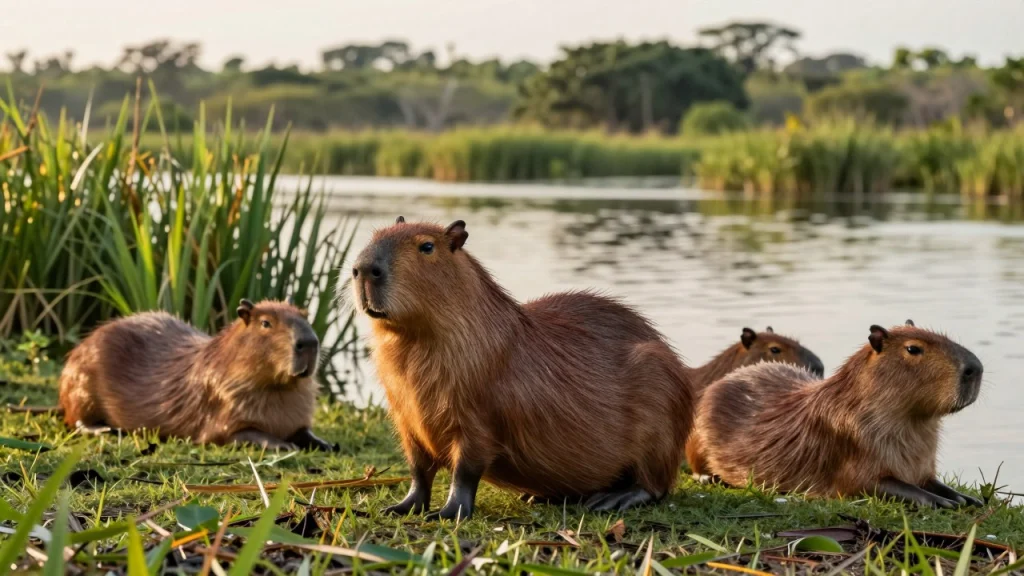
Wild capybaras reach middle age quickly, while sheltered animals gain extra years. Adults living in natural wetlands average around 6 years, with exceptional wild individuals surviving to 10 and animals receiving steady food and veterinary attention surviving to 12.
A widely consulted wildlife reference places the typical wild figure at up to 7 years, which reflects a general average rather than the longest recorded case. Zoo records also point to a higher ceiling under human care than in wilderness, because predators, infections, food shortages and floods affect fewer sheltered animals.
The short answer for busy readers
Outdoor averages sit well below managed maximums, while sheltered longevity exceeds what wetlands usually allow.
The species concerned here carries the scientific label Hydrochoerus hydrochaeris.
Why life in the wild stays brief
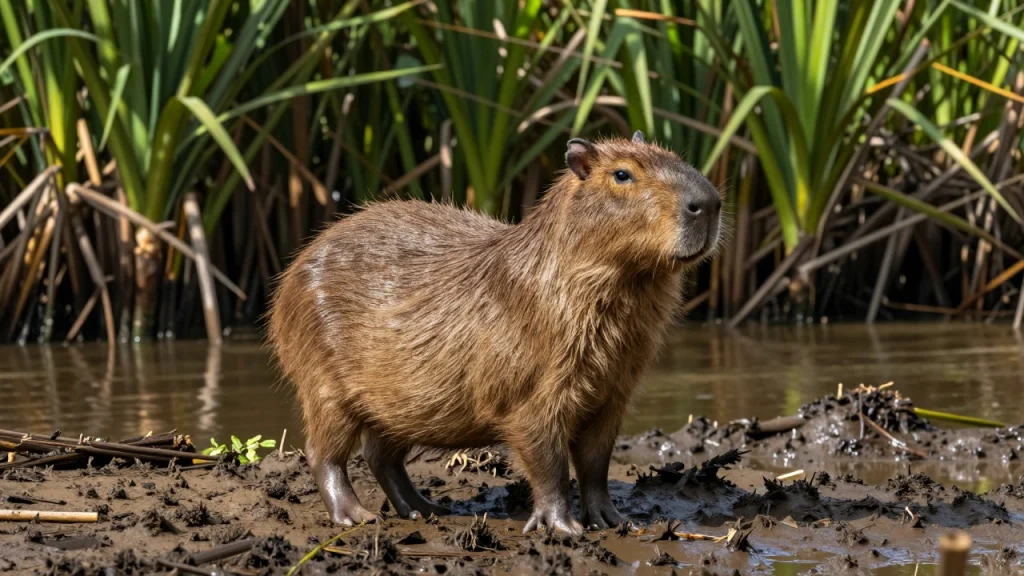
Predators remove many young animals
These semi aquatic mammals occupy large parts of northern and central South America, where rivers, marshes and seasonally flooded grasslands create both pasture and danger. They wander damp grasslands beside rivers, ponds, streams and lakes in those regions, and they depend on nearness to water for feeding, cooling and escape.
Young animals face intense pressure:
- Jaguars threaten even full grown adults
- People hunt capybaras for meat and hides
Early life explains much of the gap between average and maximum age. Especially while young, these rodents attract many large hunters, so many newborns never approach adulthood. Survivors learn to post sentries while grazing, and individuals bark to alert companions when danger appears, which often sends the whole herd toward water.
Adults retain one chief four legged enemy. Grown capybaras face one main natural threat from the jaguar, although humans also pursue them, so alertness remains valuable throughout life.
Water, cover and daily habits shape survival odds
When threatened, capybaras slip into rivers and ponds and expose only breathing openings and eyes. They can remain fully hidden below the surface for up to five minutes, and that ability lets pursued animals wait until predators leave the bank.
Group size also affects vigilance. Natural herds contain around 10 grown animals, with observed totals extending from 3 to 30, and larger gatherings often form around shrinking water during dry periods. Typical herds hold about 10 individuals, centered on a leading male with breeding females, lower ranking males and juveniles sharing care of offspring.
Numbers swell when rain returns:
- Family units merge near productive grazing lawns
- Wet season aggregations can include as many as 40 animals together
- Solitary foraging still occurs, since some animals tolerate time alone
- Dense herds allow more eyes to watch while others feed
Such flexibility helps explain varying herd counts in field reports. The smaller figure describes the stable breeding unit, while the larger figure describes seasonal congregations.
How expert care adds years
Steady food protects teeth and condition
In nature these animals graze predominantly on grasses plus water plants, with bark, fruit, grains and reeds added when favored forage dries. Their front teeth keep lengthening throughout life, and those long, sharp teeth slice tough stems efficiently.
Captive diets remove much of the uncertainty. A grown animal may consume 6 to 8 pounds of grass per day in natural settings, which shows how much bulk the gut must process. Zoos supply hay, vegetables, greens and fiber biscuits on a predictable schedule, and veterinarians treat dental wear, gut problems, skin infections and parasites before those issues turn fatal.
Water access matters in zoos as well as swamps. Because skin dries easily, pools let animals soak, cool themselves and practice natural diving behavior, which lowers stress.
Calm surroundings reduce fatal risks
Sheltered herds do not face jaguars, floods or hunters. Staff separate aggressive animals, guard newborns at night, isolate sick individuals and adjust rations during heat or cold. Those routine actions convert many deaths that would occur early in wetlands into survivable illnesses.
Body bulk partly explains the outcome. Fully grown animals can top 150 pounds, reach about four feet in length and stand about two feet at the shoulder, so they need abundant calories, joint support and space. Facilities that supply those requirements let some residents approach the managed ceiling.
Breeding speed compensates for heavy losses
Pregnancy, birth and early dependence
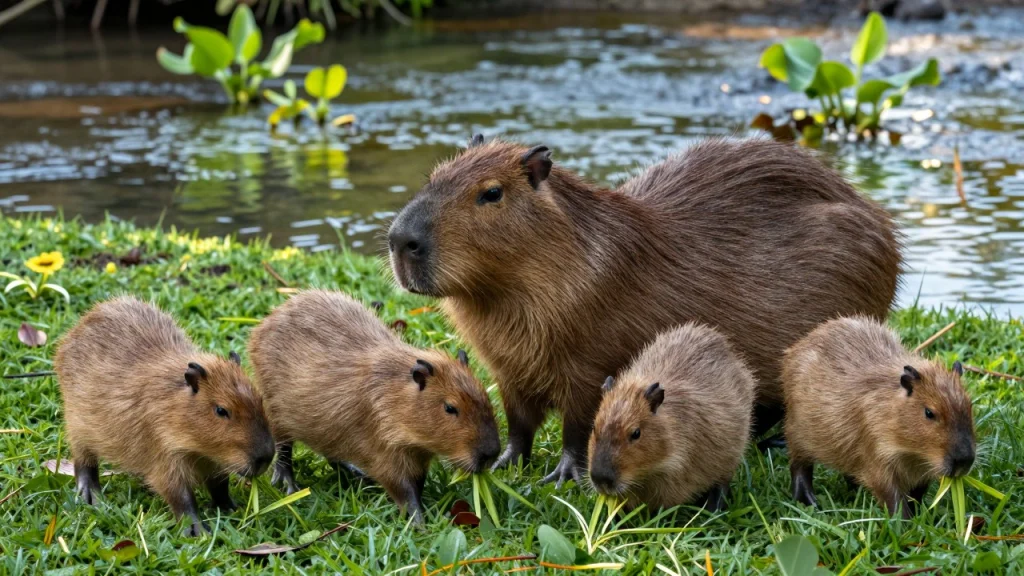
Capybaras reproduce at a pace that offsets predation. Populations generally raise a single litter each year, although timing shifts with rainfall and latitude. Pregnancy lasts 150 days, and birth groups span 2 to 8 infants.
A common family size falls between four to five young per year. Newborns stand and walk soon after delivery, graze within days and continue nursing for a while as adults share vigilance.
Family bonds extend beyond weaning:
- Mothers allow calves from other females to suckle
- Adults cooperate to guard creches
- Juveniles remain with the parental herd until roughly a year old
- Yearlings then disperse or accept subordinate rank
That extended association matters because inexperience kills. Staying with experienced adults improves finding of forage, recognition of alarm calls and selection of safe wallows.
Maturity arrives during the second year
Growth is rapid for a large herbivore. Animals typically mature near 30 to 40 kg, at about 1.5 years, after which males compete for dominance and females can conceive. Early maturity lets a female that survives predators produce several litters, even if her own life ends near the outdoor average.
Conservation context behind the numbers
The global outlook remains favorable. Global assessors place the species in the least concern category, pointing to broad range, abundant numbers and presence across many reserves. Current assessments describe the overall population trend as Stable, despite hunting and habitat conversion in particular districts.
Zoo conservation notes likewise do not rank the animal as endangered today, yet they flag forest clearance, habitat loss and unlawful hunting as pressures. Local declines therefore do not change the species wide picture, but they remind managers that wetland protection, hunting regulation and connected river corridors keep wild averages from falling further.
What a full capybara life looks like
A fortunate wild individual survives its vulnerable first rainy season, joins a stable herd, breeds annually after its second year and persists for many seasons before teeth, joints or predators end its life. A zoo resident with balanced rations, clean water, vaccines and dental checks may pass that mark and live additional seasons.
For observers, the practical lesson is simple. Expect a shorter outdoor norm, treat exceptional wild outcomes as rare and view extended managed longevity as the reward for continuous expert care rather than the expected result in rivers and marshes.