
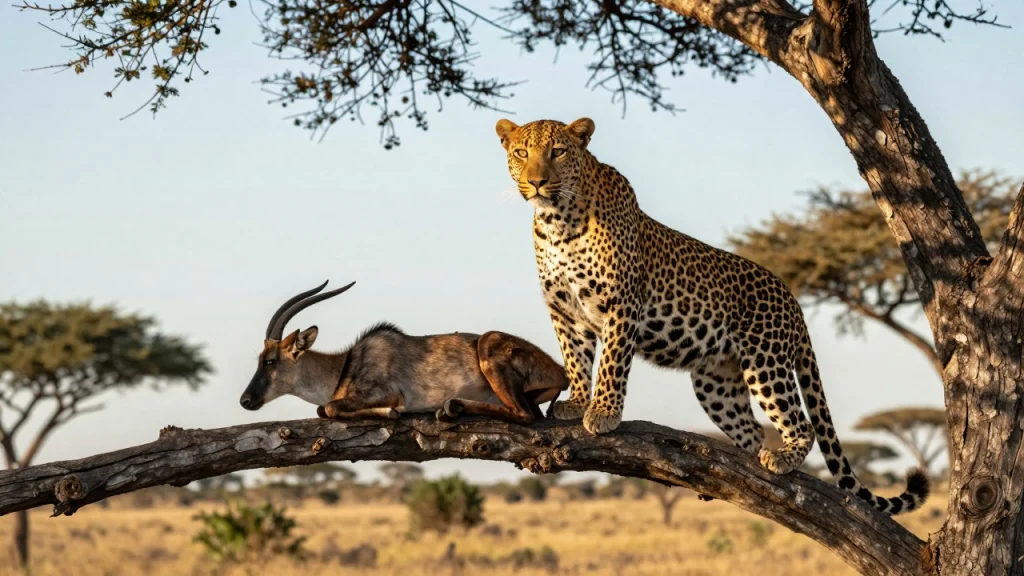
Leopards are opportunistic carnivores with one of the most varied diets among large wild cats. Their primary diet consists of medium-sized ungulates such as small antelopes, gazelles, deer, pigs and primates. However, as adaptable predators, leopards will hunt almost any animal they can catch, ranging from small rodents, birds, and hares to larger prey like young zebras, wildebeests, and even primates.
Because leopards inhabit diverse habitats across Africa and Asia, their diet adapts based on geographic location and prey availability. Unlike lions or wolves that hunt in groups, leopards are solitary stalkers. They rely on stealth, camouflage, and incredible strength to ambush their prey, often hauling their kills up into tree branches to prevent scavengers like hyenas and lions from stealing their meal.
What Do Leopards Eat in the Wild?
A leopard’s diet is primarily made up of meat, as they are obligate carnivores. Their powerful jaws and sharp teeth are specialized for catching, killing, and consuming prey. Across different ecosystems, leopards target animals that balance high nutritional value with manageable hunting risk.
Medium-Sized Ungulates: The Core Diet
In African savannas and woodlands, medium-sized hoofed mammals form the bulk of a leopard’s diet. Leopards prefer prey that weigh between 10 and 40 kilograms (22 to 88 pounds), which makes them large enough to sustain a leopard for several days, yet manageable to kill and haul into trees.
Common ungulate prey includes:
- Impalas and gazelles: Frequently targeted in open and semi-arid savannas due to their abundance.
- Bushbucks and duikers: Preferred in dense forests and thick brush where stealth hunting is effective.
- Springboks and reedbucks: Standard prey items across southern African habitats.
Small Mammals, Birds, and Reptiles
When larger prey is scarce, or when an easy opportunity presents itself, leopards readily hunt smaller creatures. Young leopards learning to hunt also rely heavily on smaller prey to build their skills.
Smaller prey items include:
- Hares, porcupines, and cane rats
- Game birds such as guineafowl and francolins
- Snakes, monitor lizards, and tortoises
- Fish and frogs in riverine regions
Large Mammals and Opportunistic Kills
While leopards generally avoid healthy adult megafauna like buffaloes or giraffes, they will hunt the calves or juveniles of these larger species. In some regions, leopards successfully take down adult warthogs, baboons, and young zebras.
How Leopards Adapt Their Diet by Region
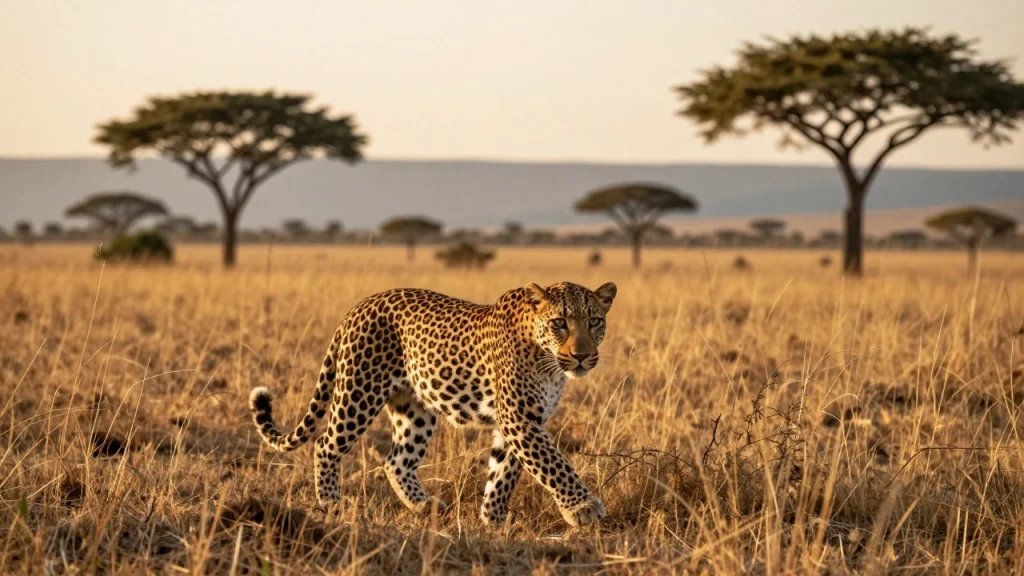
Leopards are the most widespread of the large cats, with subspecies found in Africa and Asia. Their dietary flexibility is a major reason for their geographic success.
- African Savannas: Leopards feed predominantly on medium ungulates like impalas and bushbucks, while competing with lions and spotted hyenas.
- African Rainforests: In dense jungle environments, leopards hunt forest ungulates (such as duikers and bongo calves), monkeys, and red river hogs.
- Asian Forests and Mountains: In India and Southeast Asia, leopards target chital (spotted deer), deer species like sambar, wild boars, and langur monkeys.
- Cold Mountain Ranges: The Snow Leopard (a close cousin within the same genus) feeds mainly on ibex, blue sheep, and marmots in high-altitude terrain.
How Leopards Hunt Their Prey
Leopards rely on patience, stealth, and powerful short-distance acceleration rather than long endurance chases.
1. Stealth and Camouflage
A leopard’s spotted coat (rosettes) provides exceptional camouflage in tall grass, thick bushes, and tree foliage. Leopards approach prey crouching low to the ground, getting as close as 3 to 10 m before pouncing.
2. Ambush and Bite Technique
Once close enough, the leopard pounces with explosive power. It catches the victim using its sharp, retractable claws and delivers a fatal bite to the throat or neck, suffocating the prey or severing vital blood vessels.
3. Tree Hauling Behavior
One of the most distinctive behaviors of the leopard is its ability to hoist heavy carcasses up into the branches of trees. A leopard can carry prey weighing as much as or more than its own body weight straight up a vertical tree trunk using strong neck and leg muscles. Storing food in trees keeps it safe from ground scavengers like hyenas, lions, and wild dogs.
How Much Food Does a Leopard Eat Daily?
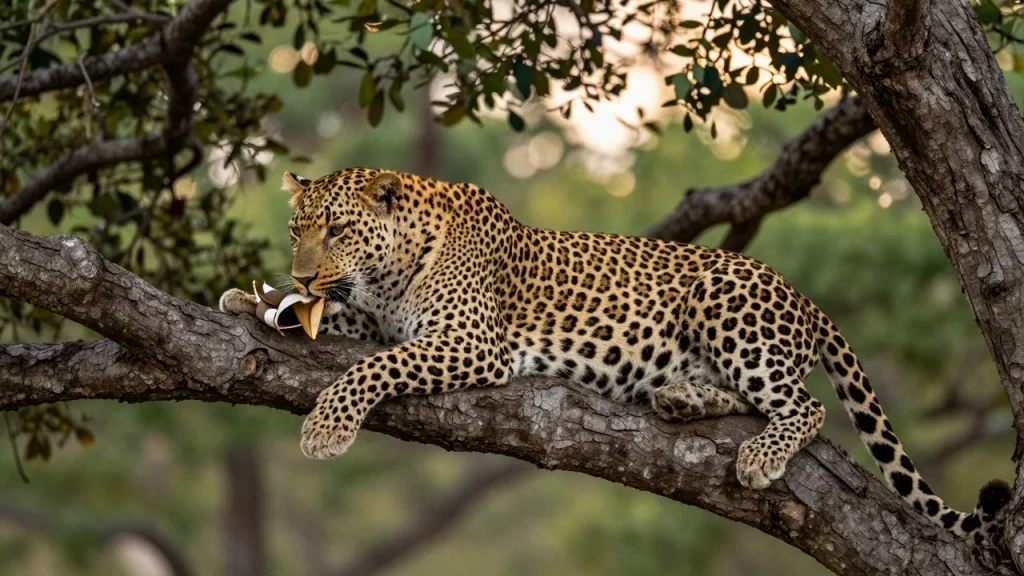
Because hunting in the wild is unpredictable, leopards do not eat every day.
After successfully taking down a medium-sized prey animal like an impala, a leopard may return to feed on the cached carcass over the following days. During this time, the cat remains nearby, resting and guarding its tree-cached meal from scavengers.
Do Leopards Hunt Livestock or Pets?
In areas where human settlements encroach upon natural habitats, wild prey populations often decline. In these edge environments, leopards may prey on domestic animals, including goats, sheep, calves, dogs, and poultry. This dietary adaptability allows leopards to survive near human populations, though it frequently leads to human-wildlife conflict and conservation challenges.
Summary: A Master of Dietary Flexibility
In summary, leopards eat a diverse range of animals, centered primarily around medium-sized hoofed mammals like impalas, deer, and bushbucks. Their ability to supplement their diet with small mammals, reptiles, birds, and primates makes them one of the most resilient and versatile apex predators in the animal kingdom. By caching their kills high in trees, leopards safeguard their food supply and secure their place across varied ecosystems worldwide.