
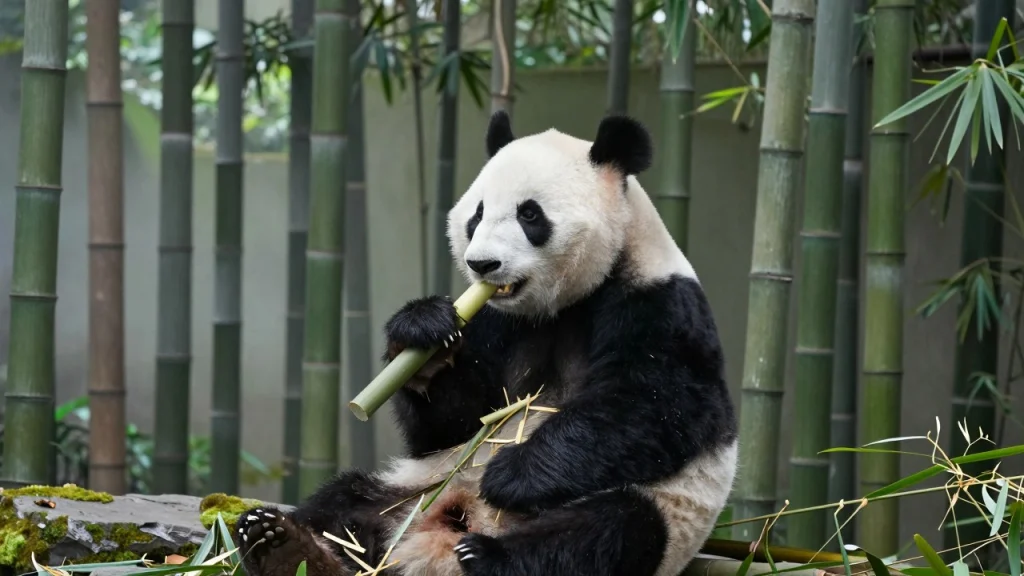
No, giant pandas are not friendly to humans in the way people usually mean. They do not seek cuddles, follow visitors, or enjoy handling. A cuddly look does not make a wild giant panda safe to approach.
Adults generally live alone and meet others only through scent marks, calls, and brief encounters. That habit explains why a wild panda usually moves away from people rather than toward them. Outside the breeding season, each bear keeps its own routine.
Keep your distance: shy bears with real power
Pandas value alone time and guard their personal area. This need for space is practical, because each animal must harvest a huge amount of low energy food every day. Crowding, pursuit, or a surprise meeting can therefore trigger defense instead of curiosity.
When two strangers meet, the exchange can include growls, swats, lunges, and bites. Those warnings show that pandas set boundaries clearly. At birth, a cub arrives helpless and demands intense care from its mother.
Size adds to the risk. Consider these basic facts:
- At the shoulder, they measure 2 to 3 feet tall on all fours.
- Wild males can weigh as much as 250 pounds.
- Wild females seldom pass 220 pounds.
A calm panda may look clumsy and soft, but that bulk belongs to a strong climber with powerful jaws. Respect works better than familiarity.
How pandas say hello without getting close
Pandas rank among the most talkative bears. Their bleat sounds like a young sheep or goat and serves as a hello. Keepers treat that call as a polite greeting, not an invitation to touch.
The wider repertoire adds honks, huffs, barks, and growls. Even loners become chatty during direct social time.
Scent carries most long distance news. Because adults announce themselves with marks and calls instead of gathering, neighbors can keep track without meeting face to face. For people, the lesson is simple: watch quietly, listen, and leave scent posts and trails undisturbed.
Why the cute face misleads
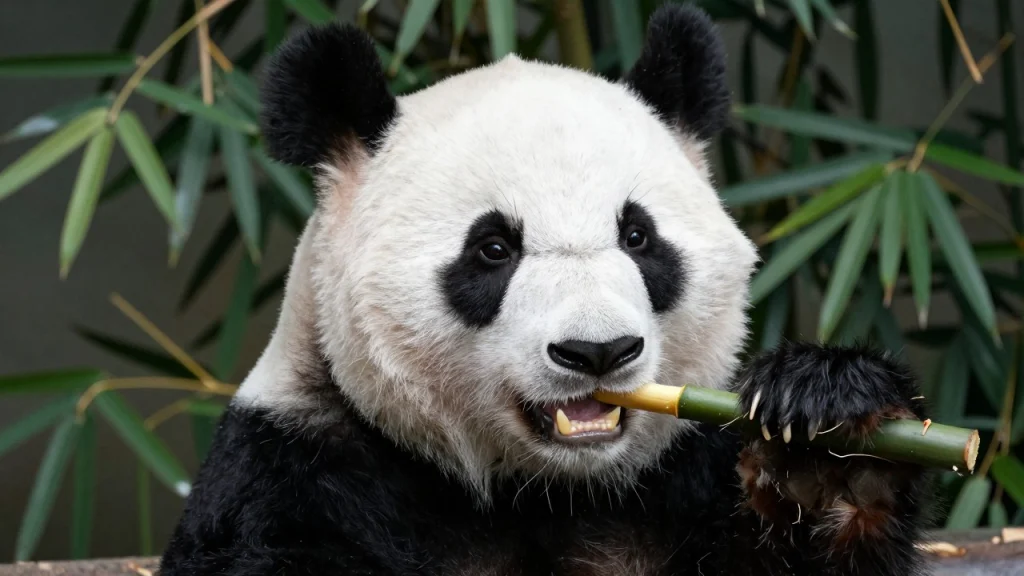
Soft round features and a waddling walk make pandas seem like toys. The feeding equipment tells another story. Broad molars and powerful chewing muscles crush tough bamboo. No other bear chews with quite the same force.
That power comes from a skull built for grinding. A widened wrist bone works like an extra thumb for gripping stems. The jaws and flattened back teeth then peel, split, and mash woody stalks. Their gut resembles a meat eater, so much bamboo passes through undigested. The result is an animal that must eat almost constantly to stay fueled.
Size, weight, and agility complete the picture. They feed mainly on the ground yet climb well and can swim. A panda that feels cornered can bite or escape into the trees, and people cannot reliably predict its reaction.
Food shapes mood and daily rhythm
To stay fueled, one animal may eat 70 to 100 pounds of bamboo in a day. Finding and chewing that bulk takes 10 to 16 hours a day. Bamboo makes up nearly all of the menu, about 99%.
A bamboo schedule leaves little room for guests
Feeding peaks fill the day, and rest fills the gaps. Between meals, wild bears doze for two to four hours in one go.
This cycle explains much of their temperament:
- A feeding bear does not want to share a patch.
- A resting bear does not want to be startled.
- A mother with a cub does not want company.
Good homes mix mature conifer woods, two or more bamboo kinds, and drinking water. When one bamboo type blooms and dies across an area, pandas must move to find food. They use leafy and conifer woods with thick bamboo undergrowth, living from 5,000 to 10,000 feet in elevation.
Where pandas live and how they fare
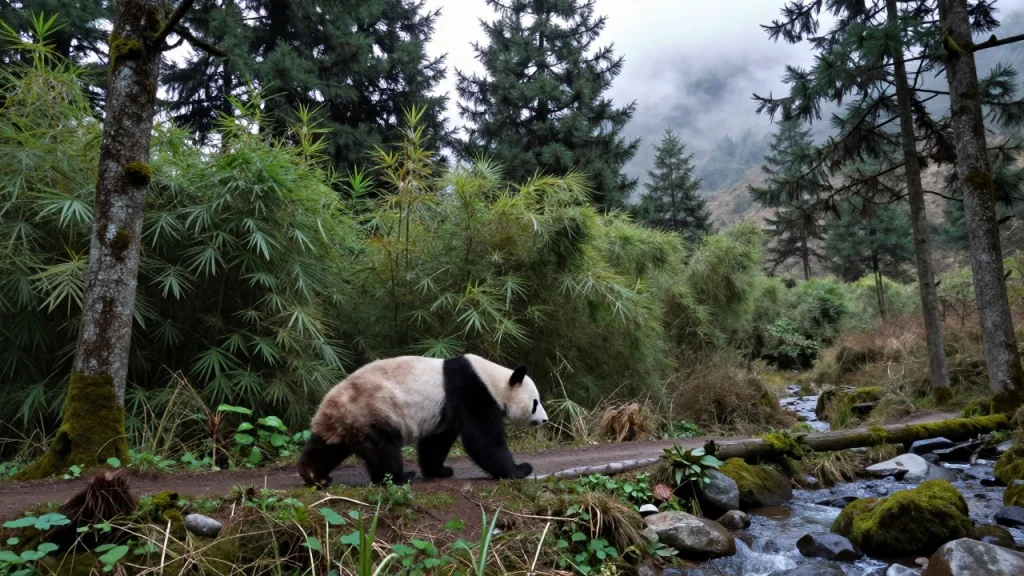
The species comes from central China and has become a worldwide symbol for at-risk wildlife. Wild groups now persist in mountain forests, while breeding centers hold additional animals for research and future recovery work.
Only 1,864 live in native forests, with some 600 more in zoos and breeding centers. Protection work has lifted the listing to Vulnerable. Before 2016, the same list ranked them as Endangered.
A slow recovery, not a surplus
Counts rose from about 1,600 in 2004, reaching 1,860 in 2014. Stronger habitat protection helped that gain, but the small total means progress stays fragile.
Typical longevity is 15 to 20 years in nature and around 30 years with human care. Longer lives with human care reflect steady food and protection, not tameness. Unlike many bears, they stay active through winter, moving lower when cold sets in.
Beginnings are tiny and fragile
A newborn weighs just 3 to 5 ounces, tiny as a stick of butter. Eyes stay shut for 6 to 8 weeks, and walking waits until about 3 months. The mother provides almost all early care.
That long dependence shapes adult behavior. As cubs grow, they move toward the separate adult life described above. Early lessons teach caution, not sociability with humans.
Watching pandas without trouble
Enjoy them from approved trails, platforms, and cameras. Use binoculars instead of approaching, keep voices low, and never offer food. Store rubbish securely, because human food and waste can harm wildlife and draw animals toward paths.
In zoos, follow barriers and keeper guidance at all times. Trained staff follow strict safety routines built over years. Visitors help most by giving pandas quiet room, supporting habitat protection, and sharing accurate facts about these quiet neighbors, not pets.