
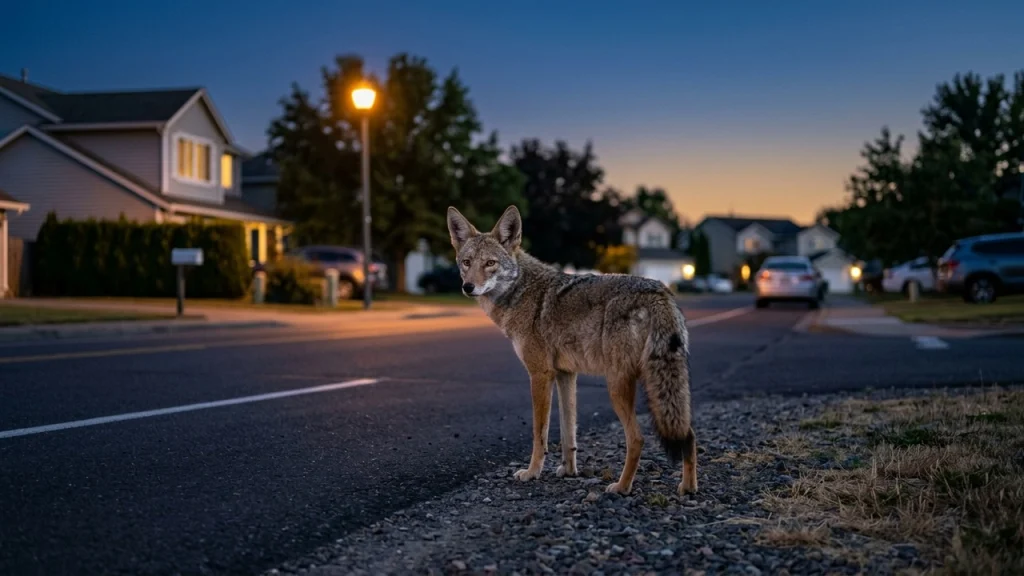
Coyotes are not aggressive toward people by nature, and the research record shows how little cause most of us have to fear them. Almost every encounter ends with the animal leaving, since coyotes generally treat people as something to avoid.
Two independent tallies put numbers on the risk. Researchers documented 367 attacks on people between 1977 and 2015, and 165 of them happened in California. A separate analysis of urban records from the United States and Canada counted 177 wild carnivore attacks in all, of which coyotes accounted for 63%. Park agencies describe bites on people as a very rare event, and the tallies line up with that.
Why wild coyotes keep their distance
Timing does most of the work. Most movement happens after dark, with activity peaking at dusk and dawn, hours when people are indoors. Reference accounts describe the animal as essentially nocturnal, though daylight sightings do happen, and near homes the pattern tightens so that the active hours sit right around dawn and dusk.
They are also elusive in a deliberate sense. Where coyotes are common, the usual sighting is a shape crossing a road in the beam of headlights, and a long study in the Santa Monica Mountains that tracked 131 coyotes recorded a strong preference for steering clear of people, with the animals spending nearly all their time in natural vegetation.
That caution is the heart of the answer. A predator that treats people as a threat has no reason to walk up to one, and every category of incident researchers have logged depends on a coyote getting past that instinct first.
Who is actually bitten
In sheer numbers, adults dominate the California record: out of 348 people bitten, 209 (60%) were grown-ups, while 139 (40%) were children aged 10 or younger. The split can mislead, because children, and toddlers in particular, are the victims most likely to be seriously hurt.
Among incidents classified as predatory, children made up 84% of the victims, and coyotes accounted for 63% of them. A child on their own is the preferred target of this kind of attack.
What sets an attack in motion
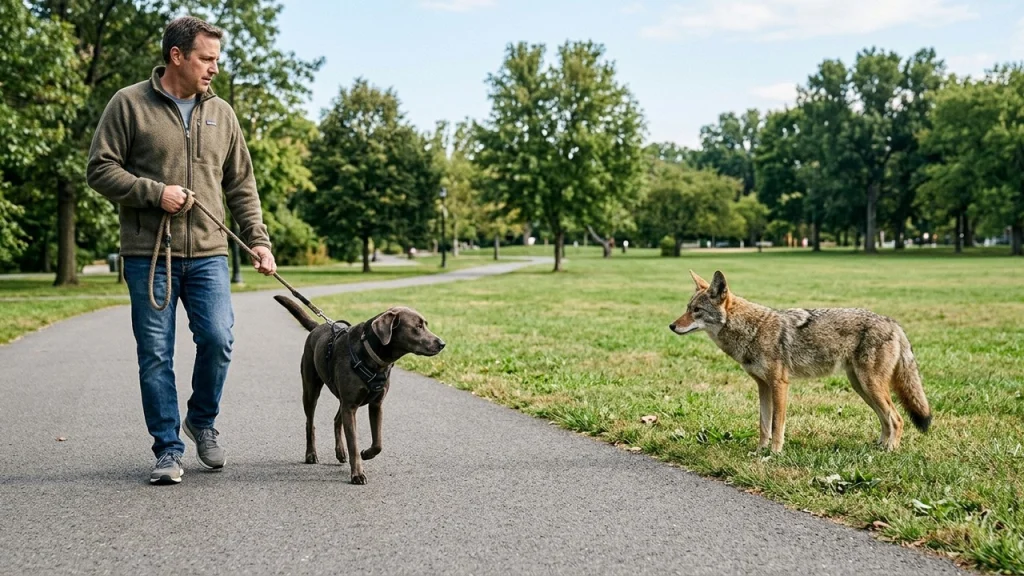
In the urban dataset the most prevalent scenario by far was a dog present at the time, ahead of food-related incidents and attacks with predatory motive. People bitten while a dog was there were all adults, and adults also made up most of the victims of food-related cases. Practically, that makes a dog the link between coyote and person, and it is usually the person walking the dog who pays the price.
Territory is the other trigger. Family groups here consist of a breeding pair and their young, and such groups defend their ground against intruders, including other coyotes, foxes and dogs. Conflict involving both pets and people tends to intensify in April and May, when adults are protecting pups. The wider North American pattern is broader than one state: more attacks were logged during the breeding and pup-rearing season of March through August than during the rest of the year.
Daylight attacks and the habituation problem
It seems odd for a night hunter to be involved in a daytime attack, and in the urban dataset most attacks still happened during the day, including the coyote cases. Coyote attacks were spread evenly over the year, peaking slightly in spring.
Used animals lose their caution. Observations in an Ohio valley suggest that as coyotes get accustomed to people, daytime activity is rising, and researchers working in other cities warn that habituated animals may have dropped their avoidance behavior and started moving around in daylight again.
Feeding is what turns a coyote into a problem
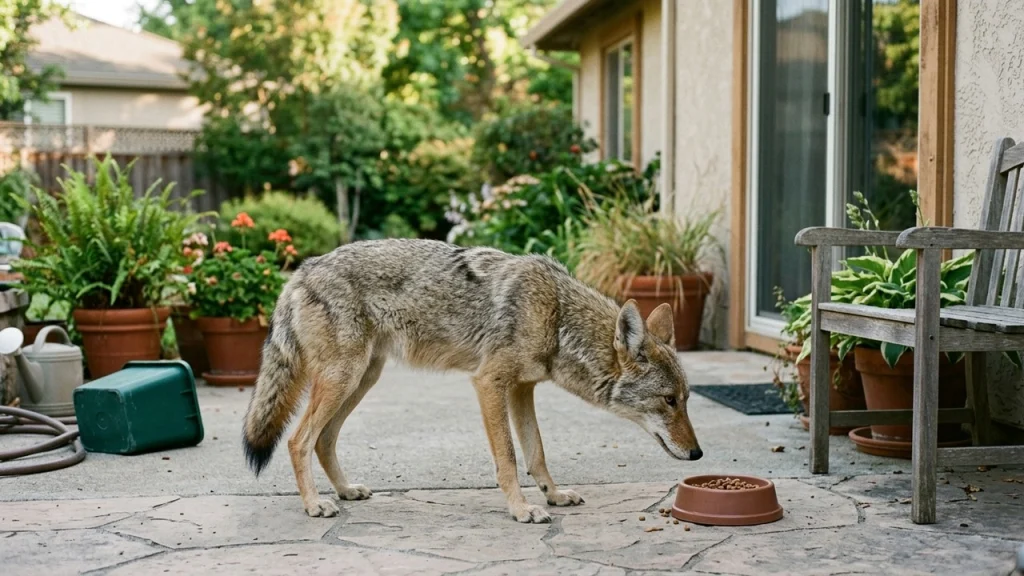
This is the hinge of the whole question. Coyotes learn fast: in Yellowstone, animals that pick up roadside feeding habits may become aggressive toward people, and the same habit raises their own odds of being hit by a vehicle.
Backyard feeding does the same thing on a smaller scale, and a coyote that has grown accustomed to people can end up genuinely bold. Park staff in Ohio state the prevention plainly: the crucial step is to stop the animals becoming habituated and to keep them from identifying people as a potential source of food. Clearing pet food, garbage, birdseed and exposed compost out of a yard removes the reward that created the problem in the first place.
Where an animal has already crossed that line, hazing works. Yellowstone staff scare coyotes away from visitor areas with cracker-shell rounds, bear pepper spray and similar negative stimuli, and research on urban attacks notes that driving a coyote off with objects is the technique wildlife services recommend.
Rabies is a separate and rarer threat
Coyotes host a number of diseases, rabies among them, and it changes the picture in one specific way, because an infected animal does not behave like a healthy one. The urban study deliberately excluded rabid animals from its records, on the grounds that their behavior is likely atypical. The national park in Ohio has worked with state health, agriculture and natural resources agencies since 2004 on distributing oral rabies vaccine bait to stop the disease spreading.
Living alongside coyotes
None of this makes the animal a harmless neighbor. Their numbers are secure enough that the IUCN Red List places them in the least concern category. They are common and widespread precisely because of their adaptability, which also helped them resist early extermination campaigns in the West. They are found throughout the United States today, having been sparse in the East before 1900.
Their usefulness is real: they suppress rodents that damage crops, and in North America people and gray wolves, rather than any other predator, are their greatest enemies. Good coexistence is mostly common sense applied consistently:
- Keep dogs on a lead and hold young children close to you.
- Make noise and movement if an animal approaches: wave your arms, shout, clap, and keep eye contact until it retreats.
- Push a nuisance coyote off your land with loud noises, thrown objects or a garden hose.
- Take attractants away and never feed, since food is what teaches a coyote to ignore people.
Sources
- Animal Diversity Web, University of Michigan: Canis latrans (coyote) | INFORMATION | Animal Diversity Web
- U.S. National Park Service: Coyotes – Santa Monica Mountains National Recreation Area
- U.S. National Park Service: Coexisting with Coyotes – Cuyahoga Valley National Park
- U.S. National Park Service: Coyote – Yellowstone National Park
- Scientific Reports (Nature Portfolio): Patterns of wild carnivore attacks on humans in urban areas | Scientific Reports
- Human-Wildlife Interactions, Utah State University: Coyote Attacks on Humans, 1970-2015: Implications for Reducing the Risks