
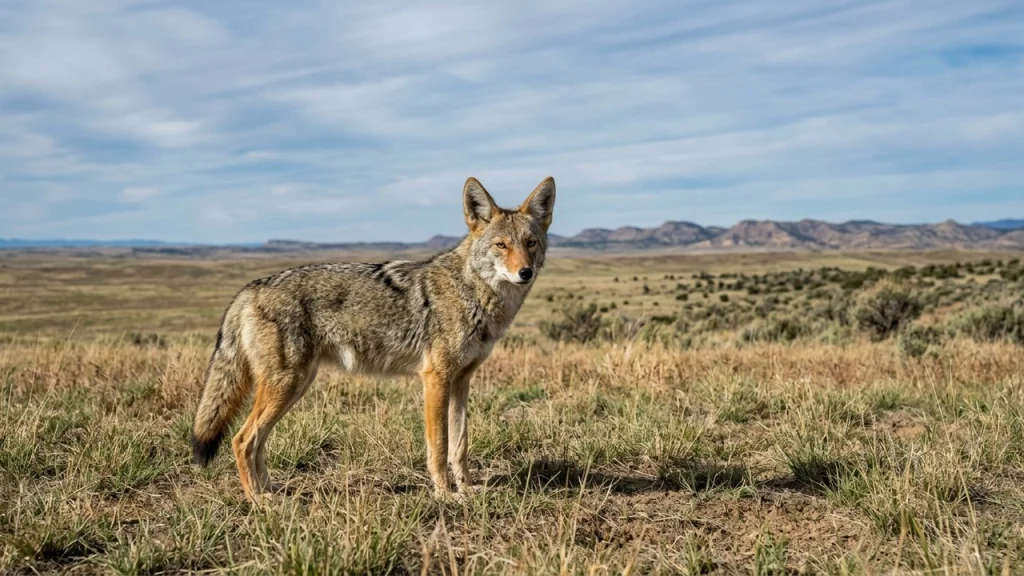
Where do coyotes live across modern landscapes? Wild coyotes originate as an indigenous canid of the Nearctic region. Today, their geographic distribution spans an immense continental range. Modern populations occupy a continuous geographic expanse stretching from Panama northward across Mexico, throughout the United States, and deep into Canada. This broad distribution makes them one of the most widespread wild carnivores across the continent.
At higher latitudes, their established territory reaches upward into Alaska and encompasses virtually all Canadian lands except the most extreme northern fringes. Because they adjust easily to varying surroundings, these wild canines thrive across diverse ecological biomes, establishing home ranges within forests, grasslands, deserts, and swamps. Furthermore, owing to remarkable endurance of human disruption, they readily colonize suburban, agricultural, and urban settings. Their ability to find food, shelter, and security near people allows them to maintain thriving communities in both secluded wilderness areas and densely settled valleys.
The historical range and twentieth-century continental expansion
The current ubiquity of coyotes across North America is a relatively recent ecological phenomenon. Preserved skeletal specimens in museum archives prove that these animals inhabited the arid west and California across the entire Holocene epoch long before European colonization occurred. During that prolonged era, their presence remained concentrated in open, dry plains, sagebrush basins, and desert valleys where vegetative cover was low and prey consisted predominantly of open-country small mammals.
Surveys from the late 1800s demonstrate that their regional boundaries mirrored prehistoric distributions, closely tracking the non-forest habitat of western prairies and shrublands. As settlers transformed landscapes through logging, agriculture, and predator reduction, these environmental conditions shifted radically.
A rapid geographic dispersal started around 1900, pushing populations northward toward taiga forests, eastward into deciduous woodlands, westward through coastal temperate rain forests, and southward toward tropical rainforests. Widespread landscape clearing, extensive forest fragmentation, and the systematic elimination of larger apex predators created vacant ecological niches that facilitated this rapid colonization.
Despite aggressive pest eradication initiatives, populations expanded their continental presence by an assessed 40% following the 1950s, exceeding the geographic spread of any other North American carnivore during that timeframe by at least twice as much. This momentum continues toward Central America. Along their southern frontier in Central America, the thick wilderness of the Darién forms the primary remaining barrier blocking them from entering South American savannah biomes. If corridors open through modified rainforest, researchers anticipate that these adaptable canines could soon enter South America.
Adaptations that support life in diverse biomes
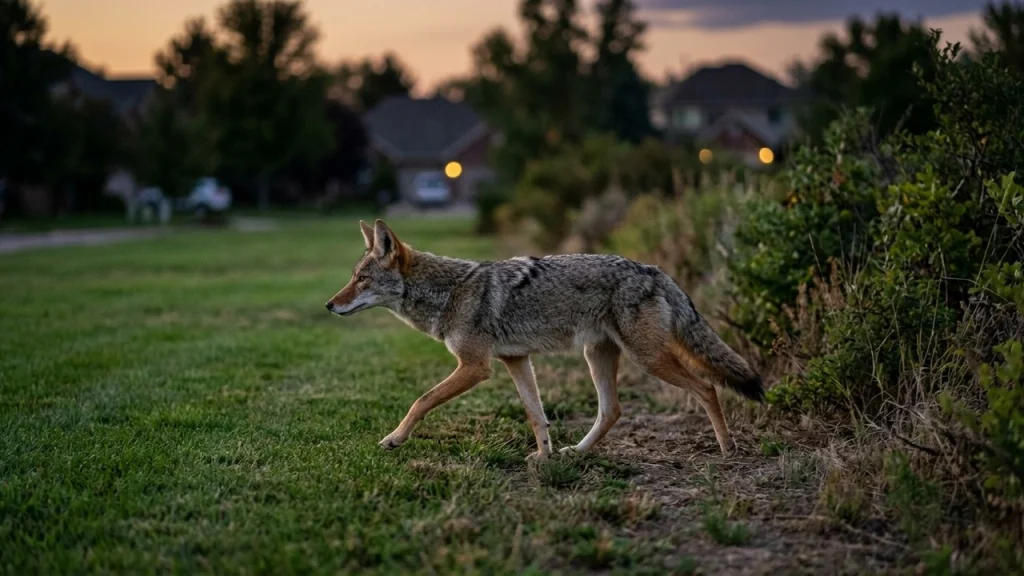
The underlying biological engine behind this continental expansion is unmatched ecological flexibility. Their sustained survival stems from pronounced phenotypic, behavioral and dietary plasticity, enabling them to flourish amid shifting environmental conditions. Where food regimes fluctuate between seasons, coyotes switch smoothly from hunting small mammals to scavenging carrion, foraging fallen fruits, or pursuing agricultural rodents.
Given their demographic expansion and stable populations across multiple countries, global conservation bodies classify the canid as Least concern.
Physical dimensions and morphological variations
Coyotes possess an athletic, medium-sized conformation tailored for endurance running and quick pursuits through dense brush. A mature wild specimen measures 0.7-0.9 m in length (2.5 to 2.8 ft). Across varying geographic populations, adult body mass spans 7-23 kg (equivalent to 15 to 50 lbs). In field measurements recorded by wildlife biologists, mature individuals stand 2–3 feet tall and carry a 16–20 inch tail.
This lean build provides excellent energetic efficiency, allowing individuals to endure extreme temperatures from northern subzero winters to arid desert heat. Under natural wilderness conditions, surviving individuals typically register an average life span of 10-14 years.
Cryptic coloration helps them blend into surrounding terrain, whether stalking prey through arid scrubland or sheltering among suburban shrubs:
- Dorsal coat color exhibits noticeable regional variation, shifting between grayish brown and yellowish gray across the top of the body.
- Lighter shading covers the lower anatomy, where the throat and belly are whitish.
- Warm reddish brown tones mark the forelegs, muzzle, facial sides, and feet.
- Dense fulvous underfur beneath the coat combines with dark guard hairs to yield a prominent black dorsal stripe across the spine alongside a darker marking across the shoulders.
- Locomotion provides an immediate diagnostic clue in the field: domestic canines run with raised tails and wolves run with straight horizontal tails, whereas coyotes run with their tails down.
Social organization and home range dynamics
Landscape tenure and spatial movements vary substantially depending on an individual’s social status. While socially cohesive, these animals do not organize into classic large packs, maintaining family groups instead. These units generally comprise a breeding mated pair alongside their recent offspring, defending an exclusive shared territory against non-family intruders.
During daily hunting movements, individuals frequently forage alone or form temporary pairs to tackle larger quarry. Solitary foraging maximizes stealth when hunting mice and ground squirrels in open grass, whereas cooperative pursuit helps in bringing down larger prey. When actively foraging across their range under cover of darkness, their nocturnal patrol covers an average distance of 4 km. Vocal communication plays a vital territorial role, with family members calling frequently during twilight hours and after dark. Through vocalizations, resident pairs signal territorial boundaries to neighboring groups, reducing direct physical confrontations while maintaining spatial spacing.
Resident territories versus transient roaming
Home range dimensions vary widely across geographic regions and land cover types. Continent-wide telemetry tracking reveals that coyote home-range boundaries span from 2.5 to 70 km 2. In coastal habitats of eastern North Carolina, established resident individuals established home ranges spanning 13.4 km² to 47.3 km².
These resident territories contrast sharply with the movements of unattached individuals. Unpaired transient individuals seeking vacant territories wandered much farther, maintaining expansive exploratory ranges between 64.5 km² to 633.4 km². Transients travel solitary routes through peripheral corridors, avoiding resident core territories while searching for vacant land or replacement breeding vacancies.
Habitat composition directly influences home range dimensions:
- Where agricultural fields provided concentrated food resources, resident coyotes required less territory, showing an inverse correlation between cultivated land and overall home-range size.
- When selecting critical central dens and resting sites, resident canines concentrated activity away from standing water, reserving less wetland within their primary core zones.
- Displaced canines possess the physiological stamina and body size necessary to traverse enormous distances when seeking unclaimed territory across fragmented regions.
Ecological relationships and competition
Coyotes do not exist in isolation within their habitats; their spatial placement reflects constant interactions with competing carnivores and prey communities. Inter-species conflict strongly governs local distributions, and coyotes are generally driven out of landscapes occupied by thriving wolf packs.
Predation pressure from other large predators also shapes reproductive behavior and habitat selection. To protect vulnerable litters from lethal competition by wolves and mountain lions, breeding adults confine developing pups inside secure dens. These underground burrows, often excavated into hillsides, ditch banks, or fallen tree root systems, conceal growing pups until they attain sufficient size and mobility.
Despite competition with larger apex carnivores, coyotes play an essential structuring role within North American ecosystems. By regulating the abundance of rodents and lagomorphs, these predators prevent overpopulation among mice and rabbits, supporting healthier vegetative balance across diverse ecosystems.
Sources
- Animal Diversity Web: Canis latrans
- National Park Service: The Coyote
- Smithsonian’s National Zoo and Conservation Biology Institute: Coyote
- ZooKeys: Mapping the expansion of coyotes (Canis latrans) across North and Central America
- PLOS ONE: Space Use and Habitat Selection by Resident and Transient Coyotes (Canis latrans)