
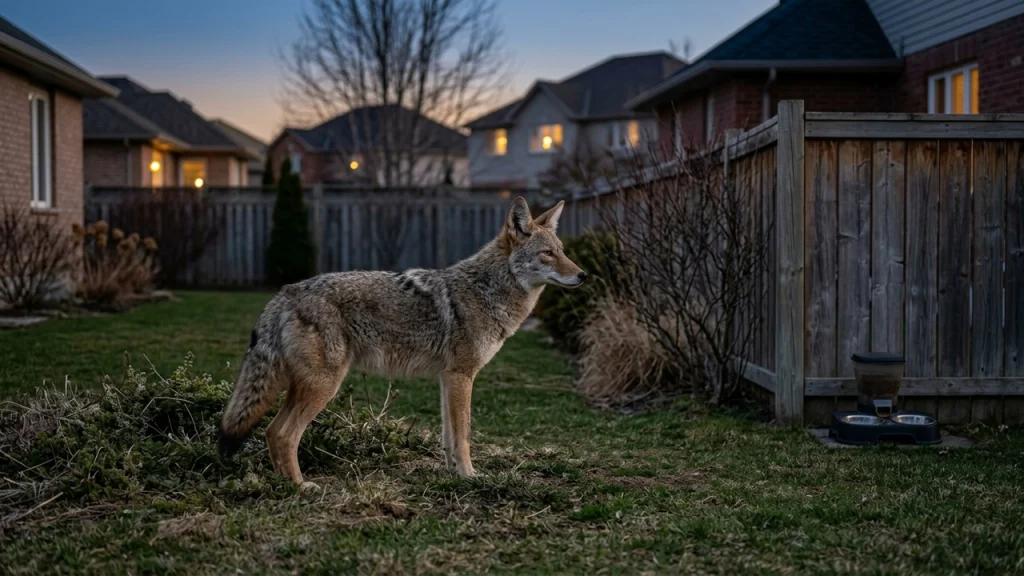
Coyotes do eat domestic cats, but predation rates depend on environmental development and habitat structure. In large wild preserves and rural landscapes, these canids feed primarily on native rodents, rabbits, and seasonal fruits, rarely targeting pets. When urbanization fragments natural habitats, this predatory relationship shifts noticeably. In densely developed metropolitan centers, free-roaming domestic felines become an accessible and frequent food source.
Scientific field investigations document significant dietary differences across North American landscapes. Dietary research reveals that domestic feline remains drop as development recedes: cats constitute 39.5% ± 5.8% of urban meals, falling to 15.8% ± 7.1% in suburban zones, and just 9.3% ± 6.5% within rural habitats. In highly developed metropolitan settings, cat consumption reached elevated levels, showing up inside 19.8% of scats analyzed by researchers. In contrast, studies in expansive natural habitats demonstrate that pet predation remains an isolated event.
Natural diet and physical profile of wild canids
Understanding predatory behavior begins with morphology and wild foraging patterns. As members of the canidae family alongside domestic dogs, wolves, and foxes, coyotes (Canis latrans) demonstrate remarkable behavioral flexibility in diverse habitats. Physically, these predators typically display tawny gray fur, elongated legs, and a brushy tail spanning 40% of their body length. Adult specimens examined in field research average 25.5 pounds.
While naturally fearful of human beings, these canids possess innate curiosity and outstanding adaptability that facilitate survival near human settlements. In natural ecosystems, native mammals satisfy nutritional requirements:
- Eastern cottontail rabbits
- Woodrats and mice
- Seasonal wild fruits
During an extensive field evaluation conducted between 1996 to 2004, wild coyotes subsisted primarily on indigenous fruits alongside small mammalian prey including rabbits, woodrats, and mice. In those preserved open spaces, domestic animals comprised less than 1% of prey consumed. Furthermore, hunting encounters remain opportunistic. Wildlife biologists tracking collared individuals repeatedly observed coyotes bypassing free-roaming felines without initiating an attack despite clear opportunities.
Predation evidence across residential neighborhoods
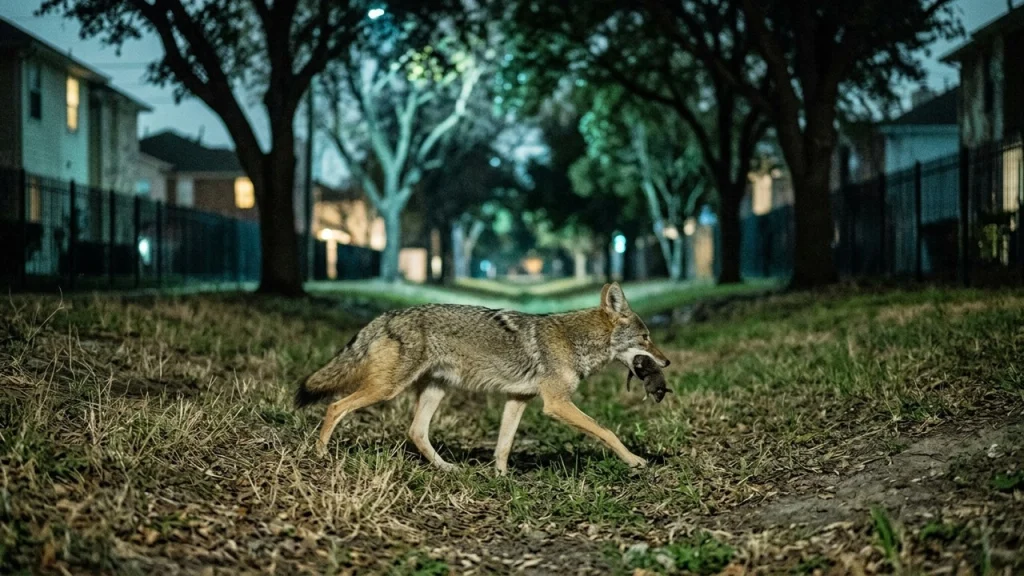
When natural habitats compress, coyotes exploit domestic pets that roam outdoors. Civic wildlife records in Culver City confirm lethal predation through eyewitness reports, subsequent necropsies of feline remains, and verified predator sightings.
Visual field research corroborates these community records. Automated camera trap surveys across urban sectors provided photographic proof of wild canids carrying felines. In a targeted Midwestern study tracking feral cat colonies, researchers documented 11 fatalities caused by coyotes, where 9 victims were partially or wholly consumed, 2 were not, and one of the unconsumed carcasses was cached. These findings prove that free-roaming cats face verified lethal risks.
Predation mechanics and dental anatomy
Predatory feeding habits frequently confuse observers due to specialized carnivore anatomy. Specialized carnassial cheek teeth slice cleanly through muscle and tissue, enabling adults to sever carcasses into transportable portions for their pups.
These sharp predatory cuts have led municipal authorities and frightened pet owners to mistake coyote depredations for human ritual mutilations.
Seasonal nutritional requirements drive annual predation spikes. Predation risks peak between March through August during the energetic pup rearing season when foraging demands escalate.
Urban factors driving coyote-cat conflict
The transition from wild prey to companion animals results directly from urbanization and anthropogenic food access.
High feline density and food subsidies
Because companion felines receive steady food provisioning from homeowners and colony caretakers, local feline densities mirror residential housing density rather than natural wildlife prey abundance. Free-ranging felines consequently become a remarkably abundant food resource within fragmented metropolitan neighborhoods.
Loss of native vegetative ground cover
As pavement and buildings replace natural brush, coyotes lose access to native rodents and shift toward domestic felines and human-derived foods.
Anthropogenic food subsidies and food chains
In dense municipal centers, cultivated fruits and seeds appeared in 26.1% of scats, municipal garbage appeared in 22.1%, and felines constituted 19.8%. Overall, human-sourced foods constituted 37.6% ± 6.3% of intake for urban coyotes, 33.8% ± 8.2% in suburban packs, and 27.3% ± 12.8% in rural environments.
These items transform predator nutrition. Isotopic tissue testing demonstrates that the bulk of assimilated biomass in city coyotes traces back to corn-based C 4 agricultural food chains through human refuse, commercial pet rations, and free-roaming cats.
Behavioral dynamics and intraguild competition
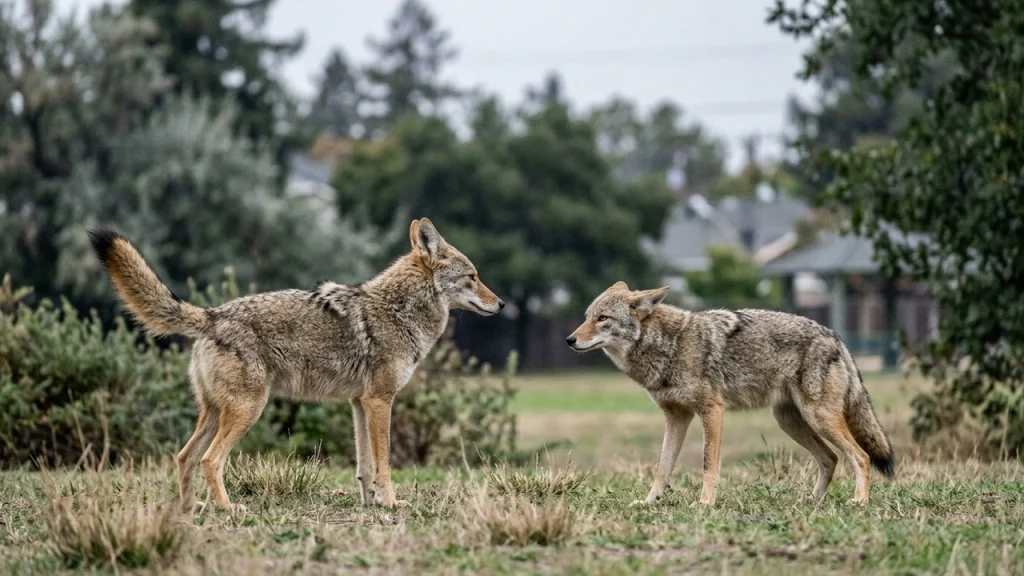
Predator interactions involve competitive exclusion alongside standard foraging behavior. Ecologists note that intraguild competition frequently organizes predatory communities through behavioral interference, territorial exclusion, and lethal predation among competing carnivores.
Field data indicate that wild canids target domestic felines both as nutritional prey and as competing mesopredators.
Spatiotemporal overlap and nocturnal activity
Elevated predation rates also stem from nocturnal activity shifts, as domestic cats in Culver City displayed unusually high nighttime movement that overlapped with coyote hunting hours.
Rather than prowling suburban lawns continuously, coyotes concentrate their activity primarily within urban green spaces. When both species share the same fragmented parks without spatial segregation, this missing landscape partitioning drives intense predation rates.
Ecological roles and landscape buffering
Despite community tensions, urban canids perform valuable ecological functions. Where top predators patrol large preserves, outdoor cats actively avoid natural fragments to escape the immediate risk of lethal attacks.
Livetrapping surveys confirm this spatial segregation, recording far higher cat captures within the surrounding residential matrix than inside nature preserves. By excluding felines from nature reserves through competitive pressure, coyotes shield vulnerable native songbirds and small mammals from domestic cat predation.
Furthermore, canids control nuisance wildlife populations. These apex urban predators also provide management services, such as curbing overabundant Canada geese populations by raiding their nests.
Guidelines for protecting companion animals
Preventing coyote predation requires practical management and habituation reversal. Property owners must remove food attractants and secure vulnerable pets.
Securing pets and domestic food sources
Wildlife specialists stress that domestic pets must never roam unattended outdoors because unsupervised animals constitute easy prey. Property owners should keep cats, rabbits, and small dogs inside the home or confined to fully covered outdoor kennels.
Feeding practices require equal caution. Pet meals must remain indoors, and any outdoor bowls should be cleared immediately after feeding to prevent attracting hungry predators. All commercial pet food supplies must be stored indoors or kept inside securely sealed heavy-duty containers.
Neighborhood hazing and behavior modification
Maintaining healthy human-wildlife boundaries requires active community participation. When facing an inquisitive or encroaching coyote, residents should stand tall, wave arms overhead, yell aggressively, and clap loudly until the animal retreats.
Consistent hazing and responsible pet management allow communities to protect companion animals while coexisting with native wildlife.
Sources
- National Park Service: Coyotes – Santa Monica Mountains National Recreation Area
- PLOS ONE: Effects of urbanization on resource use and individual specialization in coyotes (Canis latrans) in southern California
- PLOS ONE: Population ecology of free-roaming cats and interference competition by coyotes in urban parks
- PeerJ: Spatiotemporal relationships of coyotes and free-ranging domestic cats as indicators of conflict in Culver City, California
- University of California Statewide Integrated Pest Management Program: Pest Notes: Coyote