
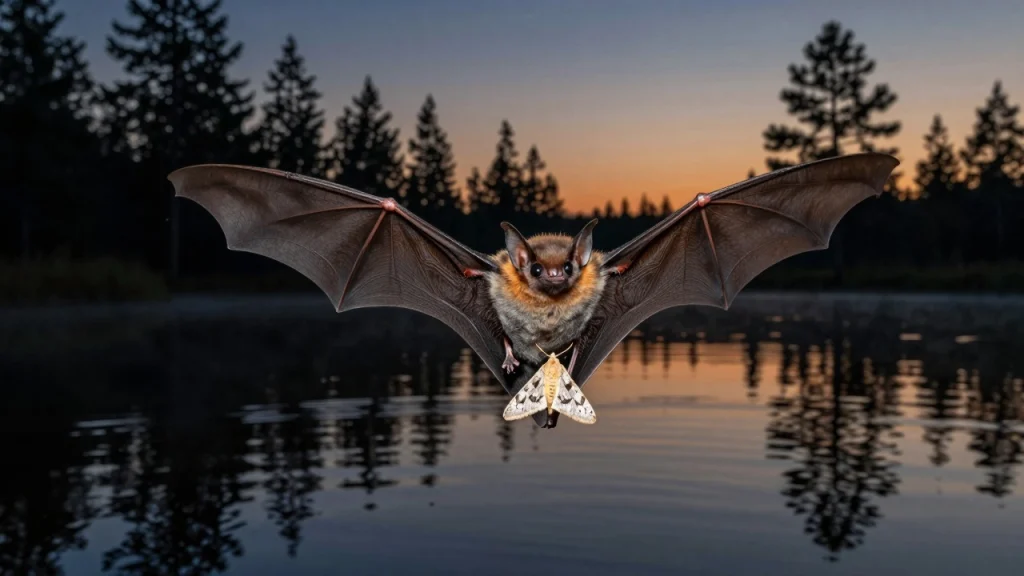
Bats are unusual among related mammals for how wide their menu is. Most bats eat insects, while the rest of the order works through fruit, nectar, pollen, fish, and small vertebrates, with blood feeding in just three cases. Roughly 1420 species are described worldwide, and each group solves a different problem of finding dinner in the dark.
A bat’s menu is also the key to its body. Whether an animal hunts insects, works a flower, or pulls fish from a pond shapes its wings, its hunting technique, and the way it finds food, so the diet is the clearest way to understand why a bat looks and flies the way it does.
Most bats are insect hunters
They do this either by seizing insects in midair or picking them off a surface. The United States National Park Service goes further, describing bats as the only major predator of moths, mosquitoes, and beetles that fly at night, a role nothing else in the ecosystem fills.
Hunting insects in the dark is difficult, and bats manage it with a combination of night activity, agile flight, and echolocation. Broad wings paired with small, light bodies give the maneuverability needed to chase elusive insects through dense forest, and some species built that way can even hover. Species with long, narrow wings trade that agility for speed and hunt across open ground instead. Plenty of bats also work over streams, lakes, and ponds, picking insects off as they rise from the water.
The scale of the appetite is where bat diets stop sounding ordinary. Fast metabolism means a bat can eat up to one half of its body weight in insects in a single night. Even a modest colony of 10,000 bats clears more than 300 pounds of insects in a single evening, and one little brown bat has been recorded taking 600 or more mosquitoes in an hour. Most insectivorous bats hunt on the wing, using their wings to sweep prey out of the air.
Fruit, nectar and pollen on the menu
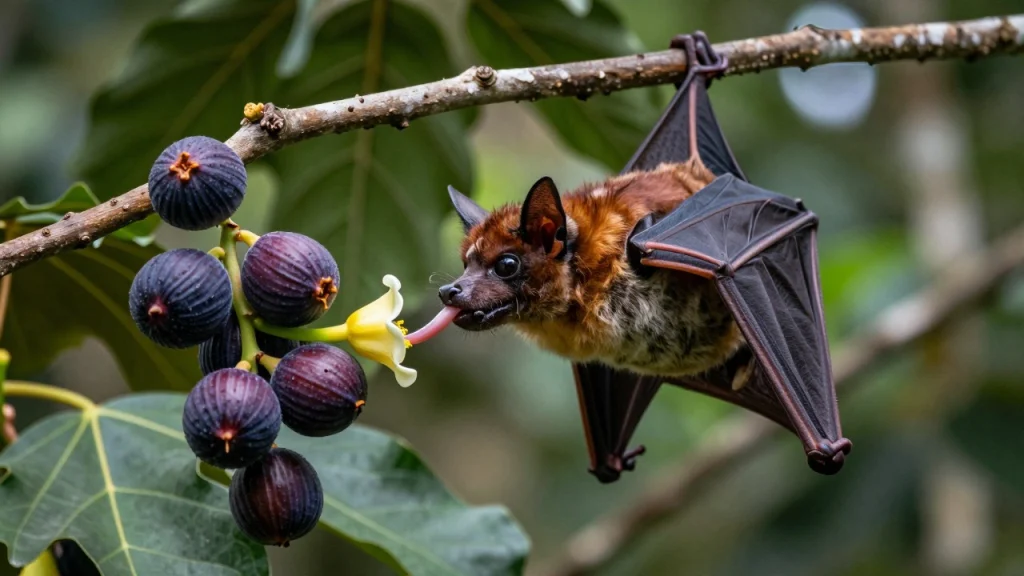
The other great branch of the bat family tree is plant-based, and it flourishes in the tropics. Bats that specialize on fruit, nectar, or pollen reach their greatest abundance and diversity in tropical regions. Fruit bats of tropical and subtropical countries often hang in trees by day, which is one reason they are visible when insectivorous species stay hidden, and only a few of them echolocate at all, relying instead on sight and smell.
Individual diets can be remarkably narrow. The Jamaican fruit-eating bat lives mainly on Ficus figs, then widens its menu in the dry season, taking in flower parts, pollen, nectar, and insects when fruit is scarce. That flexibility is typical rather than unusual: specialists keep a preferred food, but most fruit-eating bats still take arthropod prey when it becomes available.
Nectar and pollen feeders depend on hovering, because their food sits deep inside a flower that never moves. Several species in tropical and subtropical parts of the Americas drink nectar, and many plants in those regions rely on bats for both pollination and seed dispersal, including the blue agave. In the southwestern United States, three bat species pollinate the Organ Pipe Cactus and the Saguaro cactus. Fruits and other foods that depend on bats include figs, dates, cashews, avocados, and peaches.
Bats that eat other animals
Vertebrate prey surprises people more than any other bat menu. What a hunting bat takes can include lizards, frogs, rodents, birds, and other bats, and carnivorous bats can significantly limit their prey populations. In tropical communities bats often act as keystone species, so the loss of a colony reshapes the wider food web. One family of New World leaf-nosed bats holds the entire dietary range of the order, including the only blood feeders.
The bat that fishes
About six bat species eat fish regularly, and one of them is the greater bulldog bat (Noctilio leporinus). It works over ponds, rivers, and the edge of ocean surf. Small groups fly just above the water, using echolocation to detect fish beneath the surface.
Its body is built around that task. The hind feet of fishing bats are 1.8 to 3.9 times the size of those in their non-fishing relatives, and the greater bulldog bat carries an oversized cartilaginous heel spur that holds the tail membrane clear of the water in flight. Once a fish is located, the bat drops to the surface, rakes its taloned feet through the water like a pair of grappling hooks, then hauls the catch up and starts chewing without ever landing. These bats take prey up to 100 mm long from no more than 25 mm below the surface. The habit probably began as a way of picking off insects that floated or swam on the water, before anything started taking fish.
The three blood feeders
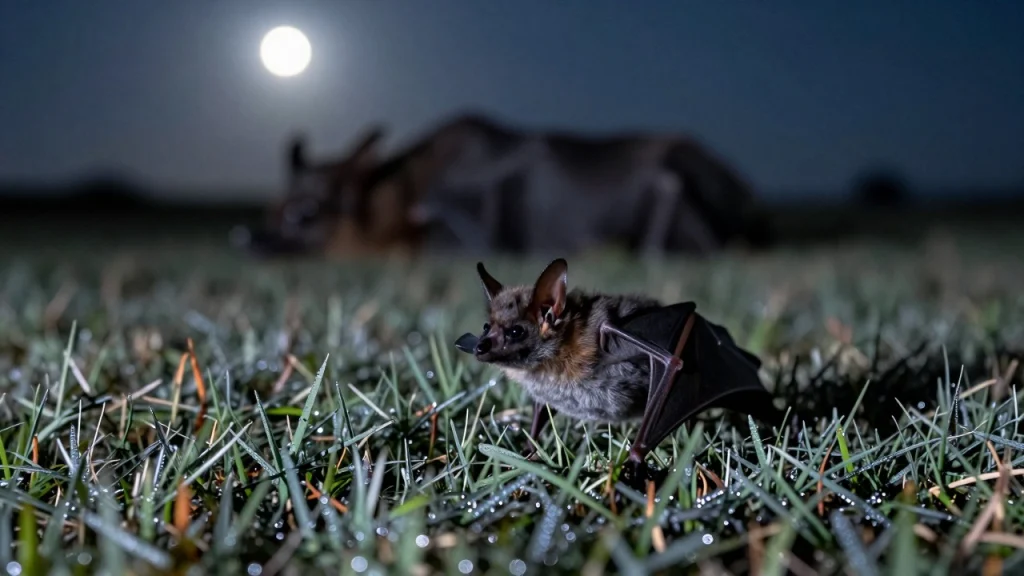
Only three species, the vampire bats, live on nothing but the blood of other vertebrates. Despite their reputation, no bat from the Old World feeds on blood: all three live in the Neotropics, and one of them takes mammalian blood while the other two specialize in birds.
Their feeding method is also not the one popular culture suggests. They lap blood from a small wound instead of sucking it, and their saliva contains an anticoagulant, so the flow continues while they feed. Small mammals and birds were their natural prey, but ranching in Latin America gave them cattle to feed on, an easy and plentiful source that pushed their numbers up.
What a bat diet does for the landscape
Their high metabolic needs and their varied diets mean bats affect the communities they live in in many ways at once. Insect eaters are one reason night-flying insects do not live longer: in the United States their hunting is worth more than $3.7 billion a year in pest control, which means fewer pests damage crops and farmers spend less on pesticides. Fruit eaters are why tropical forests regenerate, carrying seeds away and dropping them well away from the parent plant. Pollen and nectar feeders are why agaves, cacti, and fruit trees set seed, and some of the plants they pollinate, such as agave and bananas, are economically important to people. Bat droppings are also valuable: tons of guano are mined every year from cave floors, and bats are hunted as a source of protein in several countries.
The same value shows up in crop records worldwide. In Benin and Cameroon, bats raise cacao yields by suppressing pests, and in South Africa they have cut pest numbers in macadamia fields, where their effect on production has been clearly documented.
Why the menu is now under threat
About 25% of bat species, close to 240 of them, are considered threatened by the IUCN. The pressure often arrives through food: pesticides reach bats indirectly, through the insects they eat or the treated plants they feed on, and disturbing a roost site is especially damaging. Bats with small ranges and narrow specializations are the ones most exposed.
That is the practical answer to why bat diets matter beyond curiosity. A generalist can switch when conditions change. A bat that eats one kind of insect, one kind of fruit, or the nectar of a single plant cannot, and protecting bats, the insects they hunt, and the plants they pollinate turns out to be a single connected problem.
Sources
- Animal Diversity Web: Chiroptera (bats) | INFORMATION
- Animal Diversity Web: Noctilio leporinus (greater bulldog bat) | INFORMATION
- Animal Diversity Web: Artibeus jamaicensis (Jamaican fruit-eating bat) | INFORMATION
- U.S. National Park Service: Benefits of Bats
- U.S. National Park Service: Bats – Great Basin National Park
- Discover Ecology and Evolution (Springer Nature): Socioeconomic benefits associated with bats