Skip to content
Animal Fact File

Animal Fact File

Curiosities, questions and fascinating facts

  • Animals
    • Big cats
      • Lion
      • Tiger
      • Cheetah
      • Leopard
      • Jaguar
    • Bears, pandas and wolves
      • Bear
      • Polar bear
      • Giant panda
      • Red panda
      • Wolf
    • Safari animals
      • Elephant
      • Hippo
      • Rhinoceros
      • Giraffe
      • Zebra
      • Gorilla
    • Ocean life
      • Orca
      • Blue whale
      • Sperm whale
      • Dolphin
      • Octopus
      • Jellyfish
      • Penguin
    • Backyard animals
      • Raccoon
      • Opossum
      • Squirrel
      • Bat
      • Coyote
    • Odd and unusual
      • Axolotl
      • Shoebill
      • Komodo dragon
      • Capybara
      • Honey badger
      • Platypus
    • All animals
  • Printables & tools
    • Axolotl coloring pages
    • Capybara coloring pages
    • Random animal generator
  • Topics
    • Physical Characteristics
    • Wild Habitats
    • Diet & Hunting
    • Natural Behaviors
    • Species & Conservation
    • Reproduction & Life Cycle
  • Español

Natural Behaviors

How do hippos sleep? In shallow water, maybe underwater
October 5, 2026 by Animals Editorial Team
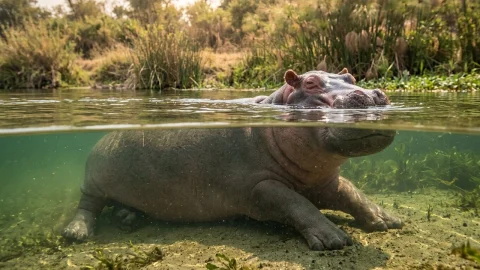
A hippo rests on a clear riverbed with only its ears, closed eyes and nostrils above the water surface

San Diego Zoo says hippos can sleep underwater; a paper says captive studies indicate the possibility. By day, herds prefer to sleep in shallow water.

Categories Natural Behaviors Tags Hippopotamus

Why do gorillas beat their chest? Likely to intimidate rivals

October 6, 2026October 5, 2026 by Animals Editorial Team
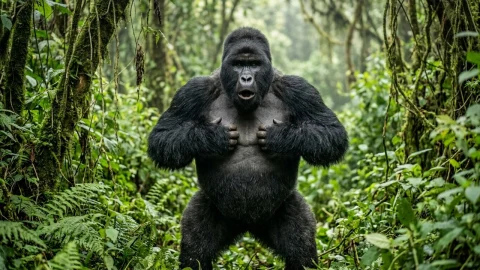
Silverback mountain gorilla standing upright and drumming his chest with cupped hands in a green rainforest clearing

Male gorillas likely beat their chests to attract females in estrous and intimidate rivals; researchers call the beat an honest signal of competitive ability.
Categories Natural Behaviors Tags Gorilla

Do orcas avoid sperm whales? Orcas attacked a pod in 1997

October 5, 2026 by Animals Editorial Team
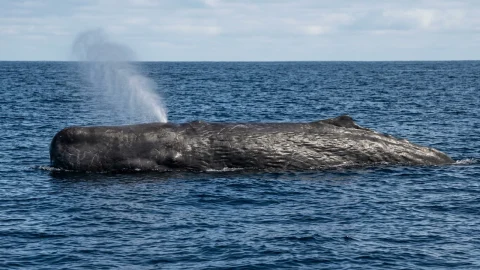
Sperm whales form a tail-out ring around a calf at the ocean surface while smaller orcas circle at a distance

Orcas do attack sperm whales: in October 1997, about 35 killer whales attacked a pod of nine sperm whales off central California, researchers report.
Categories Natural Behaviors Tags Orca, Sperm whale

Why do lions not eat cheetahs? Lions kill or compete with them

October 5, 2026 by Animals Editorial Team
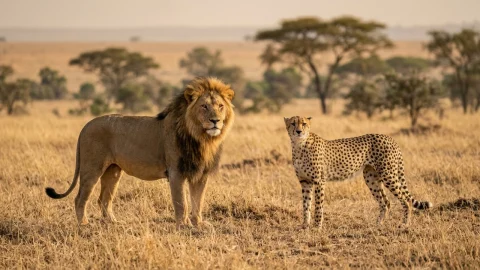
A male lion stands over a dead cheetah on dry savanna grass, turning away without feeding

Lions often kill and/or compete with cheetahs (Animal Diversity Web). Of cheetah cubs, up to 70 percent succumb to lions and hyenas (San Diego Zoo).
Categories Natural Behaviors Tags Cheetah, Lion

How do orcas sleep without drowning? Whales rest half the brain

October 5, 2026 by Animals Editorial Team
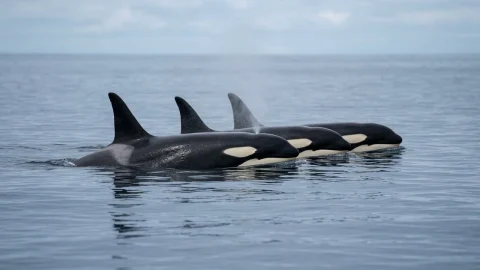
Three orcas rest side by side at the calm sea surface, their dorsal fins above the water and a soft breath mist rising

According to NOAA Fisheries, whales and dolphins rest just half their brain and keep the other half awake to breathe. SeaWorld describes how orcas rest.
Categories Natural Behaviors Tags Orca

Do coyotes live in packs? Inside wild family groups

October 6, 2026September 28, 2026 by Animals Editorial Team
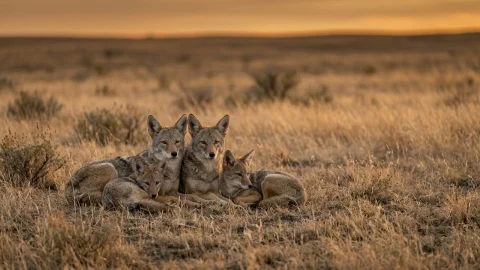
Adult coyote pair resting with younger family members on dry grassland at dusk

Coyotes live in flexible family groups built around a lifelong monogamous pair, not in large permanent packs like wolves. Learn how their social structure works.
Categories Natural Behaviors Tags Coyote

Where do coyotes go during the day and how they rest

October 11, 2026September 28, 2026 by Animals Editorial Team
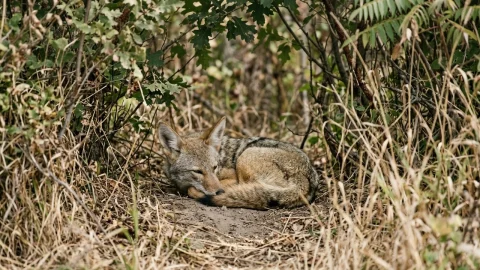
Coyote resting curled in dense brush and tall grass at the edge of a woodland during daylight hours

Coyotes spend daylight hours resting in dense brush, crop fields, and woodland edges. Underground dens are reserved for raising pups in spring.
Categories Natural Behaviors Tags Coyote

Why do opossums play dead and how it helps them survive

September 28, 2026 by Animals Editorial Team
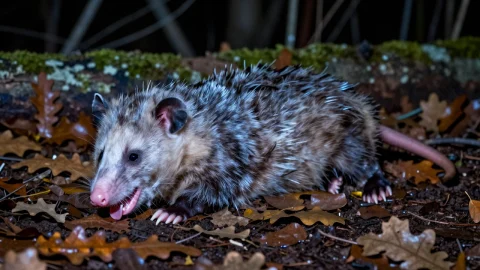
Virginia opossum lying limp on leaf-covered forest floor with glassy eyes and tongue lolling out, feigning death

Opossums play dead through an involuntary reflex called tonic immobility, releasing foul odors and mimicking decay to deter predators and survive attacks.
Categories Natural Behaviors Tags Opossum

What Are Coyotes Afraid Of? Wolves, Cougars, and People

October 11, 2026September 28, 2026 by Animals Editorial Team
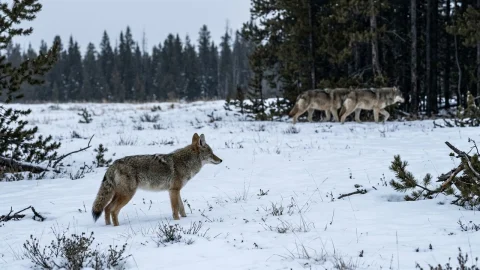
Alert coyote on a snowy plain watching two gray wolves moving through a distant treeline

Coyotes fear wolves, mountain lions, and people above all else. Learn how predator pressure, human activity, and habitat shape coyote wariness and survival behavior.
Categories Natural Behaviors Tags Coyote, Wolf

Why do raccoons wash their food? It is touch, not hygiene

October 7, 2026September 28, 2026 by Animals Editorial Team
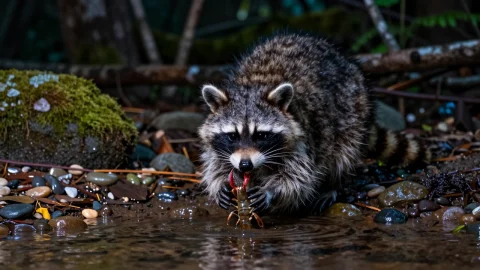
Raccoon crouching at a forest stream at night, submerged forepaws gripping a crayfish underwater

Raccoons dunk food in water to sharpen their sense of touch, not to clean it. The behavior is called dousing, and their scientific name as washer is a centuries-old mistake.

Categories Natural Behaviors Tags Raccoon
Older posts
Newer posts
← Previous Page1 Page2 Page3 … Page8 Next →

Browse animals

Big cats
  • Lion
  • Tiger
  • Cheetah
  • Leopard
  • Jaguar
  • All big cats
Bears, pandas and wolves
  • Bear
  • Polar bear
  • Giant panda
  • Red panda
  • Wolf
  • All bears, pandas and wolves
Safari animals
  • Elephant
  • Hippo
  • Rhinoceros
  • Giraffe
  • Zebra
  • Gorilla
  • All safari animals
Ocean life
  • Orca
  • Blue whale
  • Sperm whale
  • Dolphin
  • Octopus
  • Jellyfish
  • Penguin
  • All ocean life
Backyard animals
  • Raccoon
  • Opossum
  • Squirrel
  • Bat
  • Coyote
  • All backyard animals
Odd and unusual
  • Axolotl
  • Shoebill
  • Komodo dragon
  • Capybara
  • Honey badger
  • Platypus
  • All odd and unusual

Recent articles

  • Are platypuses poisonous? Male spurs, venom and pain symptoms
  • Is a platypus a mammal? Egg laying, milk and venomous spurs
  • Do platypuses glow in the dark? UV glow, colours and camouflage
  • Do platypuses sweat milk? Mammary patches and nursing
  • Why do octopuses have three hearts? Gill and systemic flow

Animals

  • Big cats
  • Bears, pandas and wolves
  • Safari animals
  • Ocean life
  • Backyard animals
  • Odd and unusual

Printables & tools

  • Axolotl coloring pages
  • Capybara coloring pages
  • Random animal generator
© 2026 Animal Fact File ·
  • About
  • Editorial policy & AI disclosure
  • Privacy policy
  • Cookies policy
  • Contact
  • Español