
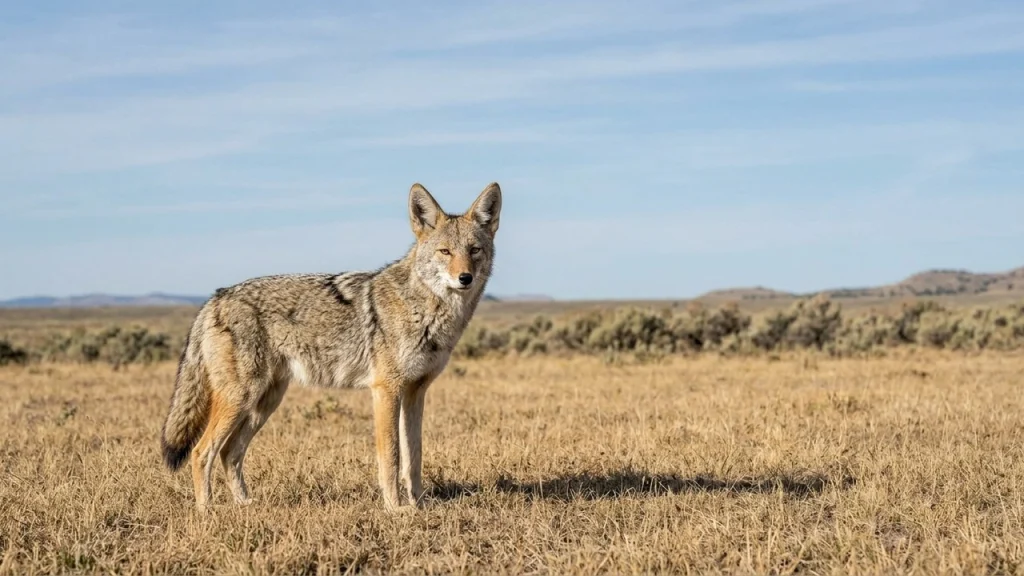
Coyotes are omnivores, and that label only half describes them: about 90% of their diet is mammalian. The core of the menu is small mammals, and named targets in the record include the thirteen-lined ground squirrel and the white-footed mouse. Around that base sits a long tail of extras, including insects, fruit, grass and carrion.
What any one coyote swallows depends on where it lives and when it hunts. Within just the past 120 years coyotes have taken up residence in every ecosystem on the continent, and the result is a diet that is extremely varied. That variability is the strategy itself: a generalist menu lets one species work landscapes as different as open prairie, desert, forest and mountain.
Small mammals anchor the menu
Compiled diet studies report a mean coyote body mass of 13.2 kg, and on average the animals in those studies picked prey around twice their own size. The prey masses coyotes selected most strongly run from 0.30 to 21.8 kg, yet the wider menu still reaches from ungulates exceeding 22 kg all the way down to rodents.
Abundance is not the same as appeal. The same analysis found that a number of small mammals, carnivorans and tree dwellers among them, were passed over rather than hunted, so skipping a meal that fights back or hides in a tree is a saving, not a lapse.
Even across that broad spread, wild mammals come first. Diet reviews put wild mammals at the top of the list, with fruit, crops, invertebrates and other foods filling in around them.
Big prey needs a team
Scaling up from a mouse to a deer is a different job, and coyotes answer it with cooperation. National Park Service staff at Jewel Cave report that a coyote will attack animals as big as a bison or cattle calf, and the same account lists a strikingly ordinary spread of fare:
- Cottontail rabbits and jackrabbits
- Rodents, birds and eggs
- Insects and fruit
- Deer and elk
- Domestic livestock
Deer, the hardest entry on that list, are taken in relays: one coyote runs the animal until it tires, and others drive it toward a teammate already hidden in wait. A family group even divides the work by age, with animals younger than 18 months concentrating on small rodents while adults favour deer.
That flexibility also shapes how coyotes treat domestic animals. Rather than singling out sheep, the prey-choice data show livestock being eaten in line with how common those animals are in the prey community, so predation on a flock follows the size of that flock.
Plant food is a real part of the plate
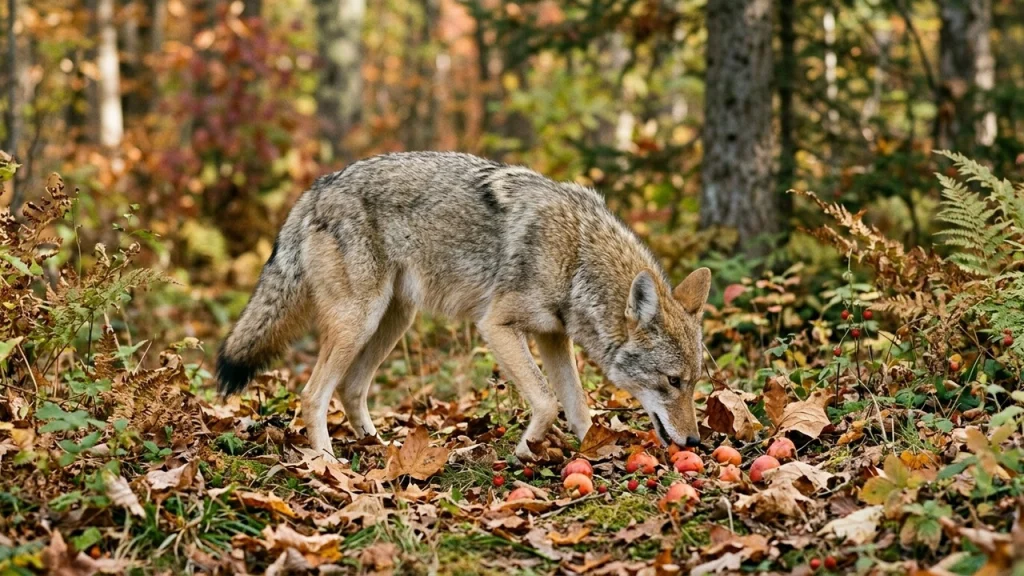
Conifer leaves from balsam fir and white cedar sit alongside sasparilla, strawberry and apple in the record, and fruit and vegetables make up a significant share of the diet during autumn and winter. The Missouri Department of Conservation points to persimmons as one of the plants that fills out the remainder once rabbits and mice are accounted for.
Carrion is a staple, not a backup
Fresh meat comes first, but carrion is not a leftover. Coyotes consume large amounts of carrion, and Missouri wildlife staff credit that scavenging with helping clean the woods and fields.
How a coyote catches a mouse and a deer
Hunting technique changes with the prey. When stalking mice, a coyote creeps through grass with its nose down, then locks its legs rigid and springs on the target.
Under snow cover they hunt by ear, plunging head first onto rodents moving below the surface before they can escape.
They also borrow another animal’s skill, pairing up with badgers, because a coyote is poor at excavating rodents from their tunnels and chases them above ground while the badger does the digging.
All of that adds up to ground covered. Coyotes average about 4 km of travel for a night’s hunting.
What city and suburban coyotes add to the menu

Coyotes have colonized cities like Los Angeles, and suburban animals fold human trash and household pets into the diet.
A study of southern California coyotes measured how much. In that research, human food showed up in 22% of scats, and stable isotope analysis estimated it at 38% of the diet. In the urban zone specifically, human-related items were the most common category in scats, appearing in 65.2% of them, and ornamental fruit and seeds were the single most frequent of those, turning up in 26.1% of scats. Garbage and domestic cats came next, at 22.1% and 19.8%.
One species, many regional menus
No region produces the same plate. Diet shifts with what is locally available, so coyotes in the southern US may take more frogs and those in the Yukon more berries, depending on the local supply.
Why the flexible menu pays off
Abundance is the clearest sign of how well that strategy pays: coyotes are widespread precisely because adaptability is their defining trait, and the IUCN Red List classes them as Least Concern. A widely used field summary goes further, reporting that numbers have probably never been higher, while Missouri’s field guide describes the species as common and generally increasing.
The ecological result is a self-regulating predator. By holding rodent and rabbit numbers down, coyotes protect the wider plant community from overgrazing, since unchecked small mammals lead to habitat degradation, and they concentrate their kills on animals that are old, injured or already sick, so hunting pressure lands on the weak instead of the healthy.
A menu that reshapes itself with the season and the neighbourhood is a large part of the coyote’s success, and it is why one flexible hunter can hold ground where a specialist predator could not.
Sources
- Animal Diversity Web: Canis latrans (coyote)
- U.S. National Park Service: Coyote (Canis latrans) – Jewel Cave National Monument
- National Geographic: Coyote
- Journal of Mammalogy: Diet selection in the Coyote Canis latrans
- PLOS One: Effects of urbanization on resource use and individual specialization in coyotes (Canis latrans) in southern California
- Missouri Department of Conservation: Coyote